BEIJING, Dec. 30 (Xinhua) -- In a year filled with rising protectionism and "decoupling" attempts worldwide, Danish energy efficiency solutions provider Danfoss has taken concrete steps to expand its innovation and manufacturing presence in China.
January saw Danfoss launch a newly upgraded application development center in Suzhou, followed by the April inauguration of its first carbon-neutral factory in China, located in Nanjing. In September, the company opened its largest China-based production base serving global markets in Haiyan, Zhejiang Province.
"China is our second home market, offering significant opportunities for growth, collaboration, and innovation," said Kim Fausing, president and CEO of Danfoss.
Danfoss has not been alone this year in stepping up its commitment to the Chinese market. China saw 61,207 newly established foreign-invested enterprises in the first 11 months of 2025, up 16.9 percent year on year, according to the Ministry of Commerce.
Foreign enterprises' bullish moves in China speak volumes about the country's unwavering appeal amid global economic uncertainties, driven by its vast market, complete industrial chains, dynamic innovation ecosystem and continued commitment to opening up.
LAND OF OPPORTUNITIES
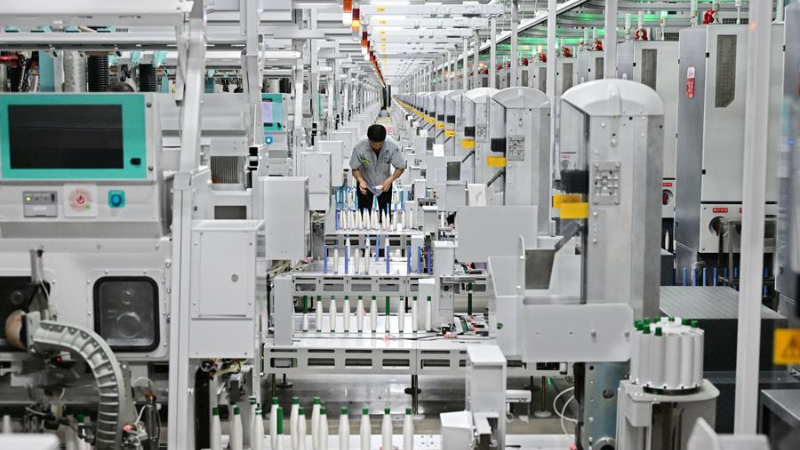
China has every industrial category classified by the United Nations. Its manufacturing sector has ranked first globally in overall scale for 15 consecutive years, and the sector's value added accounts for nearly 30 percent of the global total.
The country's ability to integrate industrial chains is almost irreplaceable on a global scale, whether in terms of engineer supply, industrial supporting capabilities, or scale advantages, noted Robin Xing, chief economist at Morgan Stanley China.
China's competitive industrial chains are a key magnet for foreign investment. Coupled with a vast consumer market of 1.4 billion people and their continuously evolving consumption demands, the country remains a crucial destination for global investors.
Vincent Boinay, president of L'Oreal North Asia Zone and CEO of L'Oreal China, said that China is the company's second largest market and its most strategic one, and the country's consumer base leads the world in scale, growth pace and vitality.
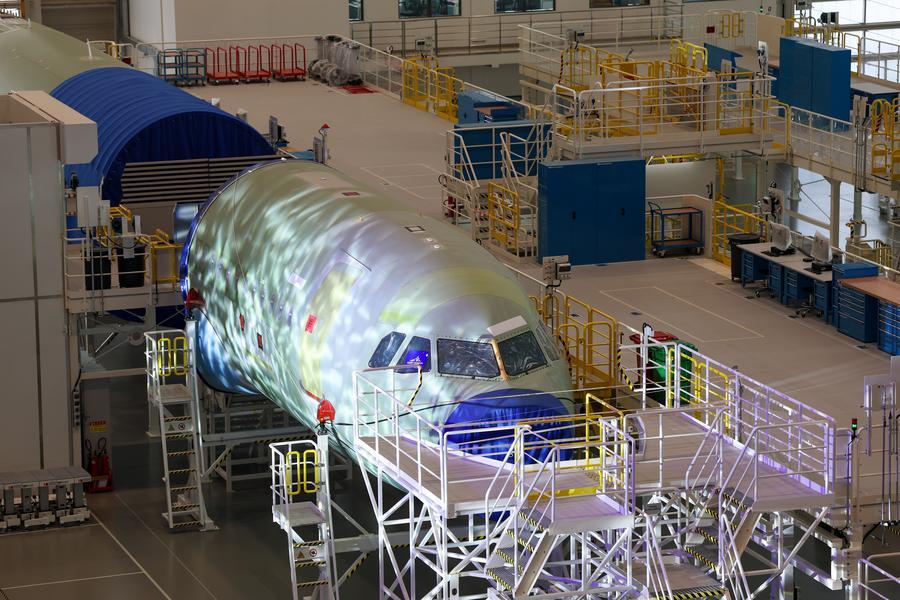
On June 25, Airbus held an event in Beijing to mark the 40th anniversary of its cooperation with China's civil aviation sector and announced the launch of a refurbishment project for an A310 aircraft, the first Airbus jet that was delivered to China in 1985 and retired in 2006.
Despite decades of rapid development, China's aviation industry is far from saturation and still has huge potential for growth, said the company. Airbus estimates that China will need approximately 9,570 new planes over the next 20 years, accounting for nearly one-fourth of global demand.
China's vast market, well-developed and efficient industrial and supply chain system, and continuously improving innovation ecosystem, ensure a solid foundation for sustained foreign investment, said Pan Yuanyuan, a researcher at the Institute of World Economics and Politics of the Chinese Academy of Social Sciences.
HUB OF INNOVATION
"A presence in China for multinational companies is not only because China is too big to be missed, but increasingly about harnessing Chinese innovation, technology, and product development to strengthen global competitiveness," said Denis Depoux, global managing director of Roland Berger.
The Global Innovation Index 2025, released by the World Intellectual Property Organization, ranks China 10th among the world's most innovative economies, up one spot from the previous year. The report also revealed that China leads globally in the number of innovation clusters, with 24 ranked among the world's top 100.
In October, British pharmaceutical giant AstraZeneca opened its sixth global strategic research and development (R&D) center in Beijing, which is its second in China, following the first in Shanghai. The new facility will leverage Beijing's scientific ecosystem and strengths in artificial intelligence to accelerate the development of innovative next-generation drugs.
In November, German automaker Porsche launched its first strategic overseas R&D center in Shanghai.
Through the China R&D Center, Porsche can directly integrate into the country's rapidly evolving innovation ecosystem, shrinking R&D cycles from years to months, said Sajjad Khan, member of the executive board of Porsche AG, car-IT.
Lin Yifu, dean of the Institute of New Structural Economics at Peking University, said that China boasts a growing pool of educated and skilled talent, and this advantage would be further amplified by the country's massive domestic market, which enables new technologies and products to rapidly achieve economic scale.
"China's continued support for high-tech, new energy, digital economy and other sectors will spawn a new round of investment hotspots, presenting strategic opportunities that global investors simply cannot afford to overlook," said Michael Bi, managing partner of EY Greater China Markets.
OASIS OF CERTAINTY
To better allow foreign investors to leverage its advantages in supply chain, market and innovation, the Chinese government has unveiled an array of key measures designed to create a long-term stable investment environment for global enterprises throughout 2025.
Last year, China removed all market access restrictions for foreign investors in its manufacturing industry. Following this move, the country has now turned its focus to further opening up in the service sector.
In February, China issued an action plan to stabilize foreign investment, calling for efforts to expand the national pilot program to open the services industry further and promote the orderly opening up of the biomedical sector.
In April, the country declared that nine additional cities -- Dalian, Ningbo, Xiamen, Qingdao, Shenzhen, Hefei, Fuzhou, Xi'an, and Suzhou -- will be able to carry out comprehensive pilot programs, to accelerate the opening up of the service sector, covering fields such as finance and healthcare.
The new round of comprehensive pilot programs to further open up the services sector will help address the insufficient supply of high-end offerings in the domestic market, bringing more choices and opportunities for both consumers and investors, said Chen Hongna, an associate researcher at the Development Research Center of the State Council.
Earlier this month, Hainan Free Trade Port (FTP) officially launched island-wide special customs operations, a landmark step underscoring the country's unwavering commitment to expanding high-standard opening up.
In terms of industry and investment, Hainan's policy advantages are expected to attract global capital into sectors such as tourism and education, said Huang Hanquan, head of the Chinese Academy of Macroeconomic Research under the National Development and Reform Commission.
Dr. Phaichit Viboontanasarn, vice chairman and secretary general of the Thai Chamber of Commerce in China, said that a number of Thai enterprises see opportunities presented by this initiative, and are now willing to use Hainan as a gateway to the Chinese market, developing processing and warehousing industries on the island while expanding cooperation in maritime and wellness tourism.
Chinese Minister of Commerce Wang Wentao has outlined some new initiatives for the next five years, with a focus on opening up the services sector. The measures include expanding pilot programs in value-added telecommunications, biotechnology and wholly foreign-owned hospitals, and further opening up the education and culture sectors in an orderly manner.
Wang added that China will accelerate the advancement of regional and bilateral trade and investment agreements, and expand its network of high-standard free trade zones, while pledging to "polish the brand of investing in China" and create a transparent, stable and predictable business environment. ■