

BEIJING, Oct. 19 (Xinhua) -- China's 16th Arctic Ocean expedition team said Monday that its polar icebreaker Jidi had completed a pre-operational application test of domestically developed satellite internet along Arctic shipping routes.
The voyage marked the first successful verification of networked communications across the Arctic, Antarctica and the Qinghai-Tibet Plateau, also known as the "Third Pole" of Earth, closing the last communications coverage gap in the world, the expedition team said.
Organized by China's Ministry of Natural Resources, the expedition set off on July 3. The Jidi, meaning "polar region" in Chinese, is one of the expedition's four research vessels.
According to the expedition team, voice and video were clear and smooth during a video link connecting the icebreaker in the Arctic, Qinling Station in Antarctica, the Lhasa River test station in the Xizang Autonomous Region and a ministry bureau based in the eastern coastal city of Qingdao.
The link enabled global low-latency, high-bandwidth communications through the Chinese satellite internet, verifying its stability under harsh conditions such as extreme low temperatures, severe sandstorms, and ice fog.
The voyage also marked the first use of domestic satellite internet for polar medical support. The Arctic Ocean expedition team said the Jidi held high-definition ship-to-shore video consultations with hospitals and experts in Qingdao, enabling timely medical assessment for its members.
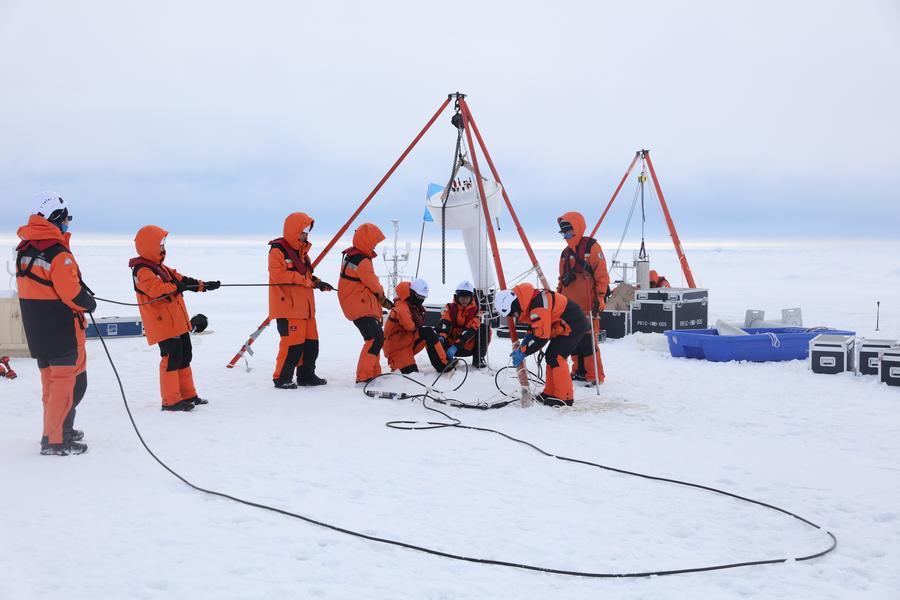
Another achievement during the voyage was a homegrown ocean drifting buoy, called Zhigan, which for the first time enabled the Chinese survey equipment to fully control data collection and transmission. Since the transmission speed and quality met practical requirements in the tests, it offered an alternative to the traditional use of international satellites for real-time ocean sensing data transmission.
Zhang Meng, an expedition member and on-site tester, said the Jidi vessel had sent and received more than 300 files totaling more than 100 gigabytes of data and supported more than 40 video consultations during the voyage.
"The communications tests have helped address the information isolation, a challenge in polar expeditions, and verified full-voyage communications support based on China's satellite internet," Zhang said. ■