BISHKEK, Sept. 3 (Xinhua) -- The Shanghai Cooperation Organization (SCO) can serve as an example for modern global governance, SCO Secretary-General Nurlan Yermekbayev has said.
In a recent interview with Xinhua, he said that within the organization, decisions are made by consensus, countries have equal rights, and the interests of each participant are taken into account.
In the 25 years since its founding, the SCO has been advocating for strengthening multilateralism, abiding by international law, equal dialogue, and the development of a fair system of international relations, he said.
"The SCO has every opportunity to become a 'laboratory' for global multilateral cooperation -- a space where ideas of peace, security, development and dialogue take concrete forms," Yermekbayev noted.
In his opinion, one of the SCO's main achievements is the formation of a unique space of trust and cooperation among countries with their own historical, political and civilizational traditions.
"Over the years, member states have developed a sustainable culture of multilateral interaction based on equality, mutual respect, consideration of each other's interests, and the search for consensus," he noted.
He said the organization has established sustainable mechanisms to combat terrorism, separatism, extremism, transnational organized crime, drug trafficking and other modern threats, while offering substantial opportunities for cooperation in such fields as trade and investment, transport connectivity, energy, the digital economy, agriculture, environmental protection, education, science, culture, healthcare and tourism.
The secretary-general said the "Shanghai Spirit" of mutual trust, mutual benefit, equality, consultation, respect for diversity of civilizations, and pursuit of common development is the important philosophical foundation for the SCO's development, allowing SCO countries to cooperate successfully.
"States from various regions see the SCO not as an instrument of geopolitical rivalry, but as a platform for equal dialogue, mutually beneficial cooperation, and the joint search for answers to common challenges," he said.
Yermekbayev emphasized China's significant role in the SCO's formation and development.
"Over the past 25 years, China has consistently supported the development of the organization and made a significant contribution to strengthening its institutional capacity," he said.
In this regard, it is of great significance that Chinese President Xi Jinping has put forward important concepts, such as building an even closer SCO community with a shared future, as well as building a common home featuring solidarity and mutual trust, peace and tranquility, prosperity and development, good-neighborliness and friendship, as well as fairness and justice, the SCO secretary-general noted.
"These concepts largely reflect the philosophy of the Shanghai Spirit, giving it new meaning applicable to modern conditions," he said.
Yermekbayev noted that the four global initiatives put forward by Xi -- the Global Development Initiative, the Global Security Initiative, the Global Civilization Initiative, and the Global Governance Initiative -- have been widely praised. "This is a complementary system of ideas and practical approaches aimed at addressing pressing contemporary challenges and building a just, peaceful, and sustainable world order," he said.
As the 2025 SCO Tianjin Summit marked the commencement of a new stage in the organization's development, Yermekbayev said, the decisions adopted at the meeting defined strategic guidelines for the organization until 2035.
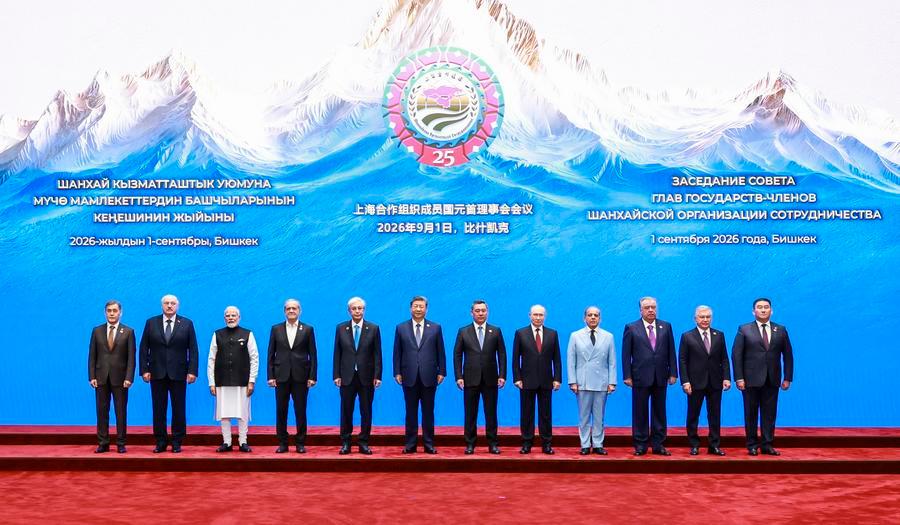
"The SCO faces great opportunities," he said, expressing hope that the just-concluded Bishkek summit will inject new impetus into the SCO's development.
He also voiced hope that participants of the summit will work together, maintain strategic mutual trust, and safeguard peace and development interests, and that the SCO will make even more significant contribution to building a secure, just, and prosperous Eurasian region and the entire world.■