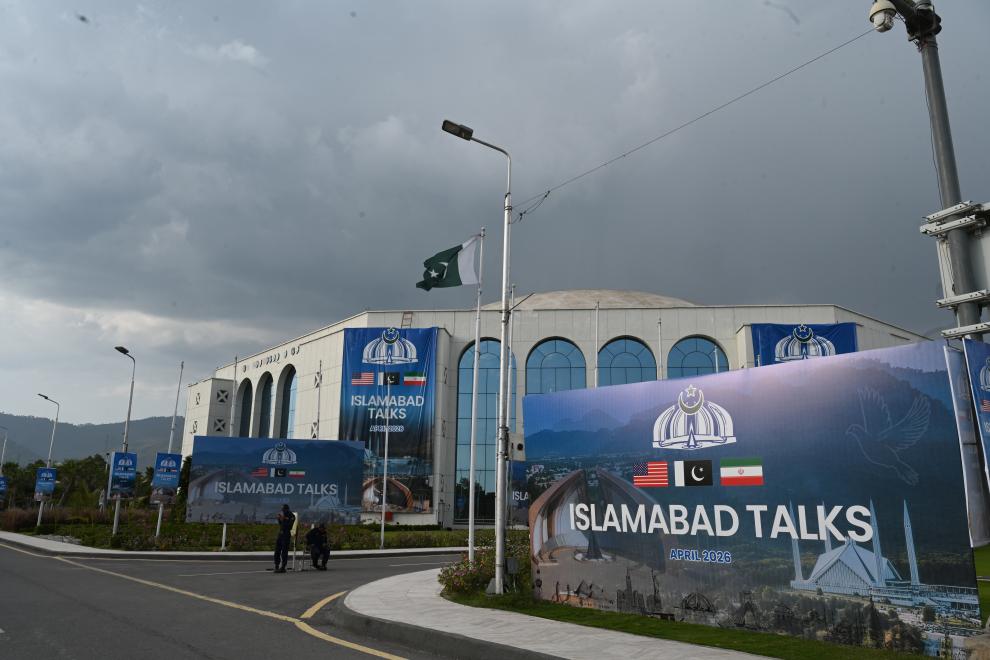
While it remains unclear when the two sides might reach a peace agreement, experts believe any breakthrough is more likely to come later rather than sooner.
WASHINGTON, May 21 (Xinhua) -- While Iran is evaluating the latest U.S. peace proposal, experts say a final deal remains elusive because there is no guarantee the two sides can bridge their deep differences.
U.S. President Donald Trump said Wednesday that he is willing to wait several days for the "right answers" from Tehran. Although the fragile ceasefire remains in place, Trump warned that U.S. forces will strike even harder if talks fail.
The remarks came just days after Trump postponed scheduled military strikes at the request of Gulf allies, saying that negotiations are in the "final stages."
Washington's latest draft proposal seeks to bring the nuclear issue back to the forefront. Trump has vowed to secure Iran's stockpile of enriched uranium. Iran, however, maintains that its nuclear program is intended solely for peaceful purposes.
Getting the two sides to agree on a peace deal is complex, as there are a few fundamentals that Tehran cannot do without, said experts.
For Iran to agree, hostilities would have to end, including the strikes against Lebanon, which means the United States would have to pressure Israel effectively, said Clay Ramsay, a researcher at the Center for International and Security Studies at the University of Maryland.
"I doubt that either the new Supreme Leader or the IRGC (Iran's Islamic Revolution Guard Corps) will put the Lebanon issue to one side," Ramsay said.
The U.S. naval blockade of Iran's ports would have to loosen before Iran shows any flexibility about opening the Strait of Hormuz, he said. "Since both of these are like valves that can be opened by degrees, this could be organized in stages."
After that, Iran may be willing to negotiate the nuclear issue in an orderly process, "but Trump will never get something radically different from the nuclear deal that he walked away from in his first term," Ramsay said, referring to the nuclear deal from which Trump withdrew during his first term.
"Returning Iran's frozen assets in stages and loosening some sanctions would help to make all this work," Ramsay said. "On Iran's missiles, though, Iran sees them as a primary mode of self-defense."
"The prerequisite now is an end to three things: hostilities, the U.S. blockade, and the Strait of Hormuz deadlock. Were that to happen, it would create a window for negotiating everything else," he added.
While it remains unclear when the two sides might reach a peace agreement, experts believe any breakthrough is more likely to come later rather than sooner.
When asked whether Tehran will agree to the latest U.S. peace proposal, Brookings Institution Senior Fellow Michael O'Hanlon told Xinhua: "I don't know. But it feels to me like the two sides are both still far apart."
"I am guessing some kind of lasting settlement by summer, not spring," he said.■