BEIJING, May 22 (Xinhua) -- A group of researchers from Peking University and DAMO Academy under Alibaba Group has published a comprehensive, high-precision inventory of China's wind and solar power infrastructure in the journal Nature.
The study published this week offers a data-driven assessment of how inter-regional coordination can enhance renewable integration in the world's largest and fastest-growing renewable energy system.
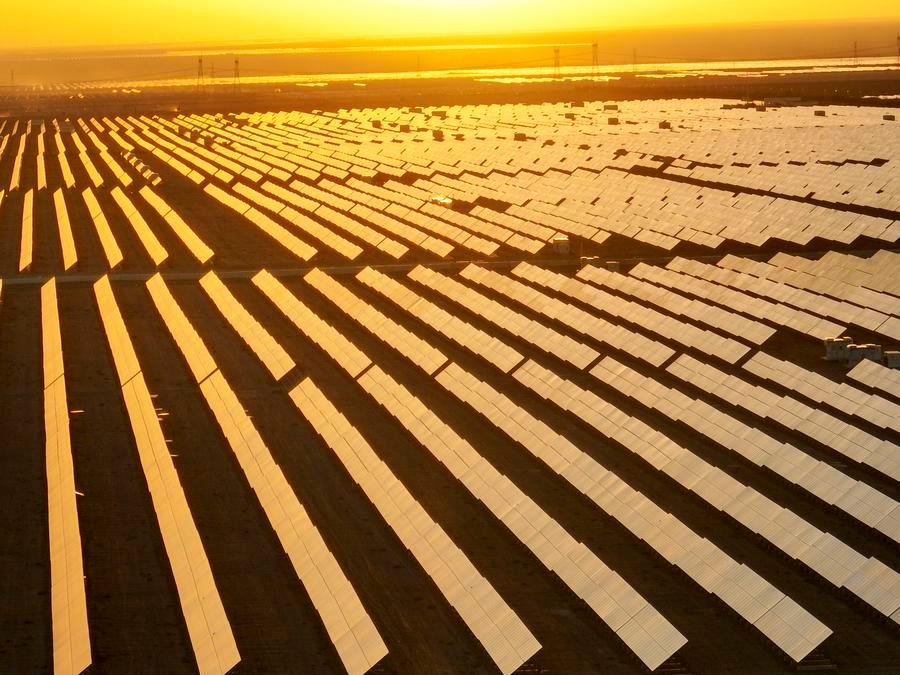
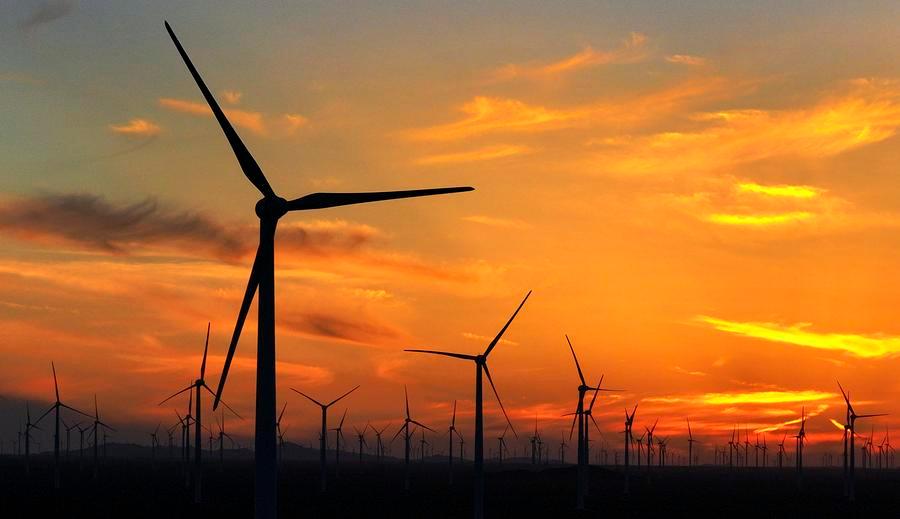
The team utilized an AI model to analyze over 7.56 terabytes of high-resolution satellite imagery. This allowed them to identify and map 319,972 solar power facilities and 91,609 wind turbines across 1,915 Chinese counties in 2022.
This granular dataset provides a "Bird's eye view of the nation's renewable energy landscape," said Liu Yu, professor at the School of Earth and Space Sciences, Peking University, and a corresponding author of the paper.
A major finding of this research effort is that expanding the geographic scope of coordination significantly enhances the effectiveness of solar-wind complementarity. This natural pairing, where solar power peaks during the day and wind often generates more at night, can smooth out the inherent variability of renewable sources in certain areas.
The study modeled four different strategies for integrating this energy, ranging from provincial integration to full national coordination. The results demonstrated that a nationwide, inter-provincial coordination strategy is the most effective.
In a system with 80 percent dispatchable flexibility, this approach could increase effective renewable energy penetration by 99.88 terawatt-hours (TWh), according to the study.
This amount is equivalent to 9.1 percent of total solar and wind generation calculated in the study and could power the national average load for approximately 120 hours. Crucially, this represents a significant amount of "new" clean energy that would otherwise be wasted due to curtailment, without requiring any additional generation capacity.
By leveraging AI to create a robust data foundation, this research offers a scalable pathway for China to integrate its vast renewable resources more efficiently and advance its carbon neutrality goals. ■