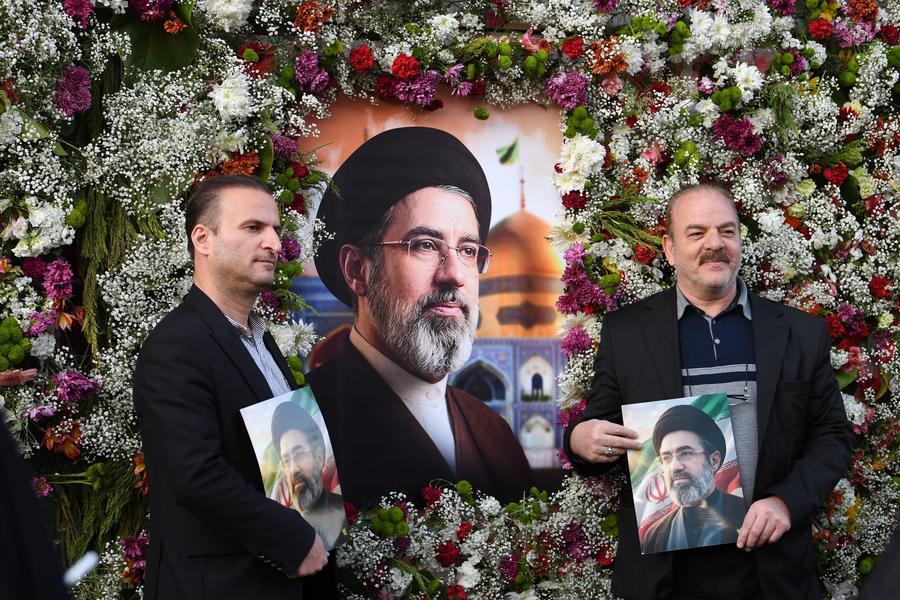
TEHRAN, May 21 (Xinhua) -- Iran's Supreme Leader Mojtaba Khamenei has issued a directive stressing that the country's stockpile of enriched uranium must not be transferred abroad, Reuters cited two senior Iranian sources as saying on Thursday.
It added that one of the sources, who spoke on condition of anonymity, said, "The supreme leader's directive, and the consensus within the establishment, is that the stockpile of enriched uranium should not leave the country."
The sources noted that Iran's top officials believe that sending the material abroad would leave the country more vulnerable to future attacks by the United States and Israel.
They added there is "deep suspicion" in Iran that the pause in hostilities is a "tactical deception" by the United States to "create a sense of security" before renewing attacks.
One of the sources said there are "feasible formulas" to resolve the issue of Iran's enriched uranium, such as diluting the stockpile under the supervision of the International Atomic Energy Agency (IAEA).
According to the IAEA's estimates, Iran has over 440 kg of uranium enriched to 60 percent purity. The stockpile is reportedly beneath the rubble of Iran's nuclear facilities bombed by the United States and Israel during the 12-day war in June 2025.
Meanwhile, the Iranian Students' News Agency (ISNA) reported on Thursday that Iran is preparing its response to the latest draft proposal sent by the United States to end the war.
According to the ISNA, the U.S. draft has narrowed the existing gaps to some extent, but the gaps' further reduction requires an end to the U.S. "temptation of war."
It added that Iran is currently negotiating in Tehran on a broad framework, some details, and confidence-building measures as guarantees.
A visit by Pakistan's Army Chief Asim Munir to Tehran scheduled for Thursday is aimed at bridging these gaps and preparing for the official announcement of a memorandum of understanding's acceptance, the ISNA added.
Iran, the United States and Israel reached a ceasefire on April 8 after 40 days of fighting that started with U.S. and Israeli attacks on Tehran and other Iranian cities on Feb. 28.
Following the truce, Iranian and U.S. delegations held one round of peace talks in Pakistan's capital Islamabad on April 11 and 12, which failed to yield an agreement.
Over the past weeks, the two sides have reportedly exchanged several proposed plans outlining conditions for ending the conflict through Pakistan.■