by Xinhua writers Xue Yanwen and Zhang Shuhui
SYDNEY, May 18 (Xinhua) -- At Haymarket Chinatown, one of Sydney's most renowned Chinese enclaves, the aroma of Chinese restaurants, the glow of shop signs bearing Chinese characters, and voices carrying dialects from across China fill the air.
Amid the hustle and bustle, the Museum of Chinese in Australia (MOCA) sits quietly watching people come and go.
Adapted from the former Haymarket Library, the museum opened on Feb. 22 during the festive cheer of the Chinese New Year of the Horse, poised to tell the stories of Chinese Australians spanning more than two centuries.
"A lot of the stories out there used to be told from someone else's perspective," said Daphne Lowe Kelley, chair of the MOCA. "It's really important that we -- people of Chinese descent -- start telling our own story."
The theme of this year's International Museum Day is "Museums Uniting a Divided World." Becoming a place for connection, reflection and celebration is precisely what the MOCA is expected to be. As the first Chinese-focused museum in the Australian state of New South Wales, it is dedicated to preserving and presenting the history, heritage and contributions of Chinese Australians.
The earliest documented Chinese migrant to Australia was Mak Sai Ying, a native from south China's Guangdong Province, who arrived in Sydney in 1818. Today, that young man who stepped off the ship, the Laurel, has a lane named after him -- Sai Ying Lane -- near Circular Quay, about half an hour's walk from the museum.
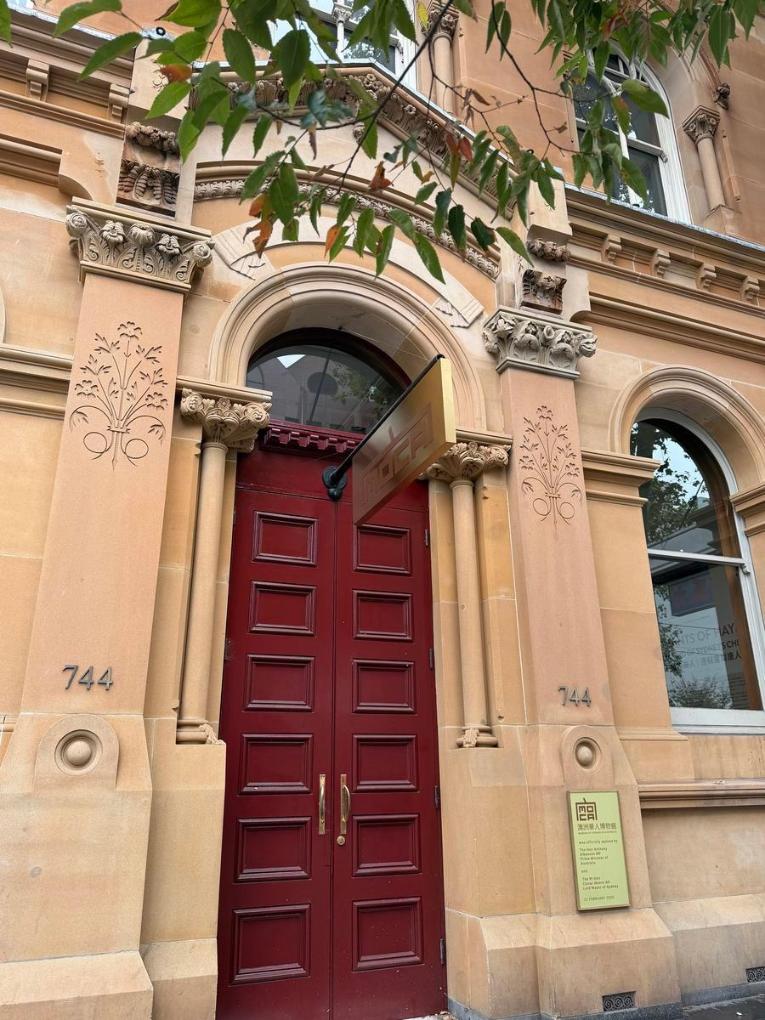
Starting from the moment his story unfolded, Chinese footprints have spread across Australia on the sea breeze for more than two centuries. According to the Australian Bureau of Statistics' 2021 census, people of Chinese descent make up 5.5 percent of the country's population, ranking as the fifth largest ancestry group in Australia.
The early Chinese in Australia are often remembered as gold miners, market gardeners, hawkers, cooks or cabinet-makers. But the inaugural exhibition at the MOCA goes beyond these familiar images, uncovering a lesser-known chapter of Haymarket Chinatown's early history.
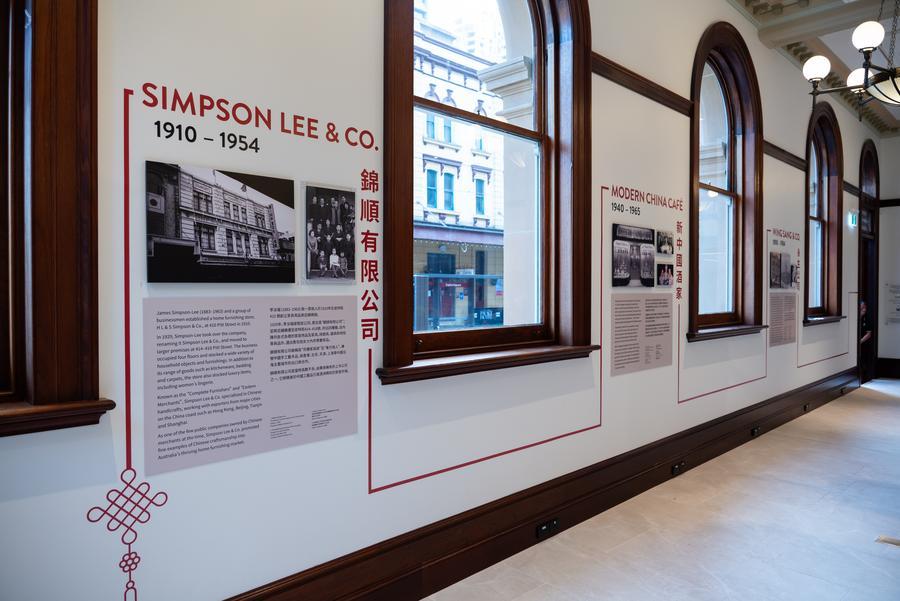
Through a collection of old objects, vintage photographs and historical stories, the exhibition traces the century-long footprints of early Chinese merchant families. An oil painting recreates the tearoom of prominent Chinese merchant Mei Quong Tart, who worked to bridge cultural divides during a time of intense anti-Chinese sentiment. In the painting, he stands at the entrance, surrounded by people from all walks of life, with a hopeful smile on his face.
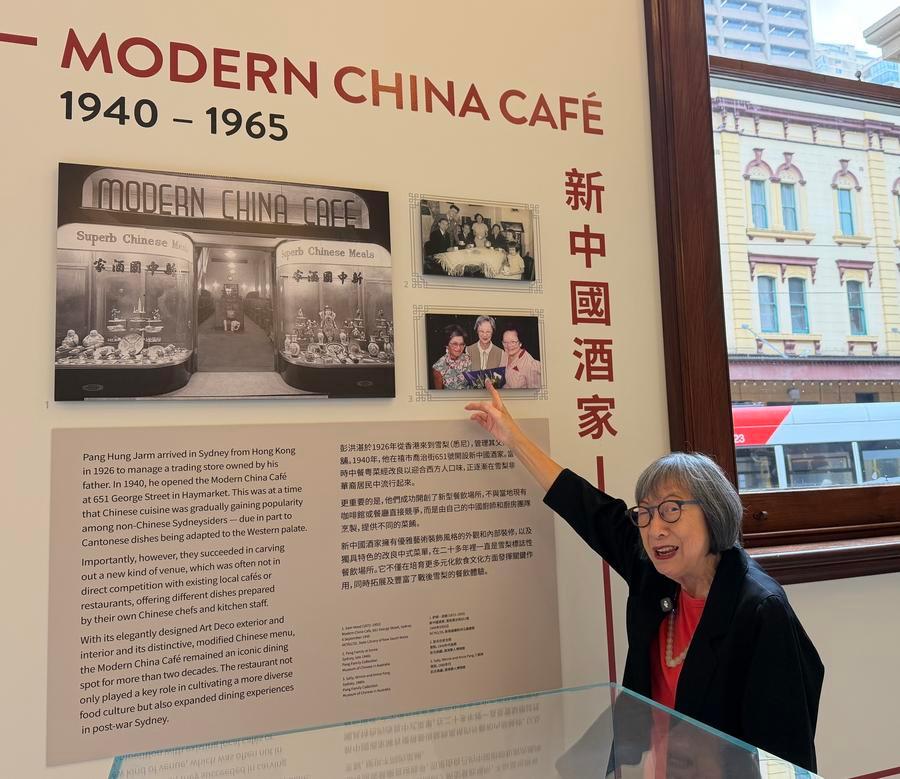
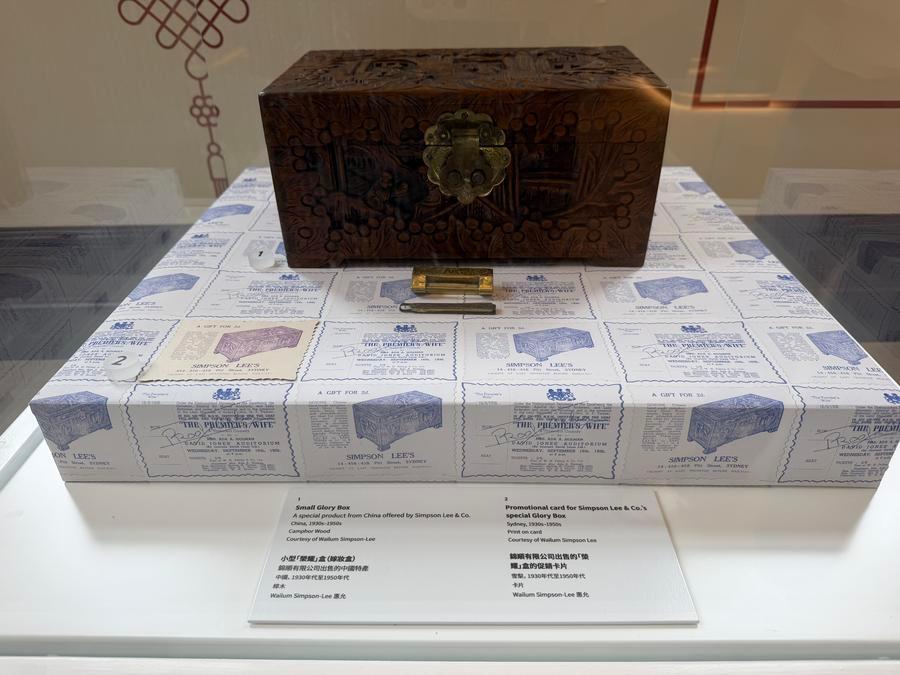
An abacus once used at Kwong War Chong & Co., a menu from the Modern China Cafe, stamps and letter sheets from Wing Sang & Co., and a wooden box and promotional cards from Simpson Lee & Co. allow visitors to imagine the vibrant energy of early Haymarket.
"There was discrimination against the Chinese -- that's what the White Australia policy was. The Chinese didn't necessarily just take it standing down. There were people amongst them who would put up petitions, write to government officials," said Lowe Kelley. "When you look at this history, don't just think that it was so difficult for them. Think also that the Chinese still did their best, tried to overcome. So they did fight back."
"The most important message I want to convey to Chinese Australians is that though we are roughly about 1.5 million people of Chinese descent, I want them to realize that we are proud. We have called this place our home, but also not to forget where we came from and some of our culture. To maintain that, and also to rise above the image that was projected formerly and the difficulties that one had earlier," she said.
Lowe Kelley said the inaugural exhibition focuses on the local history of Haymarket, but the museum's vision extends far beyond. Future exhibitions will reach into other parts of Australia, telling Chinese Australian stories from across the country. The museum also plans to strengthen exchanges and cooperation with overseas Chinese museums in China and with Chinese communities in other parts of the world.
"There's an old saying: you have to know the past to understand the present," she said. "For many of the early Chinese, life here was not that easy. There were many more restrictions. Understanding that, and yet seeing the fact that the Chinese community has now significantly grown -- that makes it all the more meaningful."■