
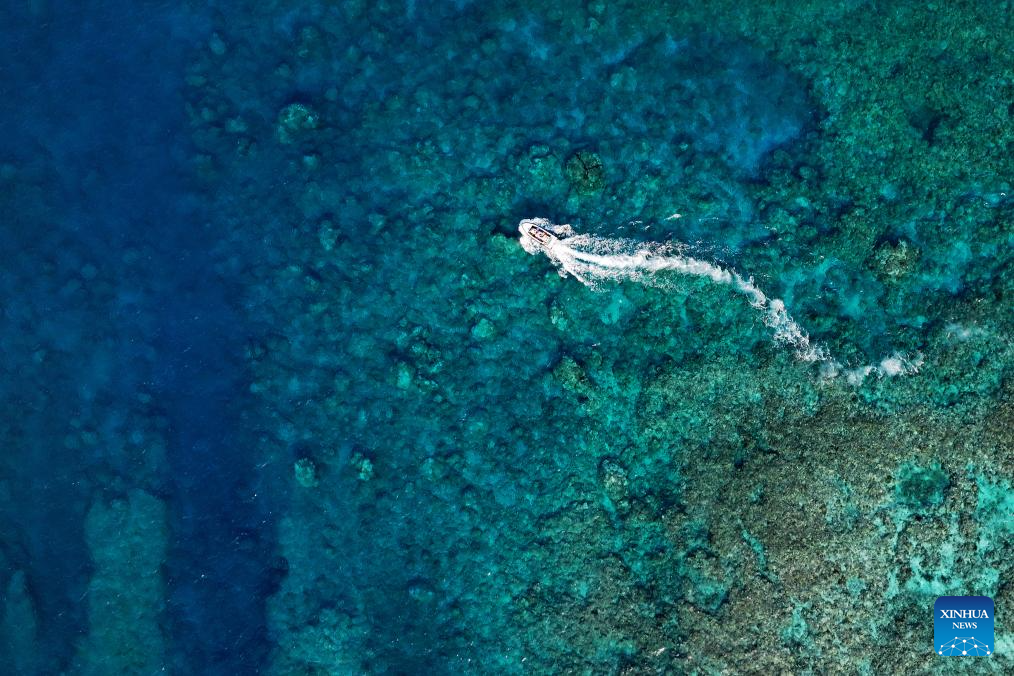
An aerial drone photo shows a boat deployed by the China Coast Guard (CCG) vessel Chuanshan patrolling near a reef in the territorial waters of China's Huangyan Dao in the South China Sea, April 24, 2026.
Huangyan Dao is located in the Zhongsha Islands and represents a typical coral atoll. Its shape approximates an isosceles right triangle.
China announced in September 2025 its approval to establish the Huangyan Dao National Nature Reserve in a necessary measure to protect its coral reef ecosystem.
The national nature reserve is home to 135 species of hermatypic corals, which belong to 36 genera and 13 families, according to a survey report released by the South China Sea Ecological Center of the Ministry of Natural Resources, together with relevant units and scientific innovation platforms. (Xinhua/Chen Bin)
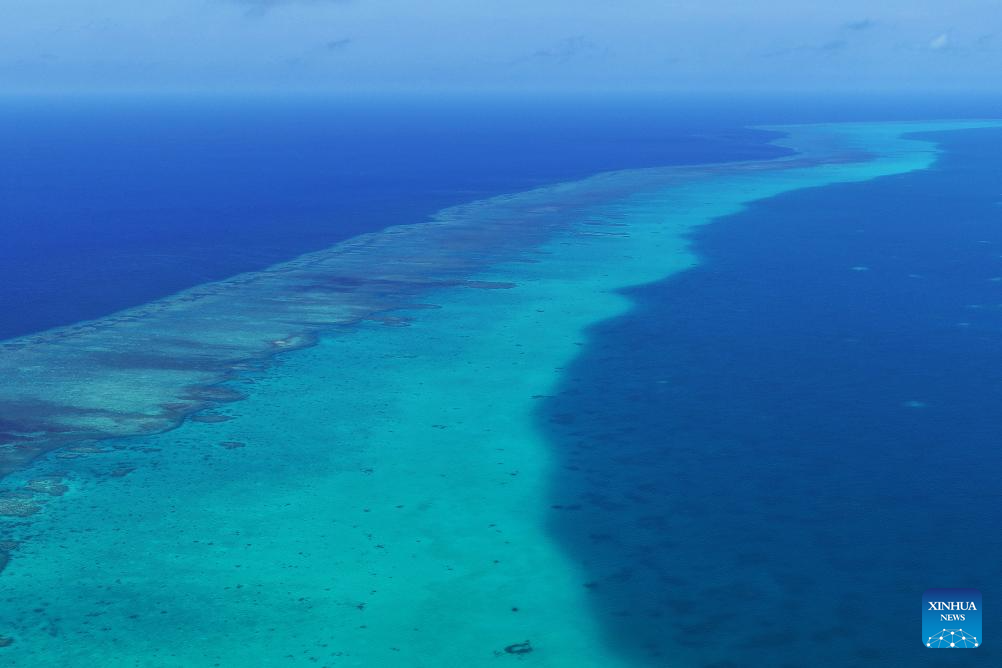
An aerial drone photo taken on May 2, 2026 shows a view of China's Huangyan Dao national nature reserve in the South China Sea.
Huangyan Dao is located in the Zhongsha Islands and represents a typical coral atoll. Its shape approximates an isosceles right triangle.
China announced in September 2025 its approval to establish the Huangyan Dao National Nature Reserve in a necessary measure to protect its coral reef ecosystem.
The national nature reserve is home to 135 species of hermatypic corals, which belong to 36 genera and 13 families, according to a survey report released by the South China Sea Ecological Center of the Ministry of Natural Resources, together with relevant units and scientific innovation platforms. (Xinhua/Chen Bin)
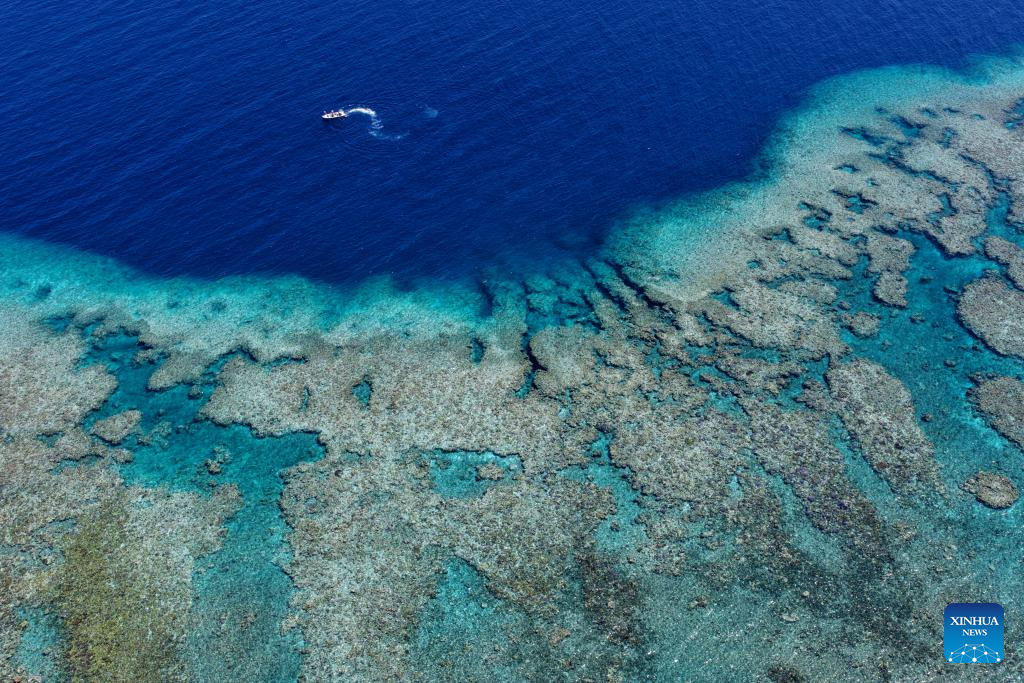
An aerial drone photo shows a boat deployed by the China Coast Guard (CCG) vessel Chuanshan patrolling near a reef in the territorial waters of China's Huangyan Dao in the South China Sea, April 28, 2026.
Huangyan Dao is located in the Zhongsha Islands and represents a typical coral atoll. Its shape approximates an isosceles right triangle.
China announced in September 2025 its approval to establish the Huangyan Dao National Nature Reserve in a necessary measure to protect its coral reef ecosystem.
The national nature reserve is home to 135 species of hermatypic corals, which belong to 36 genera and 13 families, according to a survey report released by the South China Sea Ecological Center of the Ministry of Natural Resources, together with relevant units and scientific innovation platforms. (Xinhua/Chen Bin)
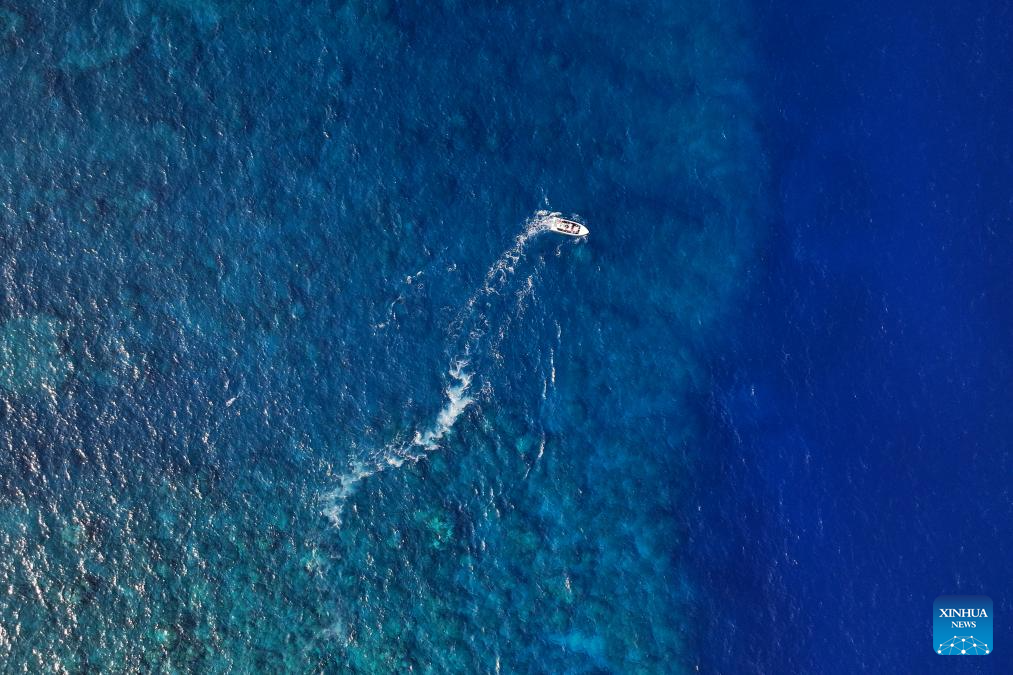
An aerial drone photo shows a boat deployed by the China Coast Guard (CCG) vessel Chuanshan patrolling near a reef in the territorial waters of China's Huangyan Dao in the South China Sea, April 24, 2026.
Huangyan Dao is located in the Zhongsha Islands and represents a typical coral atoll. Its shape approximates an isosceles right triangle.
China announced in September 2025 its approval to establish the Huangyan Dao National Nature Reserve in a necessary measure to protect its coral reef ecosystem.
The national nature reserve is home to 135 species of hermatypic corals, which belong to 36 genera and 13 families, according to a survey report released by the South China Sea Ecological Center of the Ministry of Natural Resources, together with relevant units and scientific innovation platforms. (Xinhua/Chen Bin)
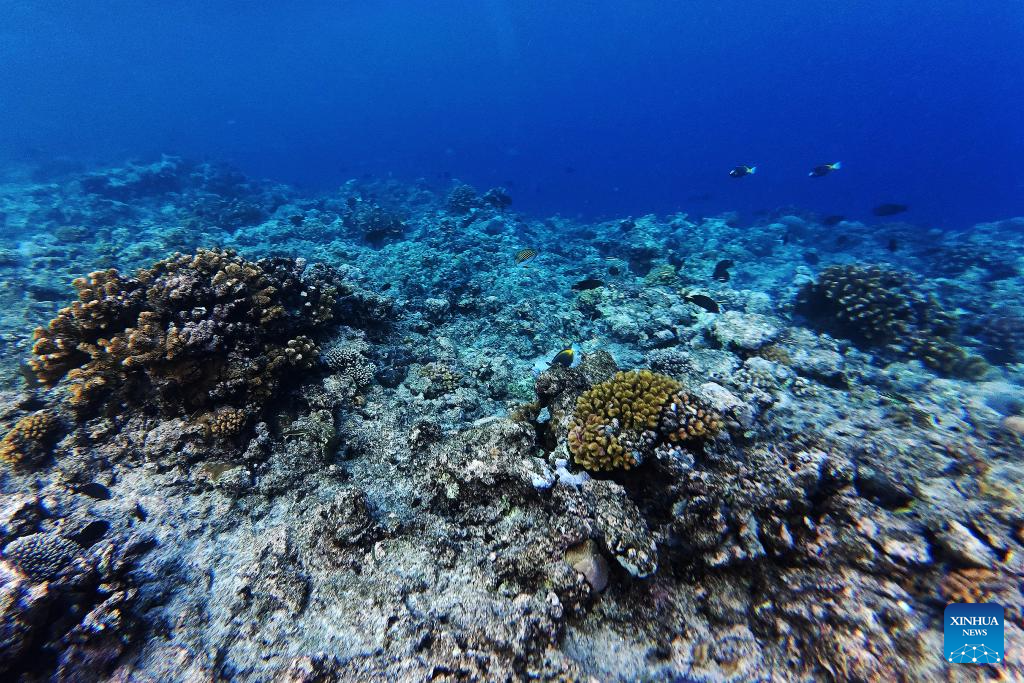
Fish swim near a reef flat in the territorial waters of China's Huangyan Dao in the South China Sea, May 7, 2026.
Huangyan Dao is located in the Zhongsha Islands and represents a typical coral atoll. Its shape approximates an isosceles right triangle.
China announced in September 2025 its approval to establish the Huangyan Dao National Nature Reserve in a necessary measure to protect its coral reef ecosystem.
The national nature reserve is home to 135 species of hermatypic corals, which belong to 36 genera and 13 families, according to a survey report released by the South China Sea Ecological Center of the Ministry of Natural Resources, together with relevant units and scientific innovation platforms. (Xinhua/Chen Bin)
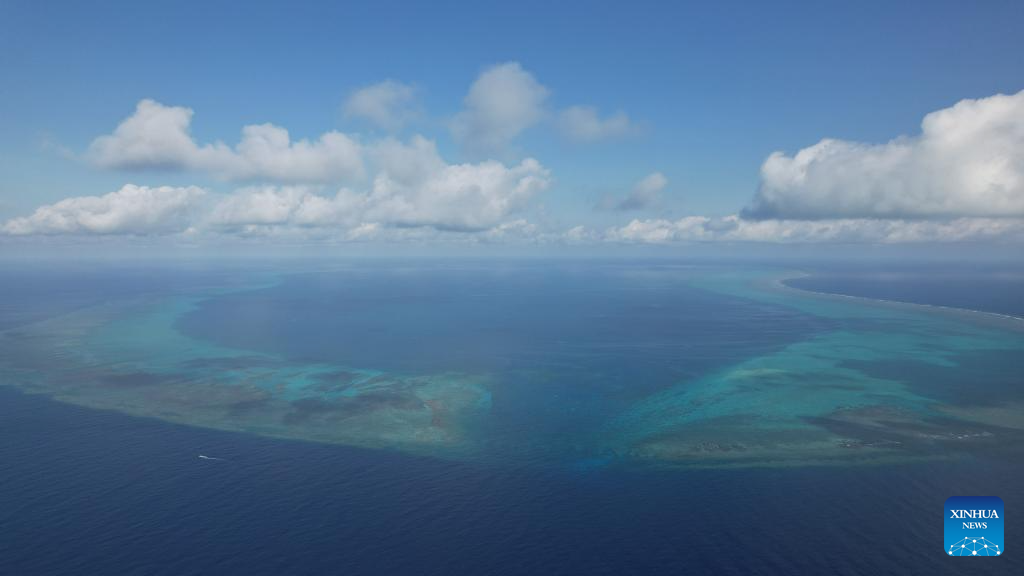
An aerial drone photo taken on May 12, 2026 shows a view of China's Huangyan Dao national nature reserve in the South China Sea.
Huangyan Dao is located in the Zhongsha Islands and represents a typical coral atoll. Its shape approximates an isosceles right triangle.
China announced in September 2025 its approval to establish the Huangyan Dao National Nature Reserve in a necessary measure to protect its coral reef ecosystem.
The national nature reserve is home to 135 species of hermatypic corals, which belong to 36 genera and 13 families, according to a survey report released by the South China Sea Ecological Center of the Ministry of Natural Resources, together with relevant units and scientific innovation platforms. (Xinhua/Chen Bin)
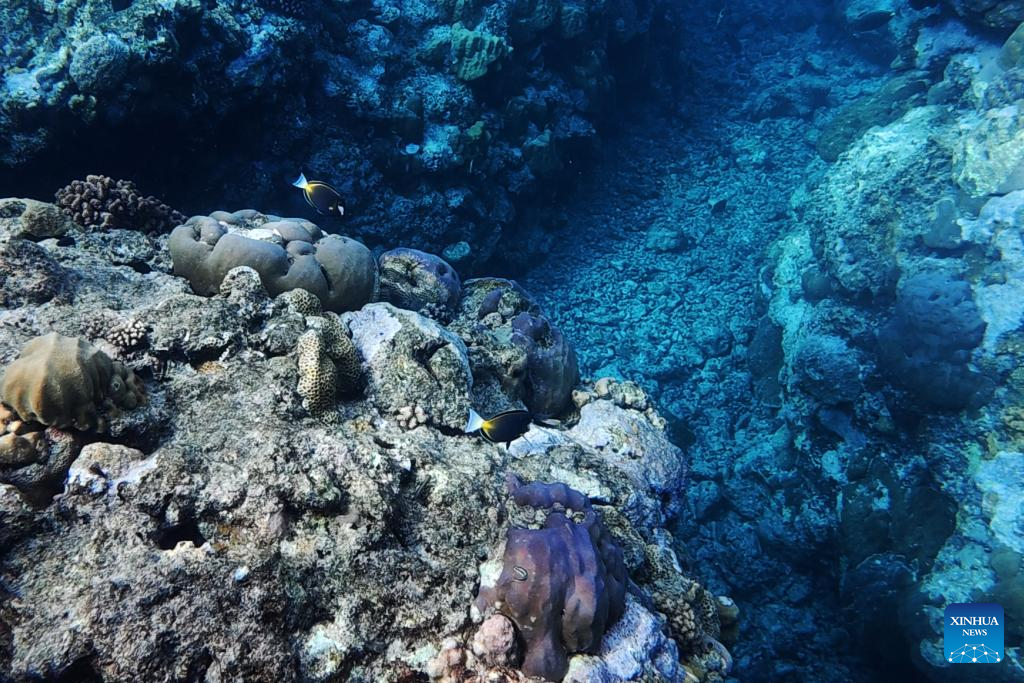
Fish swim near a reef flat in the territorial waters of China's Huangyan Dao in the South China Sea, May 7, 2026.
Huangyan Dao is located in the Zhongsha Islands and represents a typical coral atoll. Its shape approximates an isosceles right triangle.
China announced in September 2025 its approval to establish the Huangyan Dao National Nature Reserve in a necessary measure to protect its coral reef ecosystem.
The national nature reserve is home to 135 species of hermatypic corals, which belong to 36 genera and 13 families, according to a survey report released by the South China Sea Ecological Center of the Ministry of Natural Resources, together with relevant units and scientific innovation platforms. (Xinhua/Chen Bin)
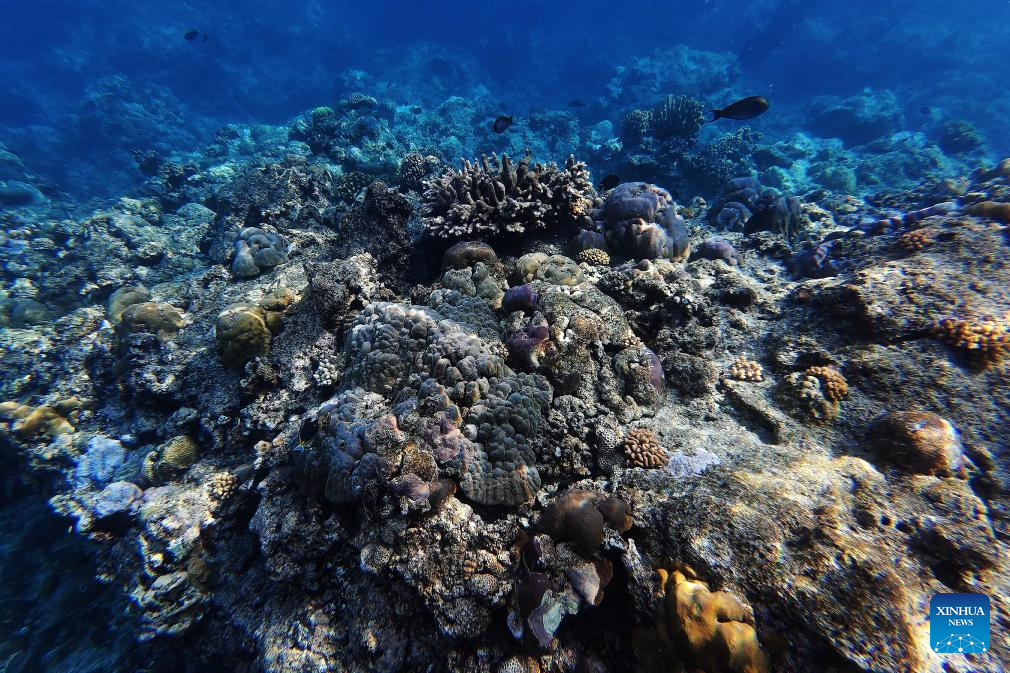
Fish swim near a reef flat in the territorial waters of China's Huangyan Dao in the South China Sea, May 7, 2026.
Huangyan Dao is located in the Zhongsha Islands and represents a typical coral atoll. Its shape approximates an isosceles right triangle.
China announced in September 2025 its approval to establish the Huangyan Dao National Nature Reserve in a necessary measure to protect its coral reef ecosystem.
The national nature reserve is home to 135 species of hermatypic corals, which belong to 36 genera and 13 families, according to a survey report released by the South China Sea Ecological Center of the Ministry of Natural Resources, together with relevant units and scientific innovation platforms. (Xinhua/Chen Bin)
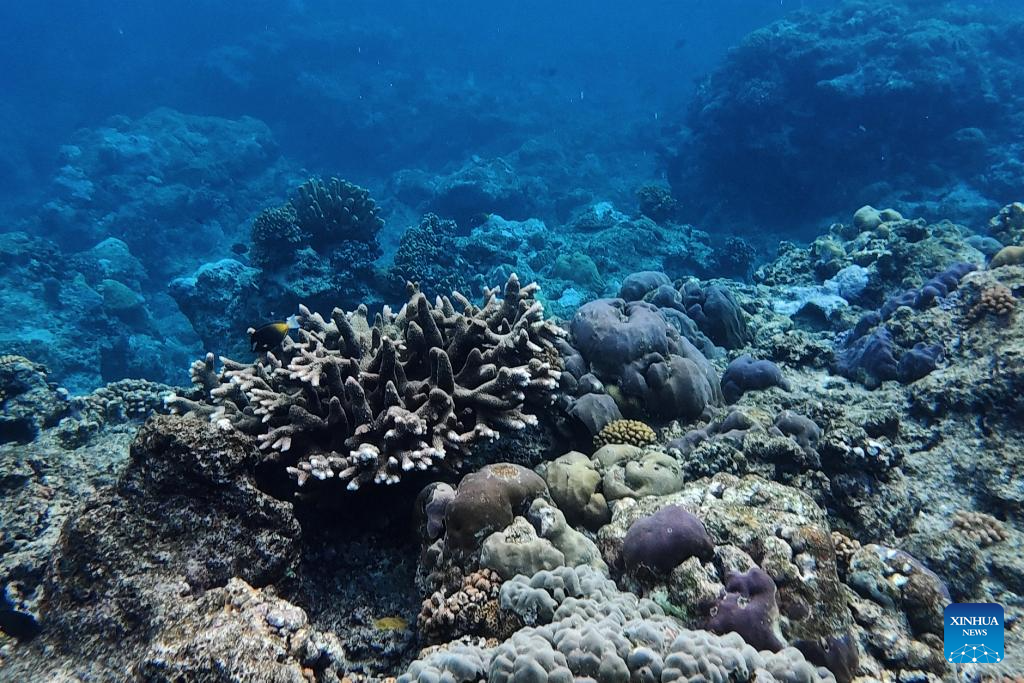
Fish swim near a reef flat in the territorial waters of China's Huangyan Dao in the South China Sea, May 7, 2026.
Huangyan Dao is located in the Zhongsha Islands and represents a typical coral atoll. Its shape approximates an isosceles right triangle.
China announced in September 2025 its approval to establish the Huangyan Dao National Nature Reserve in a necessary measure to protect its coral reef ecosystem.
The national nature reserve is home to 135 species of hermatypic corals, which belong to 36 genera and 13 families, according to a survey report released by the South China Sea Ecological Center of the Ministry of Natural Resources, together with relevant units and scientific innovation platforms. (Xinhua/Chen Bin)
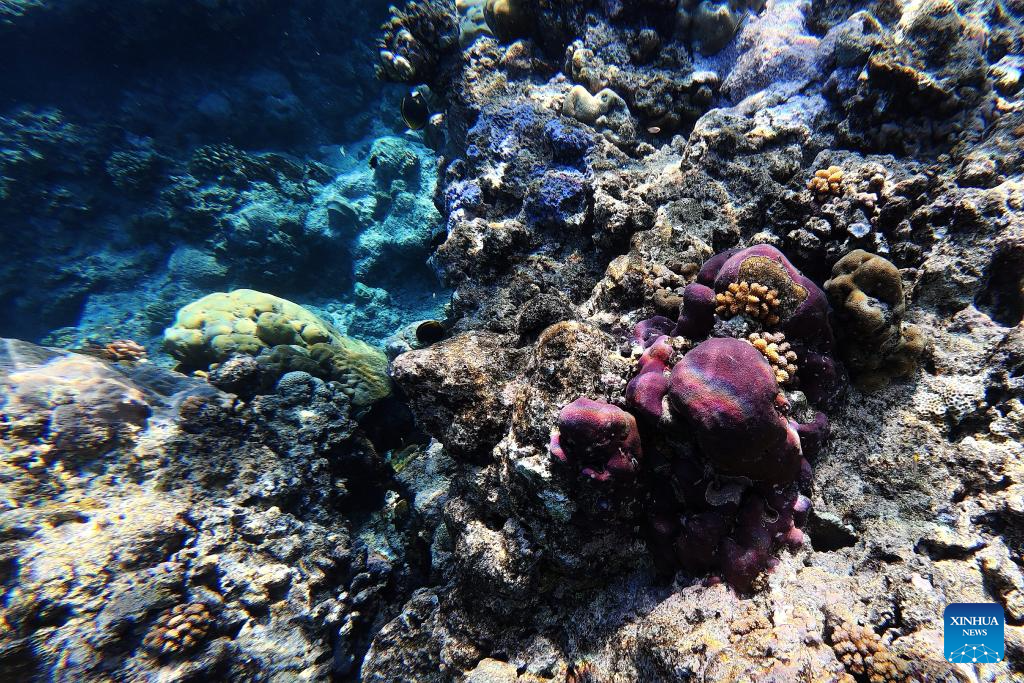
This photo taken on May 7, 2026 shows underwater scenery in the territorial waters of China's Huangyan Dao in the South China Sea.
Huangyan Dao is located in the Zhongsha Islands and represents a typical coral atoll. Its shape approximates an isosceles right triangle.
China announced in September 2025 its approval to establish the Huangyan Dao National Nature Reserve in a necessary measure to protect its coral reef ecosystem.
The national nature reserve is home to 135 species of hermatypic corals, which belong to 36 genera and 13 families, according to a survey report released by the South China Sea Ecological Center of the Ministry of Natural Resources, together with relevant units and scientific innovation platforms. (Xinhua/Chen Bin)
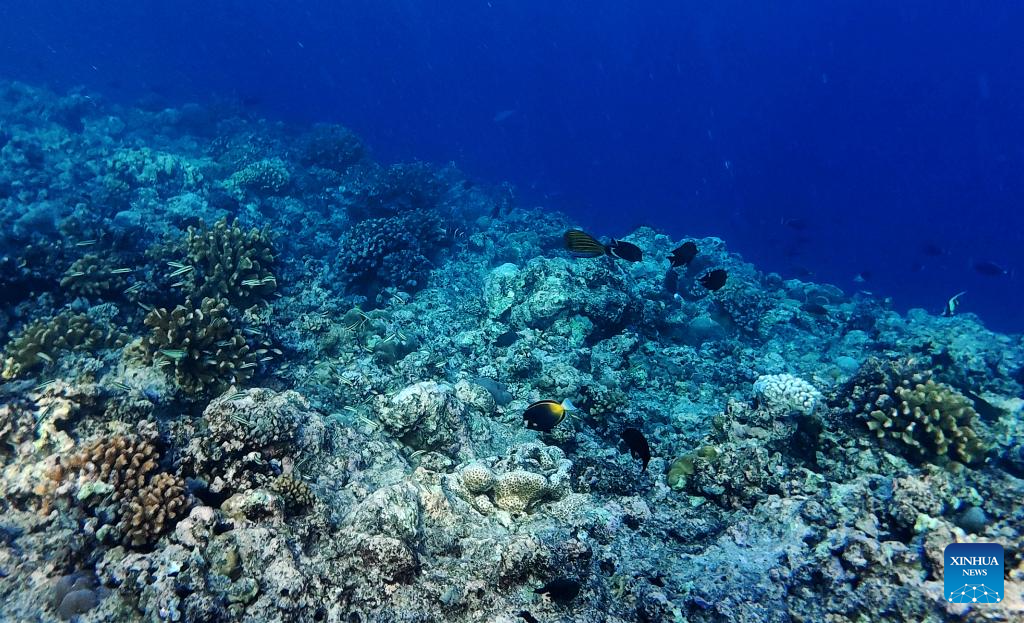
This photo taken on May 7, 2026 shows underwater scenery in the territorial waters of China's Huangyan Dao in the South China Sea.
Huangyan Dao is located in the Zhongsha Islands and represents a typical coral atoll. Its shape approximates an isosceles right triangle.
China announced in September 2025 its approval to establish the Huangyan Dao National Nature Reserve in a necessary measure to protect its coral reef ecosystem.
The national nature reserve is home to 135 species of hermatypic corals, which belong to 36 genera and 13 families, according to a survey report released by the South China Sea Ecological Center of the Ministry of Natural Resources, together with relevant units and scientific innovation platforms. (Xinhua/Chen Bin)
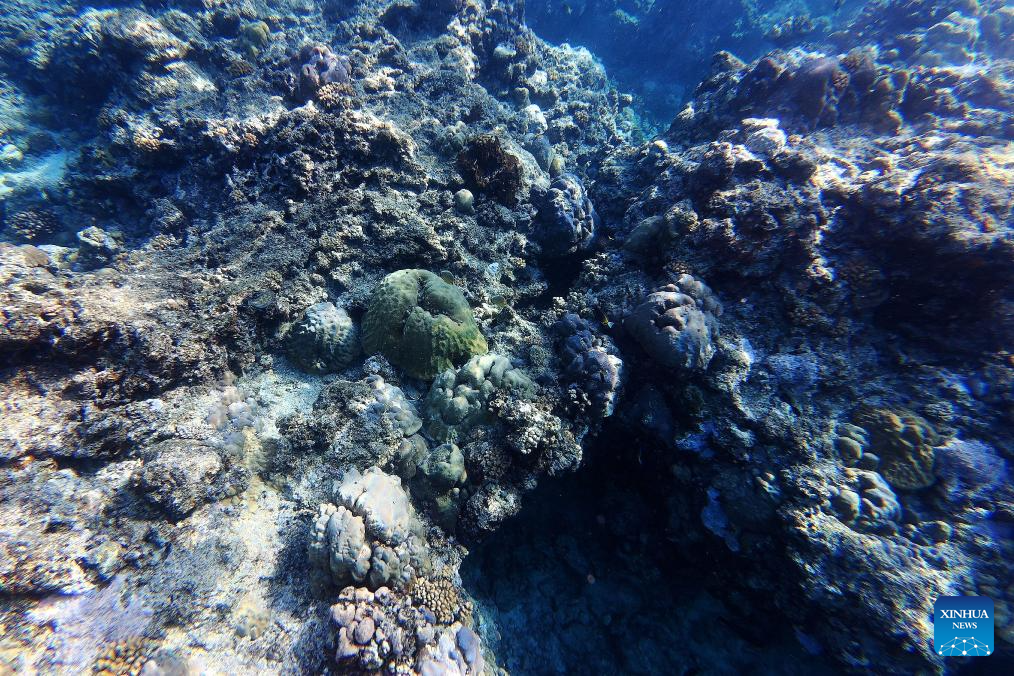
Fish swim near a reef flat in the territorial waters of China's Huangyan Dao in the South China Sea, May 7, 2026.
Huangyan Dao is located in the Zhongsha Islands and represents a typical coral atoll. Its shape approximates an isosceles right triangle.
China announced in September 2025 its approval to establish the Huangyan Dao National Nature Reserve in a necessary measure to protect its coral reef ecosystem.
The national nature reserve is home to 135 species of hermatypic corals, which belong to 36 genera and 13 families, according to a survey report released by the South China Sea Ecological Center of the Ministry of Natural Resources, together with relevant units and scientific innovation platforms. (Xinhua/Chen Bin)
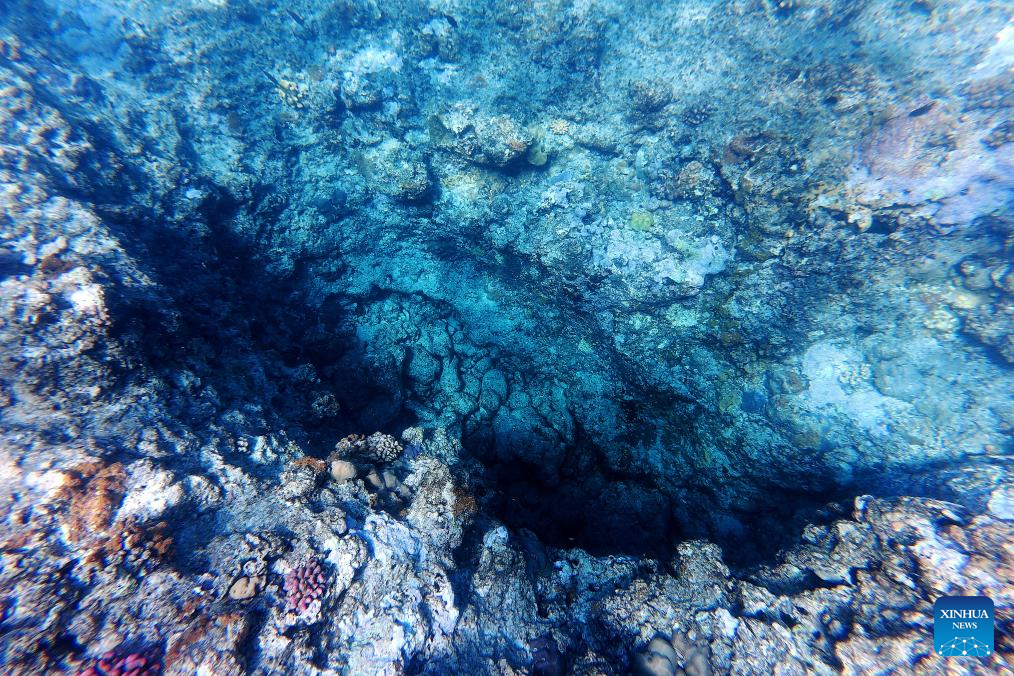
This photo taken on May 3, 2026 shows underwater scenery in the territorial waters of China's Huangyan Dao in the South China Sea.
Huangyan Dao is located in the Zhongsha Islands and represents a typical coral atoll. Its shape approximates an isosceles right triangle.
China announced in September 2025 its approval to establish the Huangyan Dao National Nature Reserve in a necessary measure to protect its coral reef ecosystem.
The national nature reserve is home to 135 species of hermatypic corals, which belong to 36 genera and 13 families, according to a survey report released by the South China Sea Ecological Center of the Ministry of Natural Resources, together with relevant units and scientific innovation platforms. (Xinhua/Chen Bin)
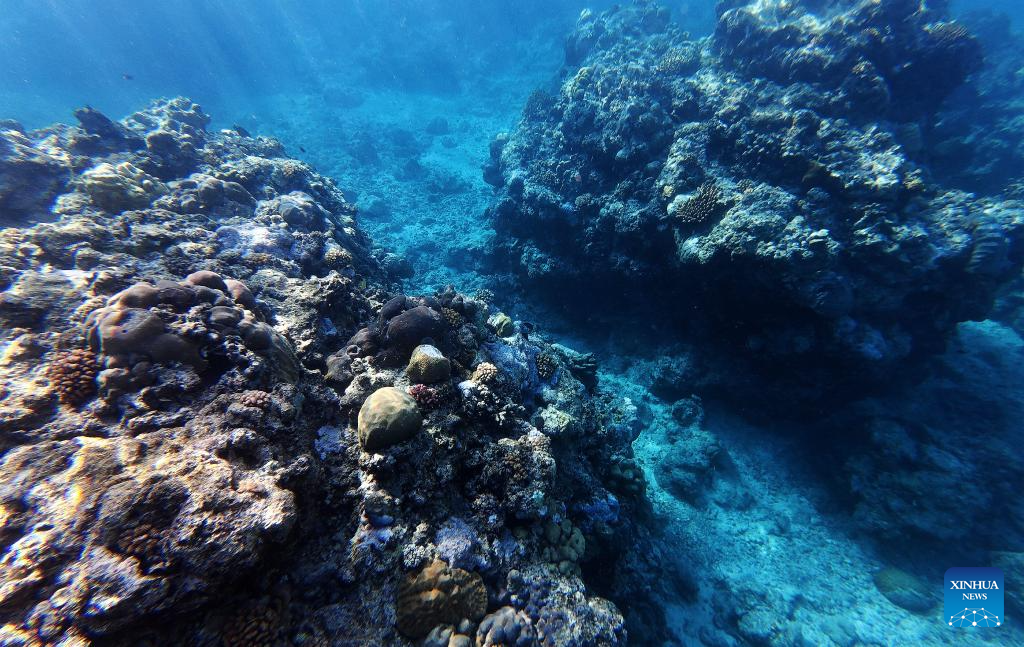
This photo taken on May 7, 2026 shows underwater scenery in the territorial waters of China's Huangyan Dao in the South China Sea.
Huangyan Dao is located in the Zhongsha Islands and represents a typical coral atoll. Its shape approximates an isosceles right triangle.
China announced in September 2025 its approval to establish the Huangyan Dao National Nature Reserve in a necessary measure to protect its coral reef ecosystem.
The national nature reserve is home to 135 species of hermatypic corals, which belong to 36 genera and 13 families, according to a survey report released by the South China Sea Ecological Center of the Ministry of Natural Resources, together with relevant units and scientific innovation platforms. (Xinhua/Chen Bin)
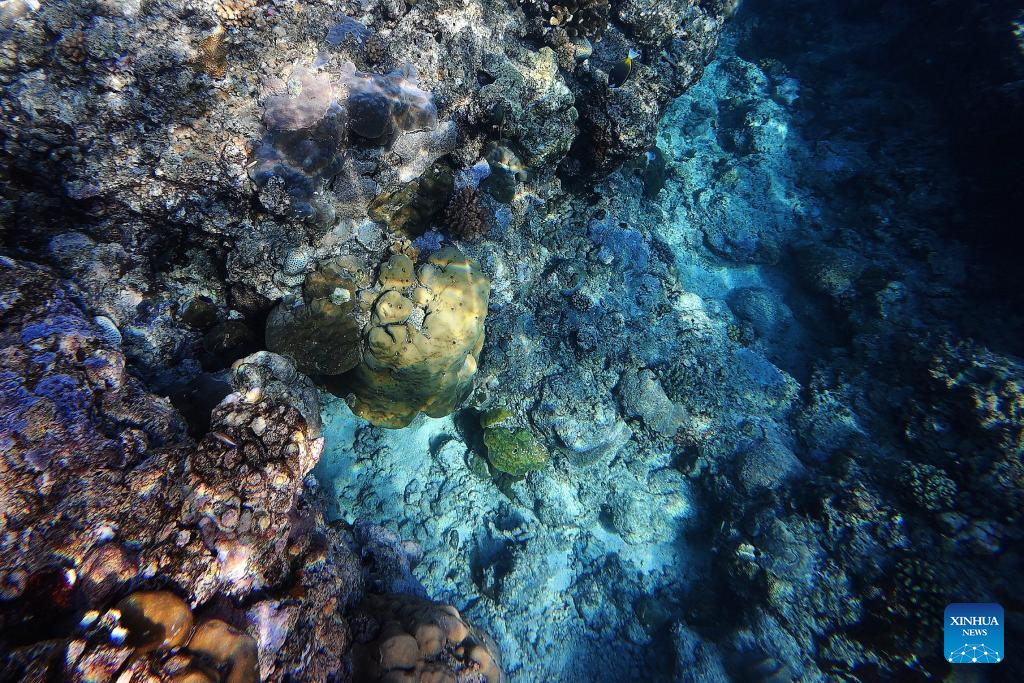
This photo taken on May 7, 2026 shows underwater scenery in the territorial waters of China's Huangyan Dao in the South China Sea.
Huangyan Dao is located in the Zhongsha Islands and represents a typical coral atoll. Its shape approximates an isosceles right triangle.
China announced in September 2025 its approval to establish the Huangyan Dao National Nature Reserve in a necessary measure to protect its coral reef ecosystem.
The national nature reserve is home to 135 species of hermatypic corals, which belong to 36 genera and 13 families, according to a survey report released by the South China Sea Ecological Center of the Ministry of Natural Resources, together with relevant units and scientific innovation platforms. (Xinhua/Chen Bin)
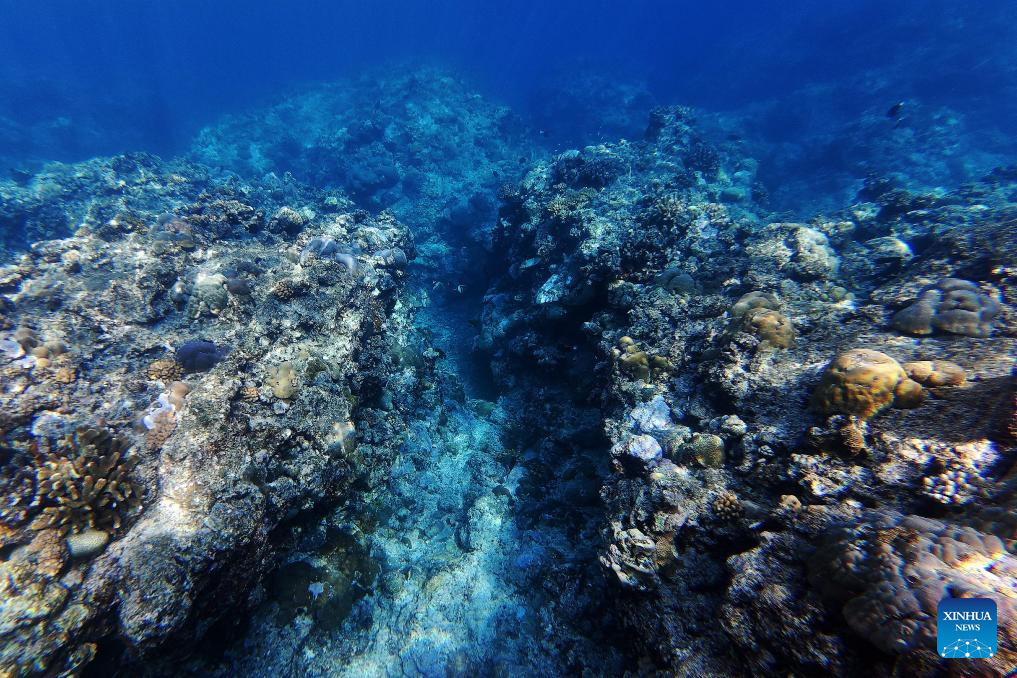
This photo taken on May 7, 2026 shows underwater scenery in the territorial waters of China's Huangyan Dao in the South China Sea.
Huangyan Dao is located in the Zhongsha Islands and represents a typical coral atoll. Its shape approximates an isosceles right triangle.
China announced in September 2025 its approval to establish the Huangyan Dao National Nature Reserve in a necessary measure to protect its coral reef ecosystem.
The national nature reserve is home to 135 species of hermatypic corals, which belong to 36 genera and 13 families, according to a survey report released by the South China Sea Ecological Center of the Ministry of Natural Resources, together with relevant units and scientific innovation platforms. (Xinhua/Chen Bin)


