BEIJING, May 17 (Xinhua) -- The Temple of Heaven in the heart of Beijing has long stood as a symbol of the ancient Chinese belief in harmony between heaven and earth.
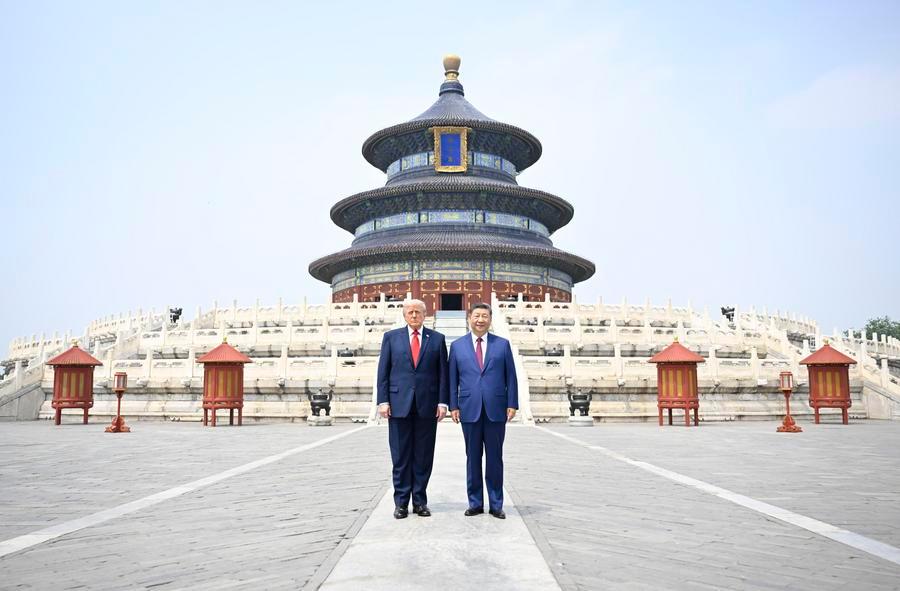
Chinese President Xi Jinping and U.S. President Donald Trump on Thursday visited the more than 600-year-old architectural complex. Trump concluded his state visit to China and departed for Washington on Friday.
During their visit to the Temple of Heaven, Xi explained to Trump that in ancient times, state rituals were held in the temple, where then Chinese rulers prayed for national prosperity, social harmony, and favorable weather for good harvests.
The temple symbolizes the traditional Chinese philosophy of "Hehe" -- meaning peace, harmony and coexistence. Xi has often introduced foreign leaders to traditional Chinese culture, underscoring his deep appreciation for China's cultural heritage.
In his view, the "Hehe" philosophy embodies one of the essences of the remarkable culture created by Chinese ancestors. These values are also seen as key to fostering a stable and constructive China-U.S. relationship in the years ahead.
AN ETHOS OF PEACE
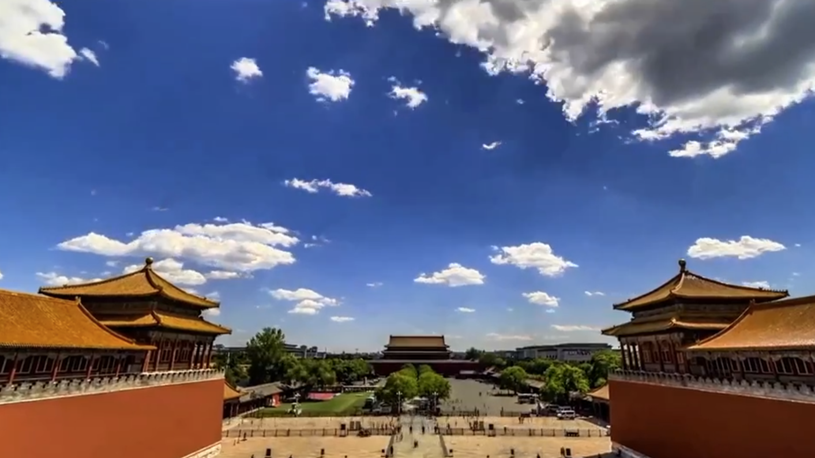
The Temple of Heaven is an important landmark near the southern end of the Beijing Central Axis. Back in November 2017, during Trump's first state visit to China, Xi accompanied him on a tour of the Forbidden City, another historic site along the axis.
The three main halls inside the ancient imperial palace complex -- the Hall of Supreme Harmony, the Hall of Central Harmony and the Hall of Preserving Harmony -- all bear the Chinese character "He," reflecting the Chinese people's longstanding aspiration for peace and harmony.
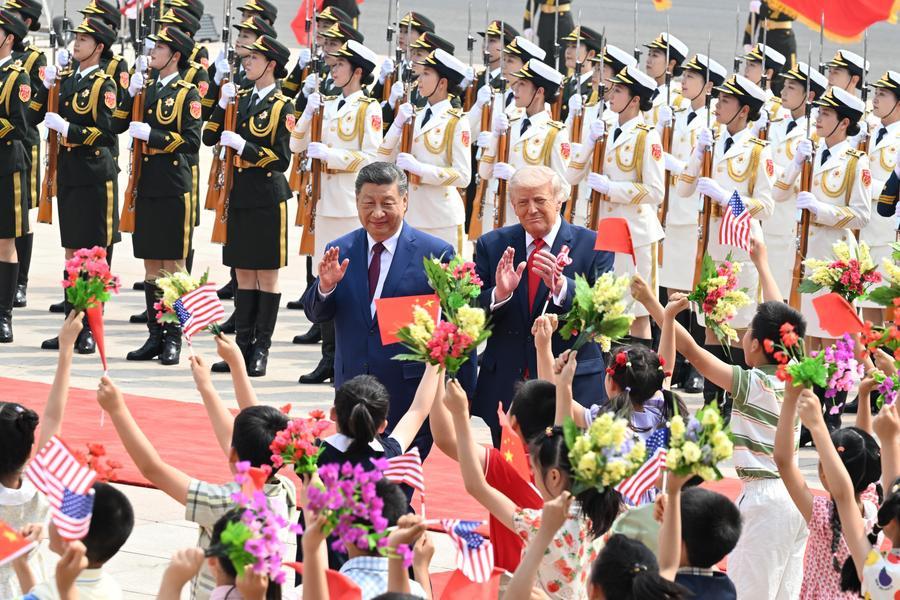
Standing inside the Temple of Heaven with Xi on Thursday, Trump said he could still recall the trip to the Forbidden City nine years ago. Admiring the exquisite artistry of classical Chinese architecture and the richness of traditional Chinese culture, he described the Temple of Heaven as "great" and "incredible."
Over the years, drawing on China's ancient wisdom to convey the country's commitment to peace has been a recurring feature of Xi's diplomatic engagements.
Peace is a core value deeply rooted in Chinese civilization. "Peace, concord and harmony are ideas the Chinese nation has pursued and carried forward for more than 5,000 years," Xi once said. "The Chinese nation does not carry aggressive or hegemonic traits in its genes."
Opening his talks with Trump in the Great Hall of the People on Thursday, Xi raised the question of whether China and the United States can overcome the Thucydides Trap and create a new paradigm of major-country relations.
For Xi, both China and the United States stand to gain from cooperation and lose from confrontation, and the two countries should be partners rather than rivals.
At times, Xi has drawn on the wisdom of Chinese classics in his exchanges with U.S. officials to underscore his view on prudence in warfare.
"It has long been known that the real experts on military affairs do not want to employ military means to solve issues," he quoted a Chinese aphorism when meeting with then U.S. Secretary of Defense James Mattis in Beijing in 2018.
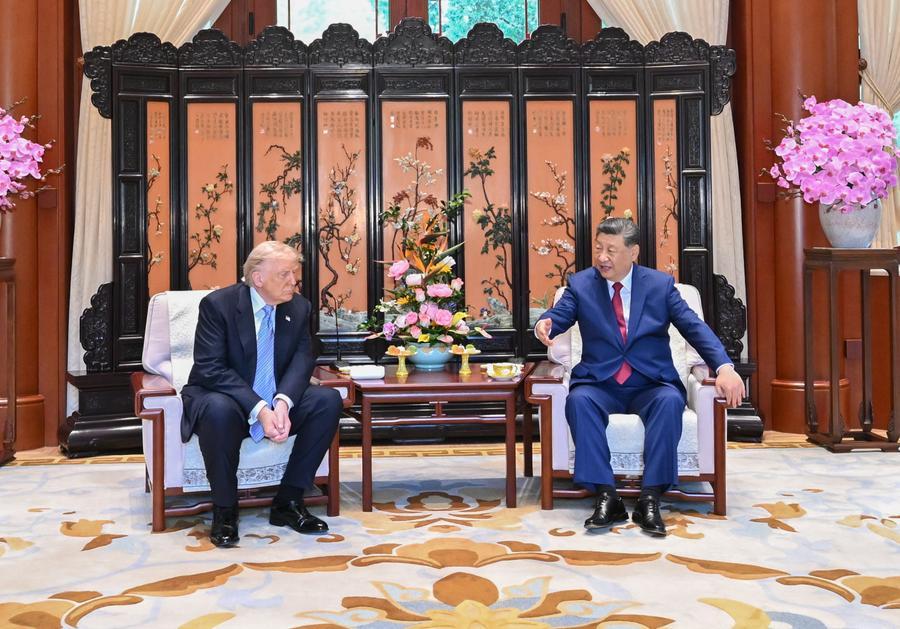
As Xi and Trump met for their summit, the world watched closely to see whether the two major countries could find the right path toward peaceful coexistence -- a question with profound implications for global peace and stability.
During the just-concluded visit, the two presidents agreed on a new vision for the world's most important bilateral relationship: building "a constructive China-U.S. relationship of strategic stability." The initiative is hailed as the most important political consensus reached by the two leaders during their summit.
Sourabh Gupta, a resident senior fellow at the Institute for China-America Studies, said this new positioning of ties could shape the bilateral relationship -- and its global and regional implications -- for years to come.
"The hope is ... that common interests will outweigh differences, and that these differences will be managed carefully with an emphasis on maintaining peace and stability," he said.■