Tajikistan and China are committed to further deepening cooperation in all fields, consolidating good-neighborly and friendly relations, and promoting common development and prosperity, said Tajik President Emomali Rahmon.
DUSHANBE, May 11 (Xinhua) -- Tajikistan and China have steadily expanded cooperation across various fields in recent years, with bilateral relations scaling new historical heights, Tajik President Emomali Rahmon has said.
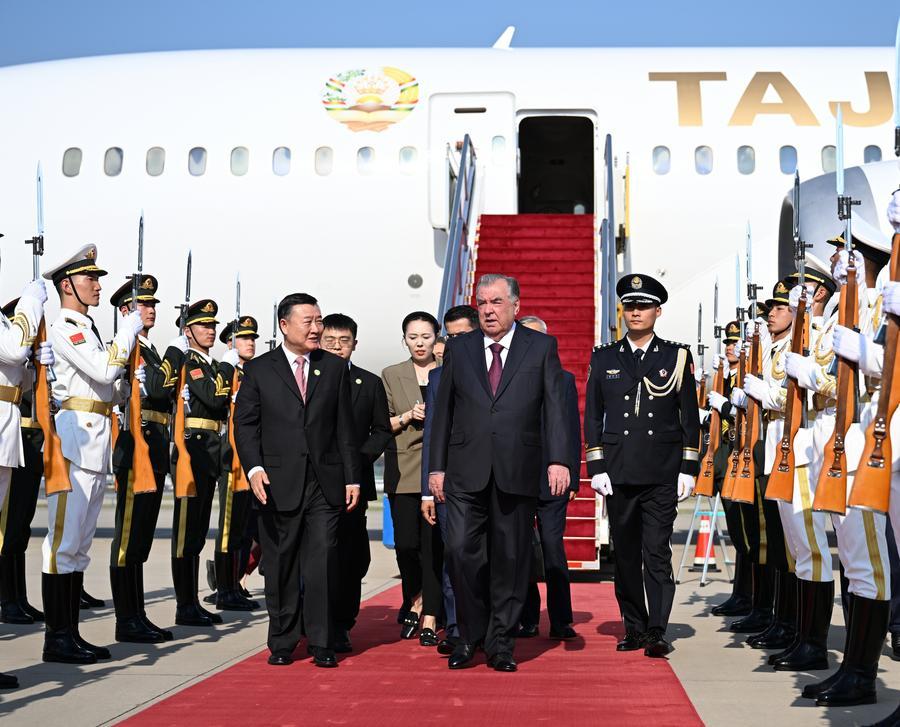
Rahmon made the remarks in an interview with Xinhua in Dushanbe on Saturday ahead of his state visit to China at the invitation of Chinese President Xi Jinping.
China is not only a close neighbor of Tajikistan, but also a strategic partner, he said, noting that over the more than 30 years since the establishment of diplomatic ties, the two countries have built a relationship of profound friendship and mutual trust.
The two sides have consistently strengthened mutual political trust and mutually beneficial cooperation in order to effectively respond to challenges and threats facing regional security and sustainable development, he added.
Bilateral relations have flourished in recent years, with the two countries maintaining close exchanges at all levels, particularly the highest, Rahmon said, adding that the Tajik side highly values the important outcomes of President Xi's state visit to Tajikistan in July 2024, which has ushered in a new chapter for bilateral friendship.
Bilateral ties have been elevated to a new historical level with the signing of the joint statement announcing the establishment of China-Tajikistan comprehensive strategic cooperative partnership in the new era, he said.
Expressing satisfaction with the high degree of mutual trust and the constructive dialogue mechanism between the two states, Rahmon hailed the positive results achieved in bilateral cooperation in political, diplomatic, economic, trade and people-to-people sectors.
He said that both sides are committed to further deepening cooperation in all fields, consolidating good-neighborly and friendly relations, and promoting common development and prosperity.
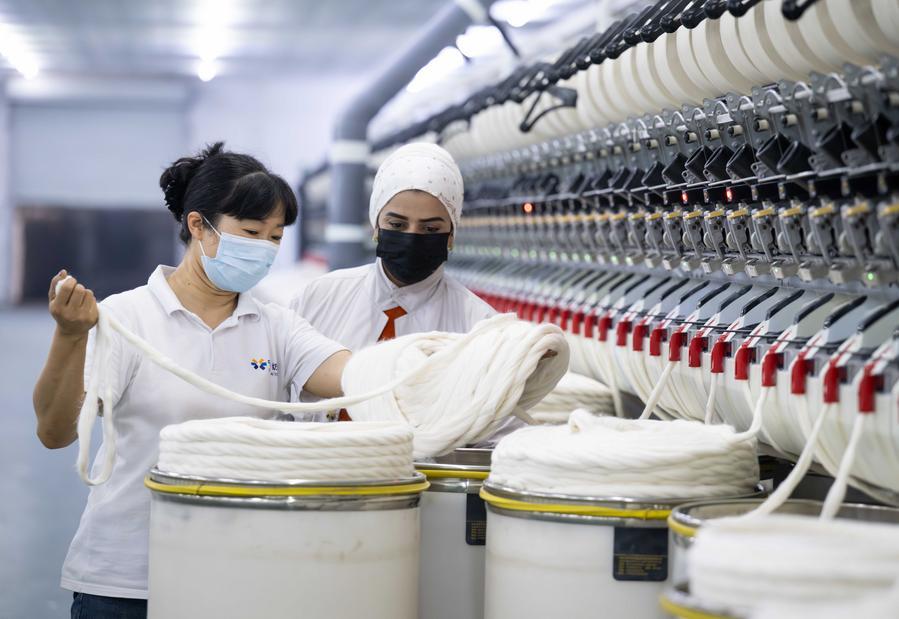
Regarding the Belt and Road Initiative (BRI), Rahmon said the initiative has enhanced mutual trust and deepened mutually beneficial cooperation.
The Belt and Road cooperation has opened a brand-new chapter in the history of Tajikistan-China relations, enriched bilateral cooperation and delivered numerous practical results, he said.
Within this framework, a series of major infrastructure projects are being steadily advanced across Tajikistan, he said.
Modern highways, tunnels and energy facilities have been built, not only strengthening connectivity among different regions of Tajikistan, but also laying the foundation for the country to become a regional transport hub and logistics center, said the Tajik president.
Cooperation under the BRI will further boost investment growth, generate jobs, drive industrial development and bring in advanced technologies, helping Tajikistan achieve its strategic goals of improving people's well-being and raising their living standards, said Rahmon.
He said the Tajik side is willing to continue actively participating in the Belt and Road cooperation to contribute to regional stability, deeper economic ties and shared prosperity.
Regarding the current international situation, Rahmon noted that the world today is confronted with a complex landscape marked by increasing global conflicts, escalating geopolitical tensions, and intertwined traditional and non-traditional security challenges.
Against this backdrop, instability and uncertainty continue to mount across the globe, with countries worldwide facing multiple threats spanning security, socioeconomic and other fields, he said.
To address common challenges, it has become increasingly important to strengthen coordinated action, enhance mutual trust and conduct constructive dialogue aimed at ensuring peace, stability and sustainable development, he added.
And the concept of building a community with a shared future for humanity, proposed by China, is of important practical significance in the context, he said.
Rahmon stressed that the Tajik side has always called for peacefully resolving all disputes and conflicts in accordance with international law, while prioritizing peace, stability and sustainable development.
Having experienced civil war, the Tajik people attach even greater value to peace and stability, he said.
Rahmon said under the current international circumstances, dialogue among civilizations based on tolerance, mutual respect and the preservation of national values carries special significance.

The Tajik side highly values cultural and people-to-people exchanges with China, viewing them as an important cornerstone for consolidating traditional friendship and promoting mutual understanding between the peoples, Rahmon said.
In recent years, more and more young people in Tajikistan have been learning Chinese, while Confucius Institutes have played a positive role in promoting people-to-people connectivity and enhancing mutual understanding, he said.
At the same time, cooperation projects such as Luban Workshops have helped Tajikistan cultivate highly qualified talent and promote the dissemination of advanced knowledge and technology, becoming successful examples of bilateral people-to-people cooperation, he said.
Rahmon said around 6,000 young Tajiks are currently studying in China.
Meanwhile, Tajikistan is also actively creating favorable conditions to promote the development of Chinese language and culture education, providing important support for students to better understand China's language, culture, history and traditions, he said.
Rahmon expressed appreciation for scholarship programs provided by China, saying they have created valuable opportunities for young Tajiks.
He expressed the hope that the two sides will further deepen cooperation in innovation, high technology, healthcare and tourism, thus consolidating the social foundation for bilateral relations.
This year marks the 25th anniversary of the Shanghai Cooperation Organization (SCO). Rahmon said the SCO has become an important transregional organization and an active participant in international affairs.
In its development process, the Shanghai Spirit has provided important conceptual guidance for building a new type of international relations and played a positive role in addressing various challenges in the 21st century, he said.
Since its establishment, the SCO has achieved remarkable results in many fields, Rahmon noted.
Thanks to close and effective cooperation among relevant authorities of member states in combating terrorism, extremism and separatism, as well as drug trafficking, transnational crime and cyber threats, the SCO region has maintained relative stability, he said.
Trade and investment flows among member states have also shown steady year-on-year growth, Rahmon said, noting that cooperation and connectivity in transport, energy, industry and agriculture continue to deepen.
At the same time, member states attach great importance to cooperation in high-tech fields, including the digital economy and green development.
In the humanitarian field, a series of diverse programs and activities covering culture, education, science, sports and tourism are being carried out in an orderly manner, he said.
In Rahmon's view, the international prestige of the SCO is steadily growing, while its members, dialogue partners, and countries and organizations interested in cooperation with it continue to increase.
China, one of the founding members of the SCO, plays an important role in promoting the organization's development and enhancing its international influence, Rahmon said.
Tajikistan highly values the various initiatives proposed by China to expand multi-field cooperation within the SCO framework, he said.
In this regard, President Xi's firm support for the work of the SCO has continued to play an important role, Rahmon said, adding that these supports aim to strengthen good-neighborly friendship and constructive interactions among member states and enhance the positive role of the SCO in the region and the world. ■