* For decades, admission to China's established elite universities has been the main goal for many students.
* Around 10 newly founded research-oriented universities are gaining traction with an alternative formula: combining academic study and hands-on training, and bringing students to the frontier of research.
* China's education road map released in June this year outlines plans to set up more such universities between 2026 and 2030.
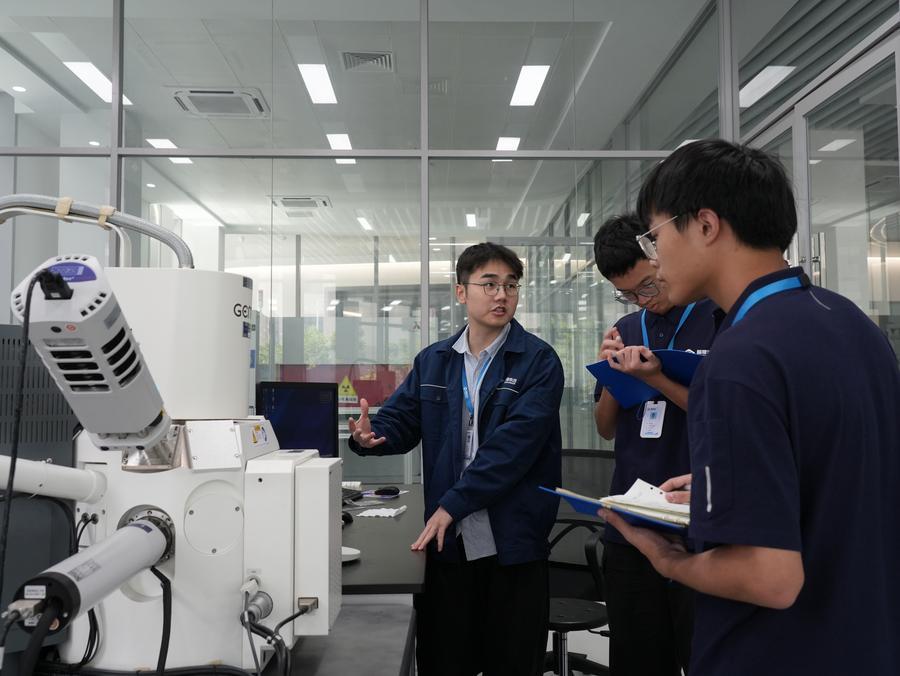
FUZHOU/HANGZHOU, Nov. 29 (Xinhua) -- Unlike many Chinese university students who choose to unwind after a semester of lectures and exams, sophomore Zhan Yutao spent his summer vacation in a factory. Each morning he attended classes, and in the afternoons he gained hands-on experience on the workshop floor.
Zhan studies at Fuyao University of Science and Technology in Fuzhou, east China's Fujian Province. Still a young institution, it has only welcomed its second intake of undergraduate students, with around 150 undergraduates in total.
"When I first learned about Programmable Logic Controllers from textbooks, I thought I had grasped the concept," Zhan recalled. "But standing before high-speed production lines and the massive streams of real-time data they generate, I realized theory is merely a map -- the actual road conditions are far more complicated."
Zhan's classmates were offered a rich array of summer opportunities as well: factory-based learning, joining their supervisors' research teams, or taking part in short-term overseas training. Integrating academic coursework with frontline practical training sits at the heart of Fuyao's educational model.
For decades, admission to China's established elite universities has been the main goal for many students. Around 10 newly founded research-oriented universities are gaining traction with an alternative formula: combining academic study and hands-on training, and bringing students to the frontier of research.
LEARNING ON THE FRONT LINE
Established in 2025, Fuyao University of Science and Technology is a private institution founded by Cao Dewang, chairman of Fuyao Glass Industry Group Co., Ltd., with an investment of 10 billion yuan (about 1.5 billion U.S. dollars).
Through collaborations with enterprises and institutes such as Hisense, SERES, FAW Hongqi and the National Innovation Center of High Speed Train, the university has launched nine undergraduate programs so far, including intelligent manufacturing engineering, artificial intelligence, future robotics, digital economy and biological science, which are highly consistent with strategic emerging industries in China.
Wang Shuguo, the university's president, said each student is assigned an academic mentor, a scientific research mentor, and an enterprise mentor to deliver tailored, refined training.
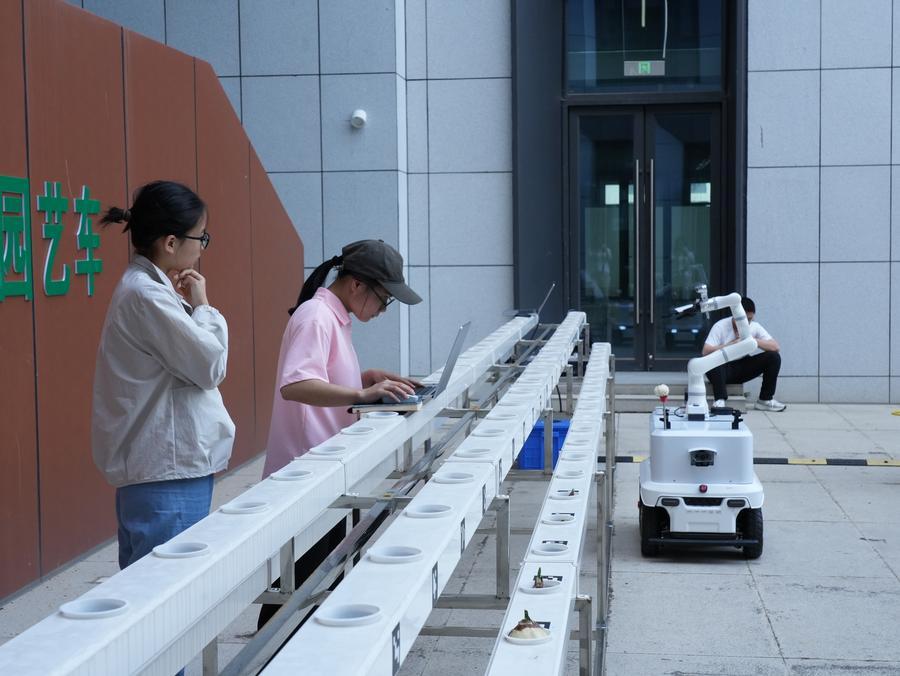
Rather than an "ivory tower," he said, the institution aims to "expose students to the most cutting-edge technologies in the industry while they are still on campus and nurture their practical abilities in a place with 'the sound of gunfire'," so that they could seize the opportunity in today's "new technological revolution."
Unlike most Chinese universities where students declare a major upon entry, Fuyao allows students to explore different fields before settling on a specialization.
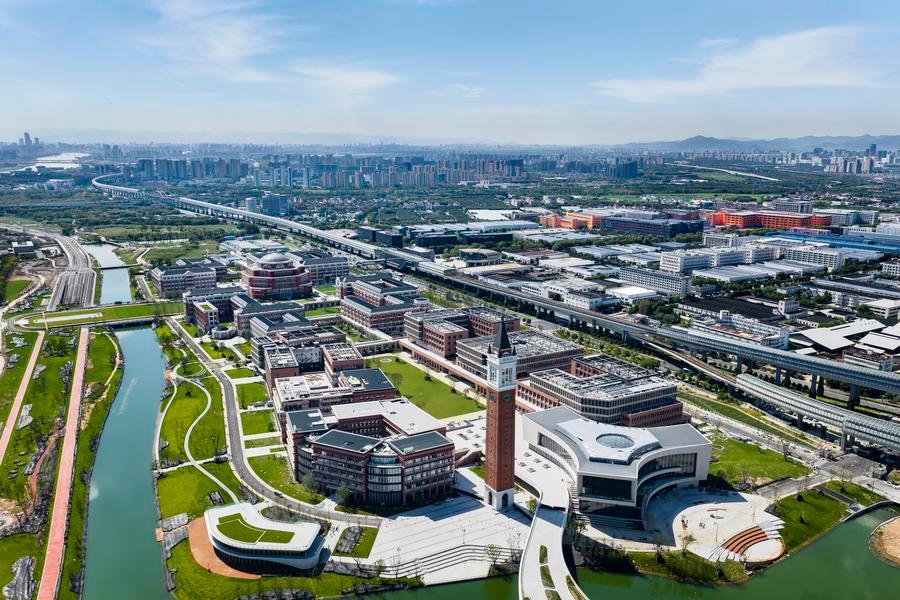
Eastern Institute of Technology (EIT) in Ningbo, Zhejiang Province, follows a similar trailblazing model. A pioneer in China's innovation-driven development, EIT also avoids locking freshmen into fixed majors at admission. During their first year, students receive general education to strengthen their foundation in mathematics, physics and artificial intelligence literacy.
Specialized education is provided in the following three years, but students retain the flexibility to change their majors.
Founded in 2025, the university runs a paid internship scheme, encouraging undergraduates to earn credits through practical work across all four years of their degree.
An executive at BTD Technology, an educational partner of EIT, said that he initially had concerns about allowing freshmen to step directly into research and development roles.
"I set a high bar: they should at least be at the level of a junior," he said. "Their performance, however, exceeded all my expectations. What we pay them is an investment in the future."
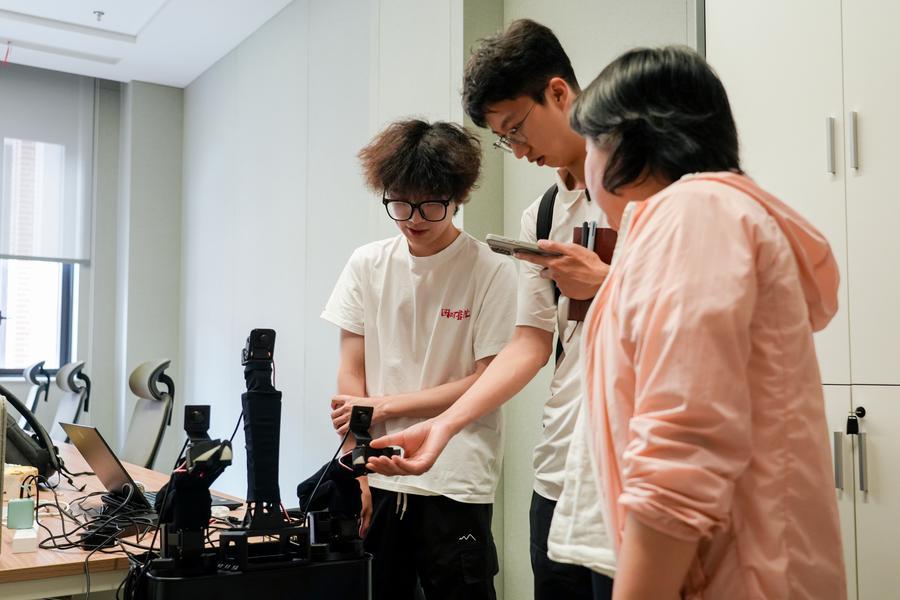
Zhao Wanqi, a freshman currently interning at an enterprise, said she has benefited enormously. "From trying to understand the system and verifying data to finally being able to write automated conversion scripts, I have become more logical, organized and confident when presenting ideas back on campus," she said.
RESEARCH AT THE CUTTING EDGE
These emerging research-focused institutions mostly concentrate on science and engineering, with programs focused on fields aligned with the country's strategic priorities. Against a backdrop of rapid advances in science, technology and industry, as China searches for new ways to cultivate talent and pursue original research, they are testing fresh approaches to university governance, disciplinary design and talent development.
Professor Chen Xingde, from the Institute of Education at Xiamen University, believes the emergence of such research-oriented universities signals an evolution in how higher education connects with the economy and society. The old model of one-way technology transfer is giving way to collaborative knowledge creation and joint innovation.
"These reforms seek to narrow the gaps between different disciplines, between students and the frontiers of knowledge, and between universities and the frontlines of social innovation," he said.
"Compared with traditional comprehensive universities, new research-oriented universities adopt a small but specialized route. They do not chase broad, all-encompassing disciplinary portfolios," said Yang Jie, an official with the Shanghai Municipal Education Commission.
ShanghaiTech University offers one example of this approach. According to Han Fei, director of its undergraduate admissions office, the student-to-faculty ratio stands at 4:1, ensuring every student receives sufficient attention and personalized development support.
Westlake University, China's first university of this new research type, was established in October 2018. Shi Yigong, a distinguished biophysicist and academician of the Chinese Academy of Sciences, was appointed as the first president of Westlake University.
It aims to rank among the world's top research institutes, focusing on basic research in natural sciences, medicine and technology.
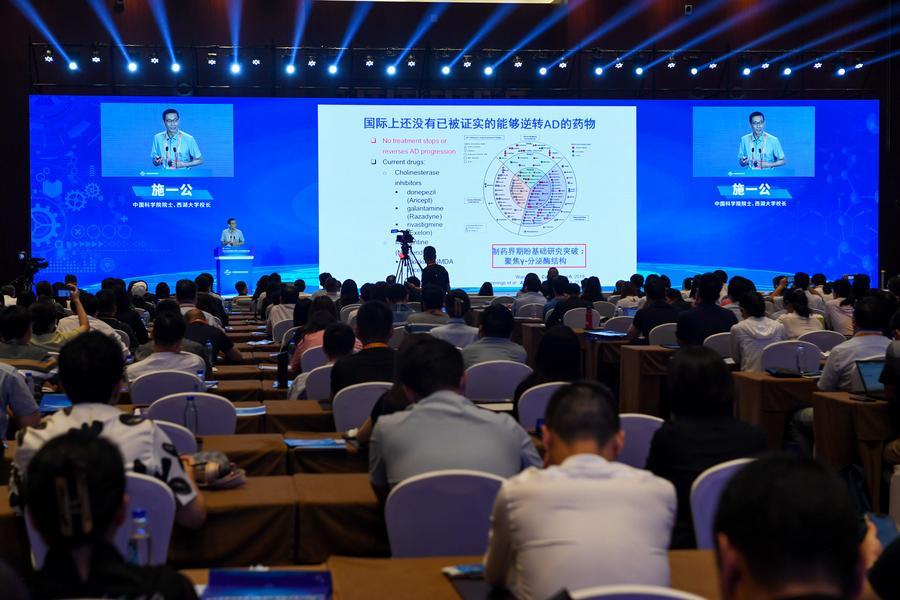
As of October, the university's faculty includes 289 doctoral supervisors, over 90 percent recruited from overseas.
Wang Rui, born in 1993, became the university's youngest doctoral supervisor when he joined its School of Engineering in 2021. His team works on perovskite, a next-generation solar material widely seen as capable of reshaping silicon-based photovoltaics.
"The school guides teams through technical validation, capital matching and industrial rollout," Wang said.
For Westlake, education and commercial translation are two sides of the same mission: train sharp thinkers and give their breakthroughs a clear path to market.
The university has established 66 research companies based on work conducted by its faculty and students. Ten of them, including Westlake Robotics, Scietrain and DiPath, are regarded as promising high-growth businesses with the potential to reach billion-dollar valuations.
Their work spans a range of technology fields, from biomedicine, artificial intelligence, robotics, new energy and advanced materials, to precision manufacturing.
China's education road map released in June this year outlines plans to set up more such universities between 2026 and 2030. Provinces like Shandong, Zhejiang, Jiangsu and Hainan have pledged support for their development in local government work reports or their 2026-2030 plans. At a press conference earlier this month, the National Development and Reform Commission expressed support for establishing such universities in regions where conditions permit.
Most of these institutions are located in the eastern and southern coastal regions, which boast robust industrial bases and abundant science and innovation resources, experts said.
While the growing appeal of these science- and engineering-focused institutions reflects the demands of a changing economy, experts caution against overheated enthusiasm for their establishment and selection.
"Cities need to assess whether they can provide stable, long-term support for the universities' original innovation," said Liu Zhentian, a professor with the Institute of Education at Xiamen University.
He also observes that this kind of university suits students who are interested in basic research, interdisciplinary frontiers and enjoy solving practical problems with their own hands. "Before making a choice, students should rationally assess their own interests and potential, and select a growth track that fits them best." ■