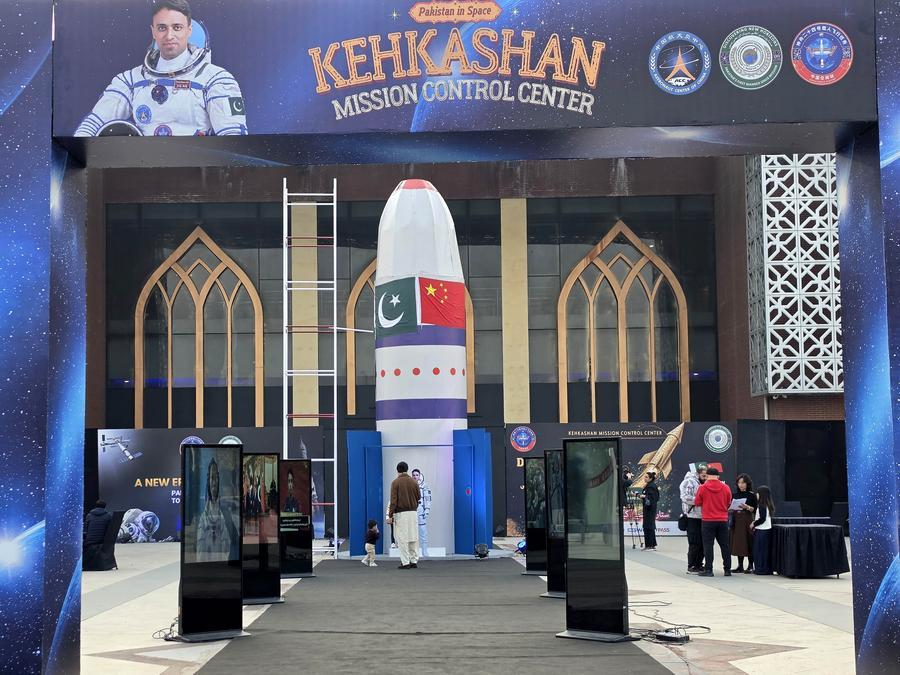
ISLAMABAD, Nov. 29 (Xinhua) -- The excitement of space exploration came alive in Pakistan's capital Islamabad this week as students, families and visitors stepped into a world of planets, spacecraft and virtual journeys beyond Earth, celebrating a landmark moment in the country's space journey.
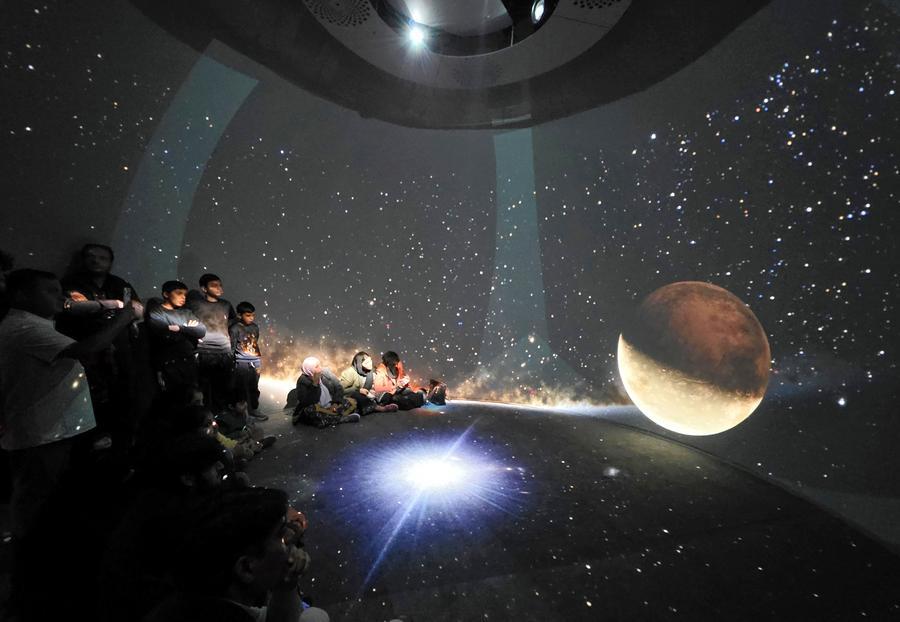
At the Pakistan-China Friendship Center in Islamabad, the "Kehkashan: Mission Control Center" offered visitors an immersive glimpse into space science through a pop-up planetarium, virtual reality experiences, telescope observation and interactive activities.
The four-day event, running from Nov. 25 to 28, was organized by Pakistan's Ministry of Information and Broadcasting to celebrate the historic participation of Pakistani astronaut Muhammad Zeeshan Ali in China's space mission and highlight the country's growing aspirations in space exploration.
Ali has been selected as a payload specialist for the Shenzhou-24 spaceflight mission, making him the first foreign astronaut to board China's Tiangong space station.
For many young visitors, the event was more than an exhibition. It was an opportunity to see a once-distant dream through their own eyes.
Zainab Arshad, a postgraduate physics student at the National University of Sciences and Technology, said she felt "overwhelmed" and proud when she learned about Ali's space mission.
"For us as Pakistanis, this is a historic moment. His dream has now become our dream," she said, adding that the exhibition allowed her to experience the excitement of space exploration in a way she had only imagined before.
She particularly enjoyed the planetarium dome, describing the simulated journey into space as fascinating.
"The moment I came here, I felt that this was what I have been dreaming about," she said.
For Arshad, Pakistan's space achievement also underscored the importance of international cooperation.
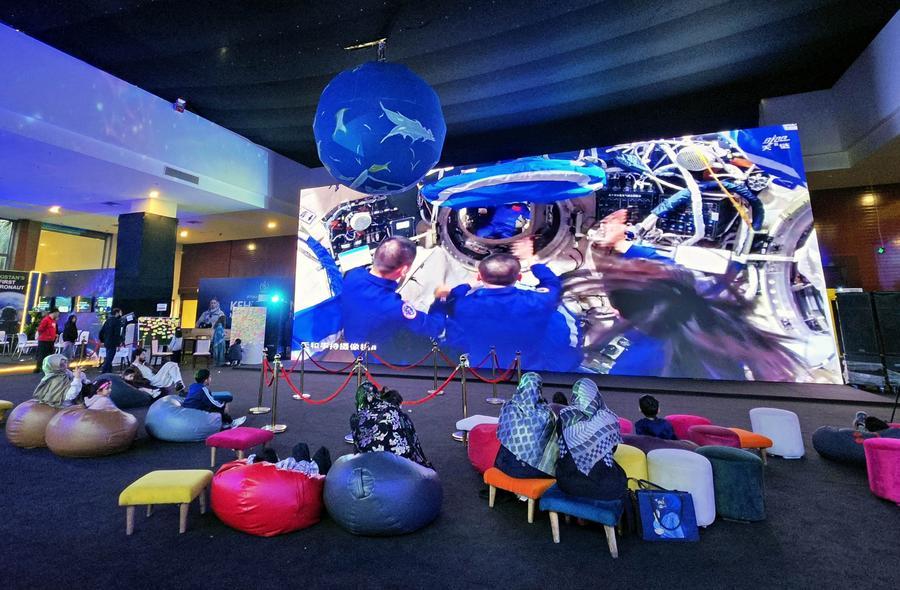
She expressed gratitude to China for providing Pakistan with an opportunity to participate in its space program and said she hoped the cooperation would encourage more Pakistani scientists and space enthusiasts to pursue research in space science.
Sidra Mumtaz, a 21-year-old undergraduate student at the International Islamic University Islamabad, said Ali's achievement has created a strong sense of pride among young Pakistanis.
"When he said he was carrying the name of Pakistan, it was a very proud moment for every Pakistani," she said.
Mumtaz said the milestone could inspire other young Pakistanis to dream of becoming astronauts and contribute to the country's scientific development.
"I hope that in the future, more students who have the same dream of going into space will get this chance," she said.
The enthusiasm was not confined to Pakistani visitors.
Mergim Tifeki, a 26-year-old visitor from Austria who has been staying in Pakistan for several months, said he learned about the exhibition after seeing a social media post about a Pakistani joining a Chinese space mission.
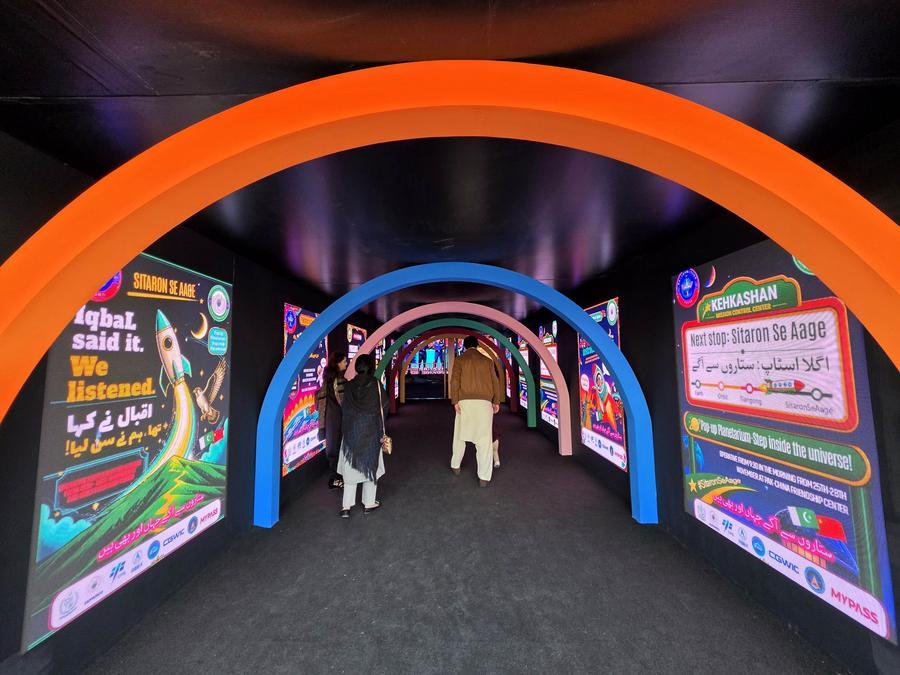
He came to the venue with friends, hoping to learn more about Pakistani space exploration and see the exhibition for himself.
I found the exhibition quite interesting and the people here are friendly, he said, adding that China has been providing opportunities to other countries to participate in their space missions and expanding international cooperation and space technology.
The event's organizers said the exhibition was designed to build wider public interest in science and space exploration.
Muhammad Waleed Khan, an official from the Ministry of Information and Broadcasting, praised China's advanced capabilities in space technology and its support for Pakistan's participation in the historic mission.
"China is a very advanced country, and it is at the forefront of space technology," Khan said, noting that Pakistan could learn greatly from China's experience and technological expertise.
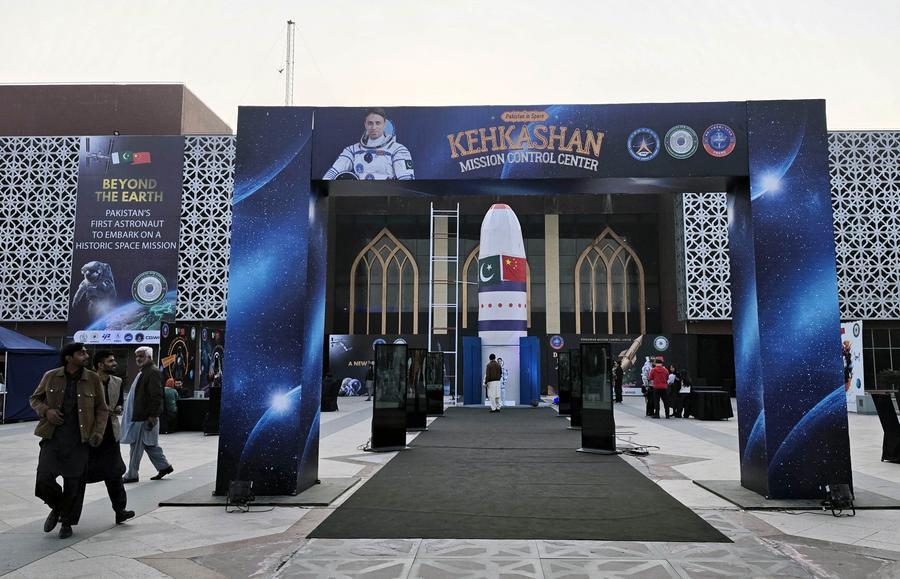
He described China's role as an important factor in enabling Pakistan to take this significant step into space exploration, saying that the milestone reflected the strength of the longstanding friendship and cooperation between Pakistan and China, which has expanded from traditional areas into science, technology and space exploration.
Khan said continued cooperation with China could help Pakistan develop its human resources, strengthen scientific capabilities and create opportunities for a new generation of Pakistani students and researchers to explore the possibilities of space.
According to officials from Pakistan's Space and Upper Atmosphere Research Commission, Ali's mission includes experiments involving biological materials and technologies designed for future space applications, highlighting the practical role of space research in areas ranging from food production to advanced materials.■