MINSK, Nov. 10 (Xinhua) -- The 7th World Media Summit bolstered collaboration and common ground among media outlets from around the world, Belarusian Telegraph Agency director-general Andrei Mokhar told Xinhua.
A strategic platform for dialogue and coordination in addressing shared challenges, the summit aims to consolidate the international media community, establish unified standards to combat misinformation, and set common editorial guidelines for outlets worldwide, Mokhar said.
According to Mokhar, the summit is a foundation for practical cross-border cooperation aimed at restoring trust in media.
"While open dialogue cannot instantly end information warfare, it is a key mechanism to break the cycle of misinformation by serving as a diplomatic corridor for media," he said.
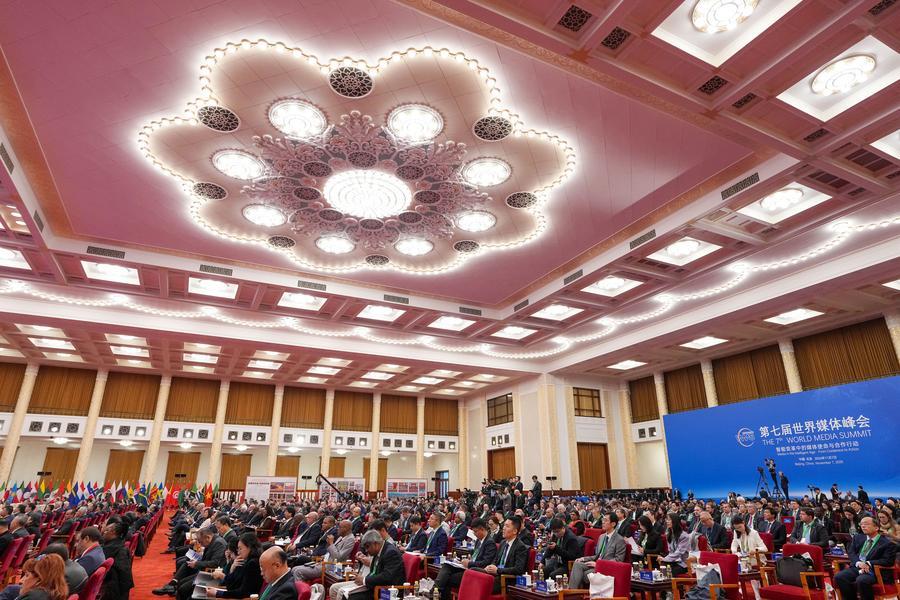
The World Media Summit, held in Beijing from Nov. 5 to 9 under the theme "Media in the Intelligent Age: From Consensus to Action," brought together about 500 representatives from nearly 330 media organizations, think tanks, government bodies and international organizations across 112 countries and regions.
As a platform to reaffirm a commitment to objective journalism, discuss responses to technological challenges, and develop joint positions on regulating artificial intelligence (AI), the summit facilitated the exchange of technologies and experience and identified areas of convergence in reporting global topics, Mokhar said.
He stressed the necessity of universal AI standards beyond national borders because technology companies evolve faster than legislation.
"A harmonized framework is essential to reducing misinformation, strengthening public trust in news, and preventing serious errors when content is produced or disseminated without proper human oversight," he said.
The overall goal is to establish common approaches and technical standards that help the media build global resilience against misinformation, Mokhar said.
Looking ahead, Mokhar hopes for substantive discussions on AI, including ensuring equal access to tools for newsrooms in different regions, marking synthetic content, and safeguarding authors' rights. He underscored the importance of setting clear "rules of the game" for IT giants driving rapid AI development to protect journalists and show readers that truth remains attainable.
Speaking of the Belarus-China media partnership, Mokhar said it is built on high trust, with practical and mutually beneficial collaboration.
"The upcoming 35th anniversary of diplomatic relations is an additional prompt for joint media projects that promote mutual understanding and a more objective global picture," he said. ■