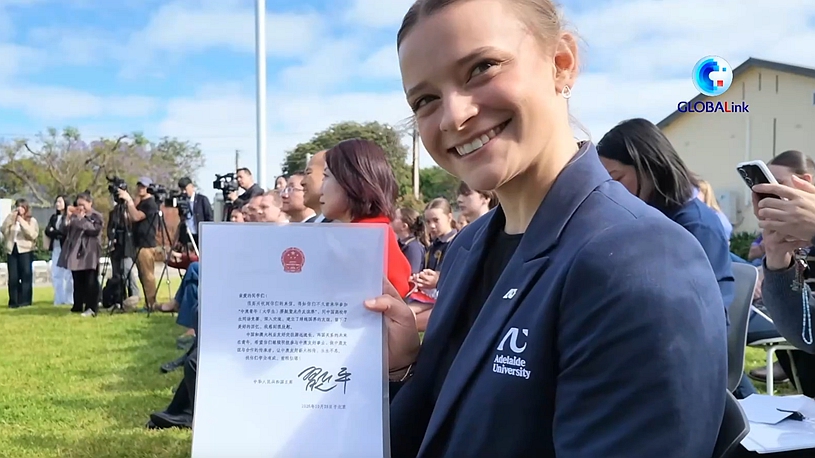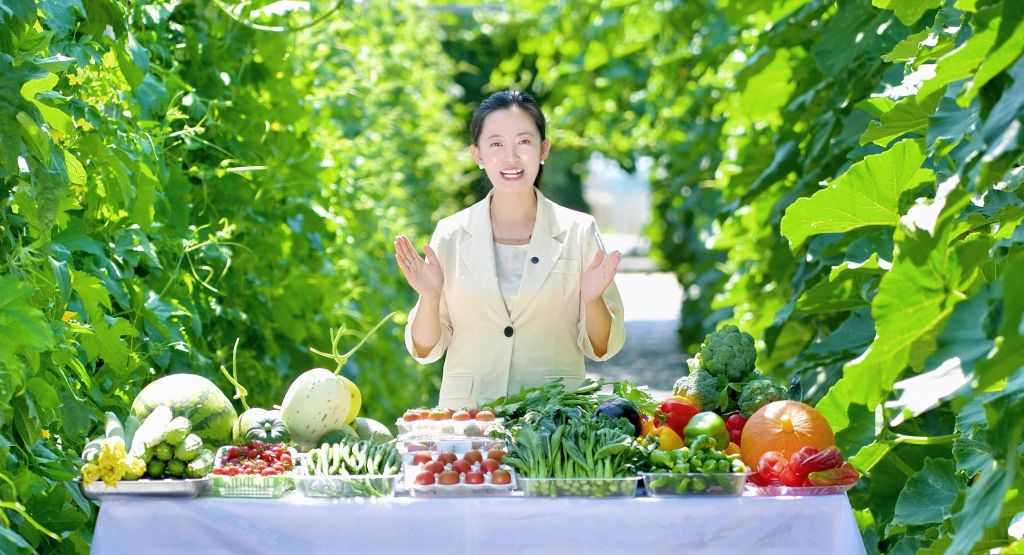
* This year's China International Import Expo has brought together 162 countries, regions and international organizations, attracted 4,142 overseas exhibitors and seen its total exhibition area exceed 440,000 square meters for the first time.
* For many overseas exhibitors, the expo is more than a six-day event. The connections established at the expo can develop into lasting business relationships, while continued engagement with the Chinese market can open up new areas of cooperation.
SHANGHAI, Nov. 9 (Xinhua) -- As tariffs rise, trade restrictions multiply and geopolitical tensions weigh on global economic ties, the case for keeping markets open has become increasingly urgent.
Against this backdrop, the ninth China International Import Expo (CIIE), which opened here on Thursday, sends a message that stands in contrast to the growing tide of protectionism: China is continuing to open its market wider and share development opportunities with the world.
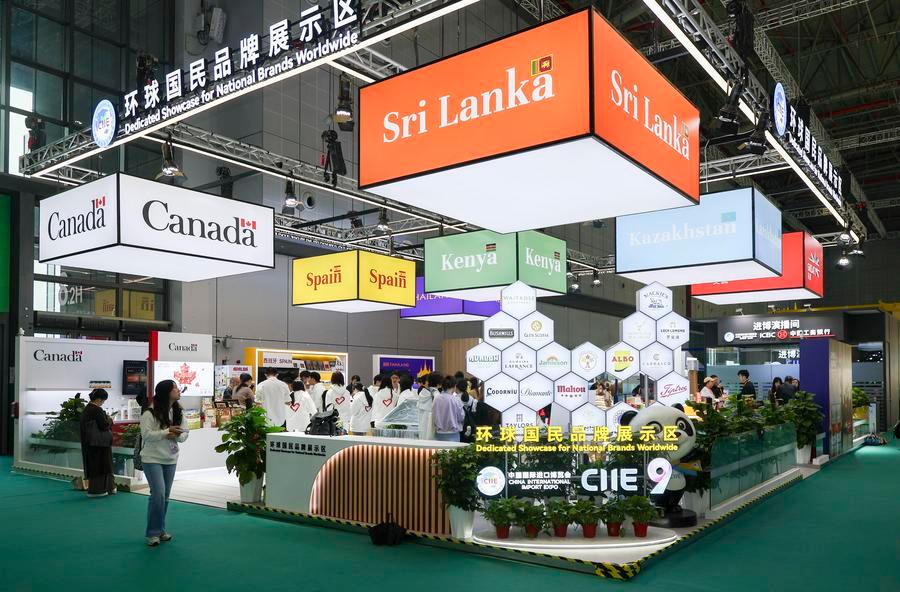
This year's expo has brought together 162 countries, regions and international organizations, attracted 4,142 overseas exhibitors and seen its total exhibition area exceed 440,000 square meters for the first time. Behind these expanding figures are businesses of different sizes and from different parts of the world, bringing products, technologies and expertise to China while seeking new markets, partners and opportunities for cooperation.
WIDER DOOR TO A VAST MARKET
At a time when some economies are raising barriers to protect domestic industries, China's decision to continue hosting an import-focused expo on an ever-expanding scale carries particular significance.
For overseas businesses, the CIIE offers a rare opportunity to meet Chinese importers, distributors, retailers and consumers in one place.
Australian dairy producer Bulla, for instance, has returned to the CIIE every year since 2019. Its participation has helped it move from limited brand recognition in China to a growing network of business relationships in retail and food services. At the 2025 expo, the company reached a direct-sourcing agreement with Chinese grocery platform Dingdong Fresh.
"It's progressing very well," Sam Zhang, who oversees international business at Bulla, said of the partnership. According to Zhang, the company's exports to China exceeded 10 million Australian dollars (6.9 million U.S. dollars) in the financial year ended June 2026.
For other companies, the expo offers a chance to introduce new products and explore untapped opportunities in the Chinese market.
Italian truffle producer Urbani Tartufi is attending the CIIE for the first time, seeking to introduce fresh truffles to Chinese consumers and explore the procedures for exports to China. The company already sells processed truffle products in the Chinese market but sees further potential in bringing its fresh produce to local consumers.
"We have high expectations for the Chinese market and hope to establish closer business ties through the expo," said Olga Urbani, the company's president.
Also making its CIIE debut is Colombia-based oil producer DAABON Group. Balachandar Selvamohan, the company's global innovation director, said company representatives had visited the previous two editions and saw the potential benefits of exhibiting, prompting the company to set up a booth this year to explore opportunities in the Chinese market.
"We see the CIIE as a platform to start discussions with customers," he told Xinhua, adding that the company had already received a number of inquiries.
TURNING MARKET ACCESS INTO SHARED OPPORTUNITIES
For developing economies, access to a large market is only the starting point. Exporters also need to find buyers, understand consumer preferences and navigate market requirements, challenges that can be particularly difficult for smaller businesses.
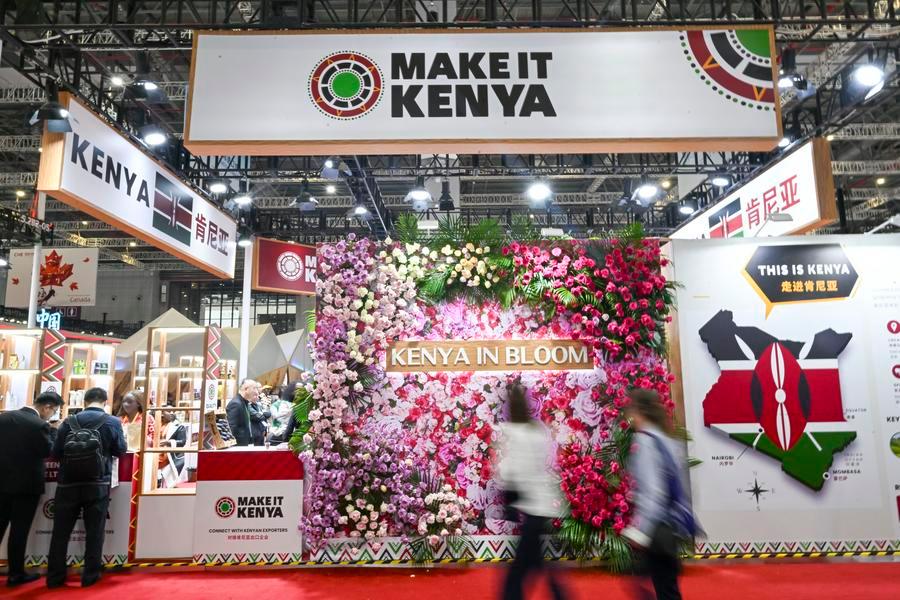
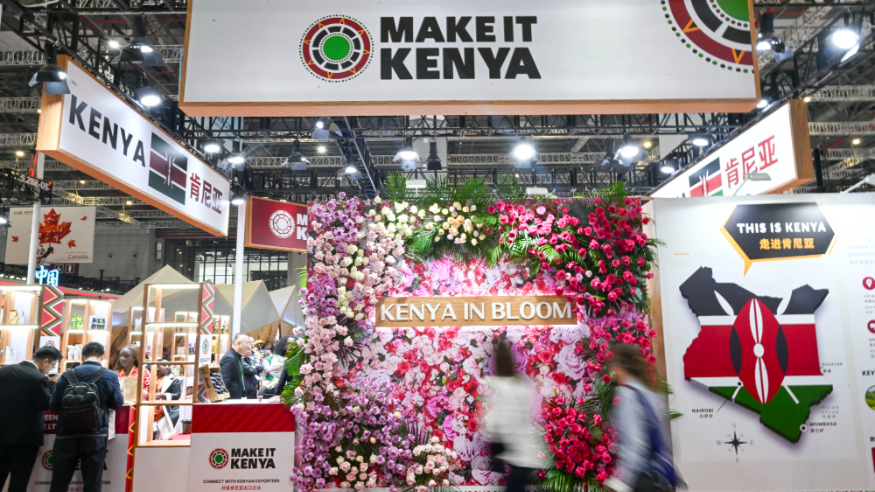
The Kenyan national pavilion is showcasing products from local exporters at this year's CIIE, as the East African country seeks to expand its presence in the Chinese market.
Dennis Mwirigi, chairman of the Kenya Export Promotion and Branding Agency, welcomed China's zero-tariff treatment, which was expanded on May 1 to cover all 53 African countries with which it has diplomatic ties, saying the policy would help boost Kenyan exports.
"The increased market uptake is certainly going to create employment," he added, noting that growing demand for Kenyan agricultural products could generate jobs in farming, processing, transportation and cold-chain logistics.
Latin American exhibitors are also seeking to turn opportunities at the CIIE into concrete business ties.
El Salvador, participating in the CIIE for the fifth time, has brought 12 entrepreneurs to Shanghai to promote products including coffee, rum, shrimp sausages and handicrafts.
Alejandro Rivas, a specialist at El Salvador's foreign ministry, said at least three of the entrepreneurs had already found Chinese importers through business exchanges during the expo.
He also cited earlier sales of Salvadoran specialty coffee and rum worth more than 50,000 U.S. dollars, highlighting the potential for the Central American country's products in the Chinese market.
For Nicaragua, the opportunities extend beyond finding buyers for its products.
At its national pavilion, visitors can sample Nicaraguan products and learn about its export offerings. Alma Hernandez Altamirano, a representative of Nicaragua's export and investment promotion authorities, said participating businesses had established contacts during the first two days of the expo for follow-up meetings and potential negotiations.
Nicaragua is also looking to China for agricultural processing machinery. According to Hernandez Altamirano, such equipment could help Nicaraguan producers increase output and lower costs while maintaining product quality, making their exports more competitive.
FROM TRADE TO DEEPER COOPERATION
For many overseas exhibitors, the CIIE is more than a six-day event. The connections established at the expo can develop into lasting business relationships, while continued engagement with the Chinese market can open up new areas of cooperation.
Attending the CIIE for the third time, Ethiopia's MSA Business Group, an exporter of agricultural products, has developed lasting business relationships through the expo. Mershaye Kurabachew, the group's export director, said she first met one of her regular Chinese sesame buyers at the CIIE and reunited with the buyer at this year's event.
Kurabachew also met potential new buyers this year, some of whom said they planned to visit the company in Ethiopia in December for further discussions.
New Zealand company Hauora New Zealand has also witnessed how continued participation can help broaden business networks. Since attending the inaugural CIIE in 2018, it has seen its business connections expand beyond traditional importers and distributors to include e-commerce retailers, smaller import firms and group-buying businesses.
Barbara Zhang, the company's general manager, said Chinese consumers have progressed from sampling products to placing online orders and making repeat purchases.
"I see it as a very positive, self-reinforcing cycle," she said.
Swedish industrial group Alfa Laval, participating in the CIIE for the sixth time, is showcasing technologies for efficient data center cooling and industrial waste heat recovery.
Belinda Lau, president of the Energy Division at Alfa Laval China, said the exhibits respond to growing demand in China for advanced thermal management solutions. She noted that China is also one of the company's key global manufacturing bases, supplying both domestic and overseas markets.
Lau said China's increasing focus on innovation and decarbonization is creating new opportunities for product development.
"We can find new demands for new products so that we know what to develop," she said.
(Video reporters: Liang Wanshan, Qiu Jingyi, Di Chun, Hong Jing; Video editors: Liang Wanshan, Zhu Cong, Zheng Xin, Hui Peipei)