According to official IEC figures released on Sunday evening, the African National Congress (ANC), led by Ramaphosa, remains the country's largest political party, securing 30.76 percent of the vote and 3,282 council seats.
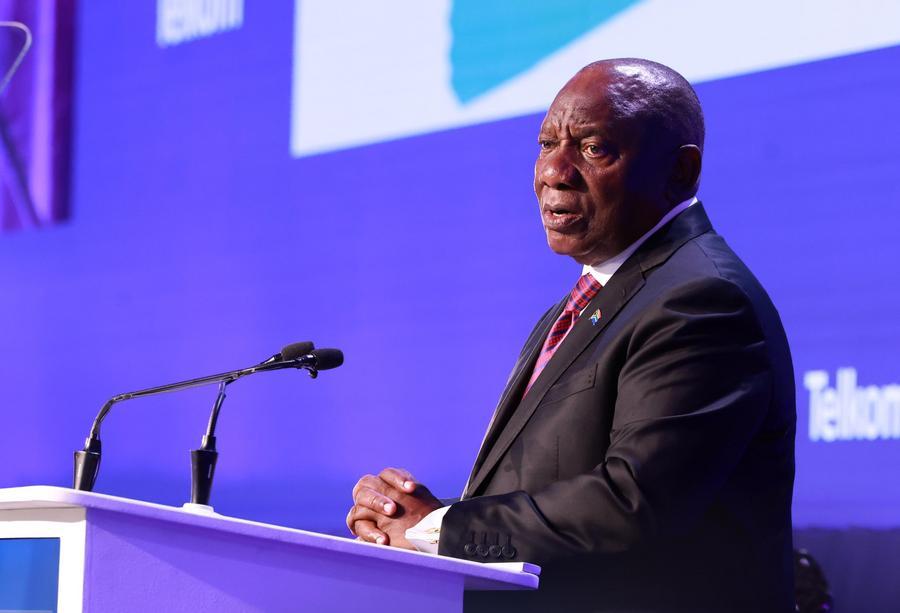
JOHANNESBURG, Nov. 9 (Xinhua) -- South African President Cyril Ramaphosa on Sunday urged political parties to prioritize service delivery and community interests over political positions as they begin negotiations to form municipal governments following the country's 2026 local government elections.
Political friction and the scramble for positions must not undermine municipal stability or delay essential services, Ramaphosa said at the Independent Electoral Commission's (IEC) Results Operations Center in Midrand, north of Johannesburg.
COALITION NEGOTIATIONS INEVITABLE
According to official IEC figures released on Sunday evening, the African National Congress (ANC), led by Ramaphosa, remains the country's largest political party, securing 30.76 percent of the vote and 3,282 council seats.
The Democratic Alliance (DA) finished second with 24.64 percent of the vote and 1,722 seats, followed by the uMkhonto weSizwe Party (MK Party) with 9.77 percent and 799 seats, the Economic Freedom Fighters (EFF) with 6.22 percent and 592 seats, and ActionSA with 5.67 percent and 320 seats.
Other political parties and independent candidates collectively accounted for 22.94 percent of the vote, securing representation across municipal councils.
The IEC reported that approximately 14.9 million voters cast their ballots, bringing the turnout to 52 percent, up 6.1 percentage points from the 2021 local government elections.
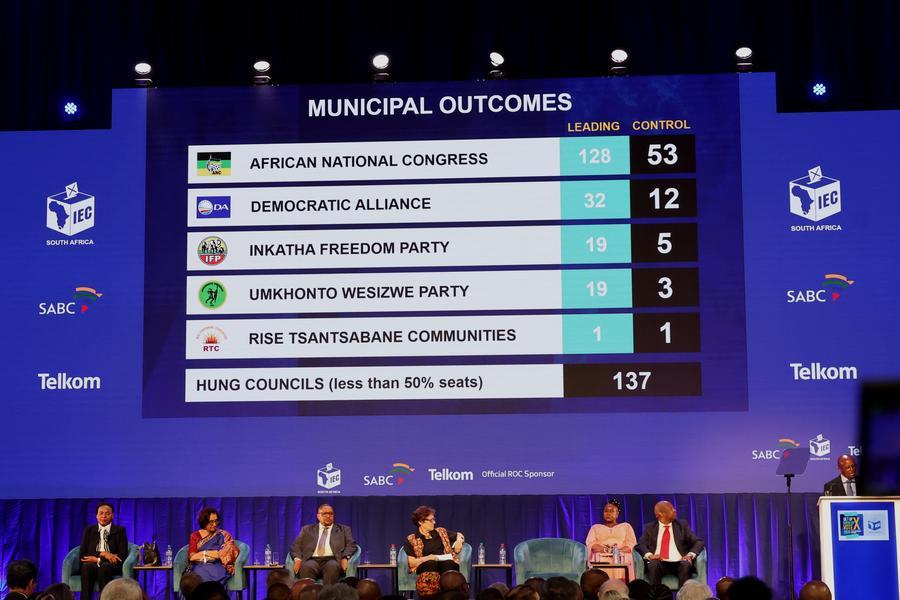
All 213 municipal councils have been finalized and declared, with 10,526 council seats contested. The ANC secured outright majorities in 53 municipalities and emerged as the leading party in 128, while the DA won outright majorities in 12 and led in 32.
In total, 74 municipal councils were won outright by a single party, while the remaining 138 were hung councils, where no party secured an absolute majority, making coalition negotiations inevitable.
In Johannesburg, the DA emerged as the largest party in the 270-seat municipal council with 91 seats, followed by the ANC with 63 and ActionSA with 43. No party reached the 136-seat threshold required for an outright majority.
SERVING THE PEOPLE
Ramaphosa said the elections were a resounding affirmation of South Africa's democratic institutions and the constitutional principle that all political authority belongs to the people.
Citing the Freedom Charter's foundational principle that "the people shall govern," he said: "The authority to govern comes from the people. It is not inherited. It is not owned by any political party. It is not the permanent possession of those who hold public office."
"The people did not cast their votes so that their representatives could spend the next five years fighting among themselves. They voted because they expect their lives to improve," he said, cautioning that coalition negotiations "must not become contests over positions, privileges or the distribution of power."
Noting that the elections took place amid severe socioeconomic challenges, including a high cost of living, rampant youth unemployment, and inadequate municipal services in many areas, Ramaphosa said that people do not judge a government only by the promises it makes or the policies it adopts. They judge a government by what actually changes in their daily lives.
Residents expect reliable water and electricity supplies, regular refuse collection, well-maintained public parks and safer streets, he added.■