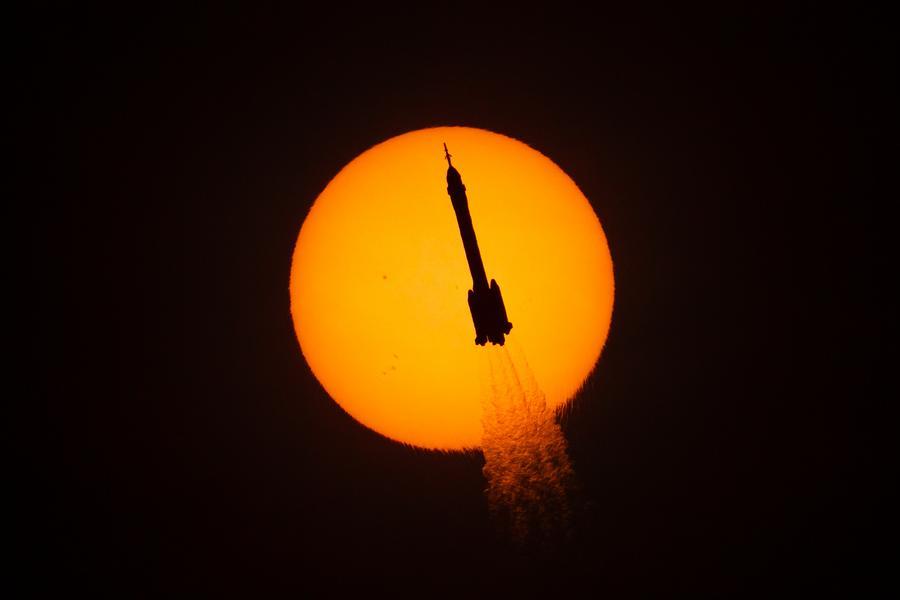
BEIJING, Oct. 21 (Xinhua) -- One of the most visible legacies of the Red Army's Long March, a roughly 12,500-km military odyssey that ended 90 years ago, may well be an active rocket family that bears the same name.
Among the world's busiest launch vehicles, China's Long March rockets have for more than half a century carried satellites, crewed spacecraft and scientific probes into orbit and beyond, helping open the country's path to space.
This name for the rocket was suggested by several pioneers of China's aerospace industry. "It meant that the development of the rockets would overcome all difficulties and achieve victory, just as the Red Army had done during the Long March," said Han Houjian, a general designer of the Long March-1 rocket, which made its maiden flight in 1970.
On April 24, 1970, the Long March-1 lifted off carrying Dongfanghong-1, China's first satellite, into orbit. Since then, this rocket family has grown into a diverse fleet of launch vehicles with increasing payload capabilities. As of October 10, 2026, it had completed 671 orbital launches.
The journey behind these Chinese rockets echoes that of the Red Army: both were marked by immense hardships, determined perseverance, and the resolve to press ahead against the odds.

In October 1934, the Communist Party of China (CPC) was forced to retreat from the Central Soviet Area in east China's Jiangxi Province and move northwest after enduring a series of encirclement campaigns by rival forces of the Kuomintang party. The CPC-led Red Army broke through enemy blockades, crossed rugged terrain, and endured fierce battles and immense hardship. Tens of thousands of soldiers lost their lives along the way.
Few people represent the connection between these two journeys better than Sun Jixian. During the Long March, Sun, as a Red Army officer, led his men across a major river under enemy fire, helping the Red Army break through a dangerous bottleneck in 1935. More than a decade later, after the founding of the People's Republic of China, he took on a different mission -- building the country's first missile and satellite launch site in the remote Gobi Desert. His team battled sandstorms, drank alkaline water, lived in tents and caves, and transferred equipment by hand across the barren landscape.
"I remember once when my father returned from the desert, he reached into his coat pocket to look for candies for me, but what he touched was a handful of rough, cold sand," recalled Sun Dongning, his 75-year-old son.
In the 1960s, when China began developing its first rocket, the country had a weak industrial base and was cut off from access to many key foreign technologies. Scientists performed calculations using hand-cranked computing machines and worked day and night in poor workshops.
China's first nuclear-powered submarine emerged from similarly difficult conditions and relied on technological self-reliance to overcome obstacles. Commissioned on Aug. 1, 1974, it was also named Long March-1. Subsequent generations of Chinese nuclear submarines have continued to carry the Long March name.
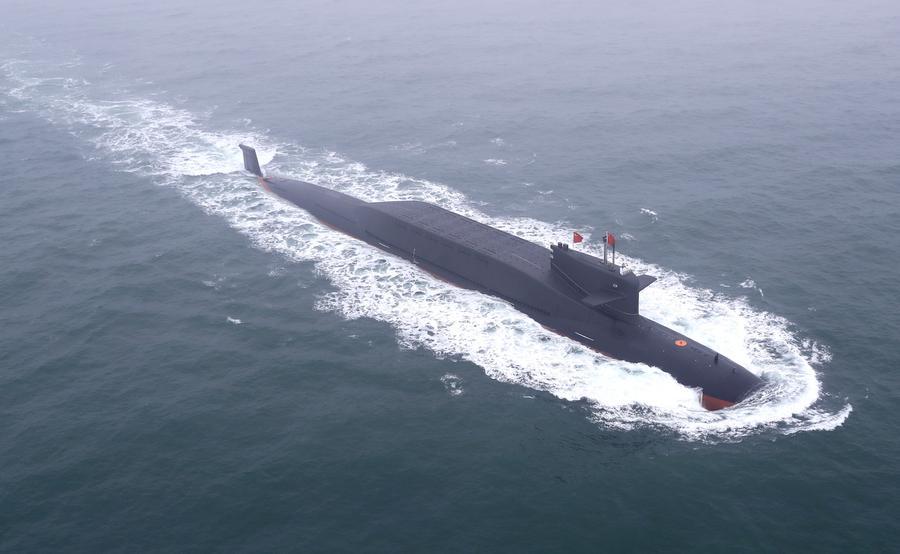
The epic trek's legacy has since spread across military and technology sectors. Naval vessels such as Zunyi and Chishui bear the names of places associated with the historic march. Loongson, a major Chinese chipmaker, also gave two generations of its chips the project codes CZ70 and CZ80 in 2006 and 2016, respectively. CZ stands for Changzheng, the Chinese name for the Long March.
For Chinese scientists and engineers, the legacy is not simply a name but a determination to persevere in facing daunting challenges, maintain faith in eventual success, and grow more resilient with every setback.
Long Lehao, a leading Chinese rocket designer, cited the launch failure of Long March-3B as an example. As the rocket's first chief designer and chief commander, Long recalled that his hair "turned white overnight."
"There was no time to think about personal honor or disgrace. I threw myself into the new battle of tracing faults," Long recalled at a recent press conference.
After 30 days and nights of continuous work, his team identified the cause of the failure. Some 551 days later, the Long March-3B successfully delivered its payloads into orbit.
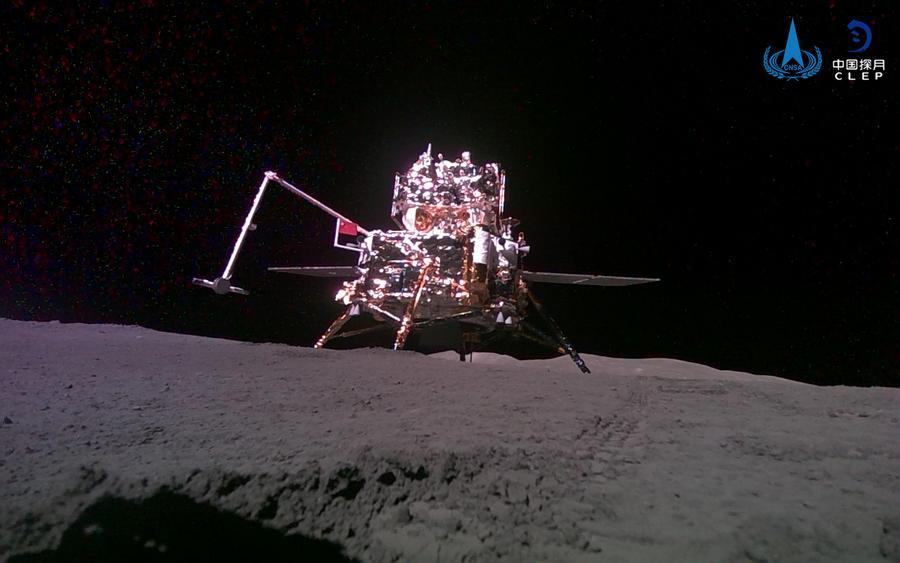
The Long March-5, designed to carry lunar and Mars probes, suffered a rare setback when its second flight failed in 2017. The failure marked the darkest chapter in this rocket's development. The research team carried out painstaking reviews and repeated trials to resolve the technical problem. On Dec. 27, 2019, the rocket completed a successful third flight and subsequently launched several spacecraft, including the Chang'e-6 probe for a far-side lunar sample-return mission.
And the journey continues. In July 2026, the Long March-10B completed China's first controlled recovery of a rocket's first stage, marking a step forward in reusable launch technology. Meanwhile, development of rockets with greater capability is being accelerated.
China aims to land astronauts on the moon before 2030 and launch a Mars sample-return mission around 2028. Additionally, it is pursuing the broader goal of becoming an innovative nation and a world-class science and technology power.
For generations of Chinese researchers, the Long March is a journey that never ends. From rugged trails to the frontiers of technology, its legacy is continuing to inspire further exploration and innovation. ■