

QINGDAO, China, Oct. 21 (Xinhua) -- With music playing, waves breaking and athletes sprinting across the sand, the 2026 World Rowing Beach Sprint Finals in Qingdao offered a glimpse of how one of the world's oldest sports is reinventing itself ahead of its Olympic debut at Los Angeles 2028.
For World Rowing President Jean-Christophe Rolland, the event marked an important step in the development of a discipline designed to bring rowing to new audiences through shorter races, unpredictable conditions and a more accessible setting.
In an interview with Xinhua during the competition, Rolland discussed beach sprint rowing's growing appeal, preparations for its Olympic debut and China's increasingly prominent role in the sport.
STILL ROWING, "BUT COMPLETELY DIFFERENT"
Beach sprint is a short, head-to-head knockout format of coastal rowing, the open-water branch of the rowing family.
While classic rowing takes place on flat water with specialized boats, coastal rowing is raced at sea where waves demand sturdier craft. Beach sprint adds a third dimension: athletes start by running on the beach, jump into their boats, race through two 250-meter sections around buoys and sprint back across the sand to hit the finish button.
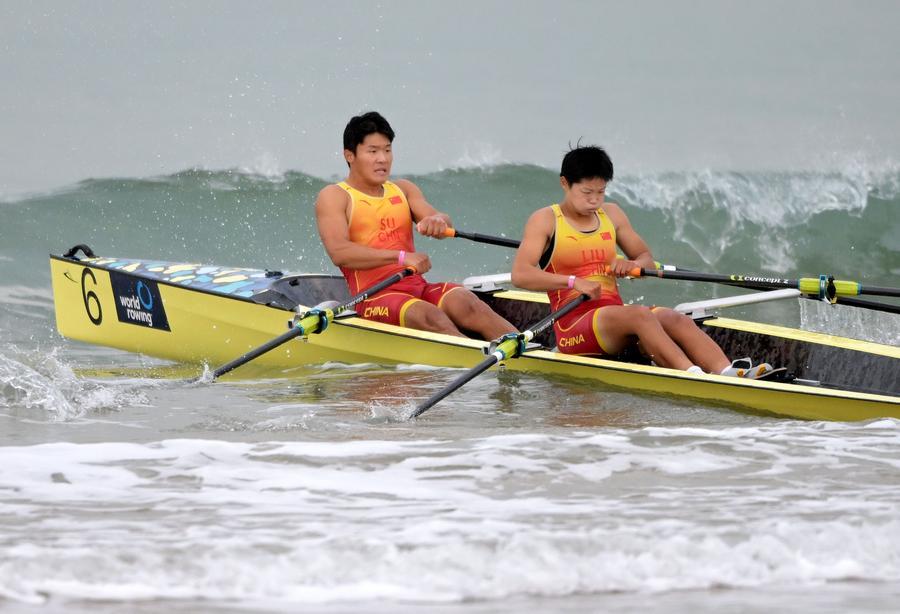
"It is still rowing because we have a boat, a sliding seat and oars. But the concept, the environment and the rules are completely different," he said.
That difference, he argued, is exactly its appeal. Music, the beach setting, running on sand and jumping into the boat make it "a little more fun," while the waves inject an element of uncertainty.
"Depending on how athletes ride the waves, they are affected by the surrounding conditions. That makes the sport a little unpredictable. For the public and spectators, it is probably more fun and faster-paced."
He also drew a clear line between the two coastal formats held in Qingdao: last week's World Rowing Coastal Championships is a six-kilometer endurance race with all crews starting together, while beach sprint is a compact knockout competition, the exact format that will appear at the Los Angeles Olympics.
READY FOR THE OLYMPIC STAGE
Rowing has been part of the Olympic program since the first modern Games in 1896, while coastal rowing only took shape about two decades ago. In October 2023, the IOC Executive Board approved coastal rowing beach sprints for LA 2028, where men's solo, women's solo and mixed double sculls will award three sets of medals.
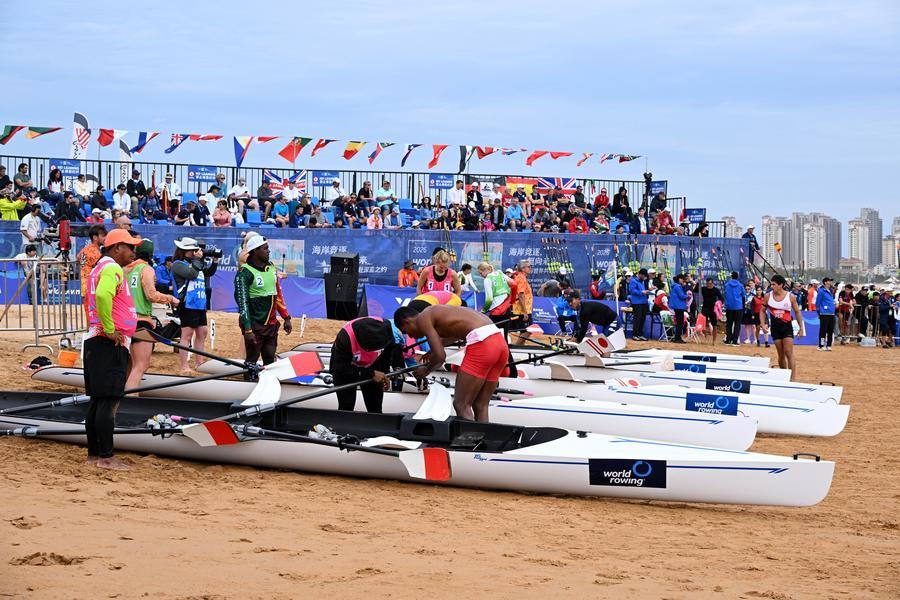
"It allows us to reach different territories and different audiences, and the environment is completely different from classic rowing," Rolland said. "At the Olympic Games, we can benefit from sharing a venue with other sports rather than needing a standalone venue."
With two years to go, he said the discipline is still maturing. "When the discipline started, it was limited to a very small number of countries. Now its inclusion in the Olympic program has encouraged countries to invest in it. I would not say that we have reached maturity yet, but it is absolutely clear that this discipline really matters in rowing. It continues to grow year after year."
World Rowing is refining the rules to keep them simple. A World Beach Sprint Series will be launched in 2027, with stops in Türkiye and China.
Rolland called the Qingdao finals "a key milestone" on the road to the Olympics. "They allow us to keep improving the event and to show that we have reached the Olympic standard, both in the product we deliver and in the quality and performance of the athletes."
CHINA, "A VERY ACTIVE CONTRIBUTOR"
This was Rolland's first visit to Qingdao, a city known worldwide for its beer. "But there is much more to the city than beer," he said, "The athletes from around the world who are here are very pleased and happy, because we have a very good environment for these world championships."
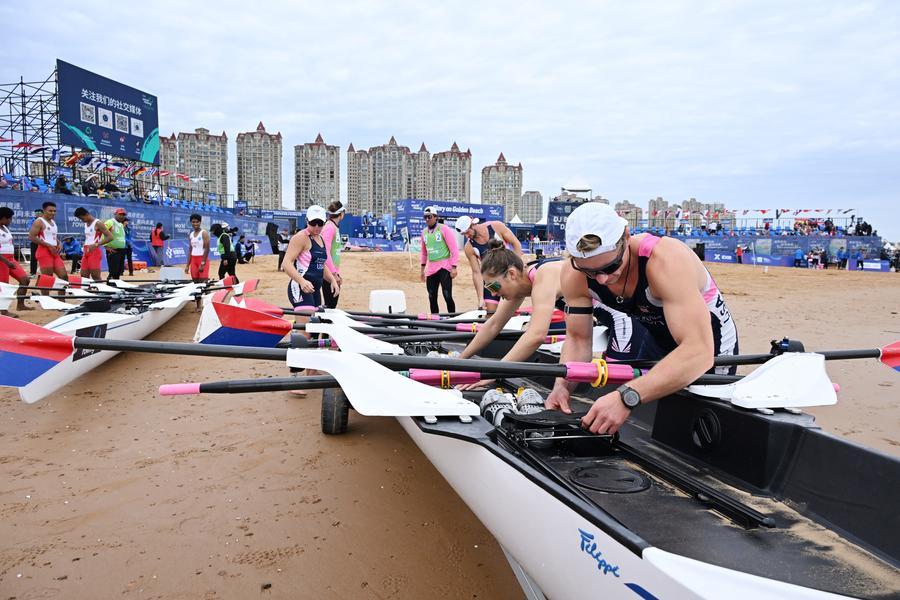
His bond with China dates back nearly 30 years, to when he first visited as an athlete after the Atlanta Games. "Since then, I have seen the incredible development of rowing in the country," he said, citing the support of the water sports administration and the Chinese Rowing Association, which he described as "one of the most contributive member federations worldwide."
In 2025, China hosted the World Rowing Championships for the first time in Shanghai, followed by the Shanghai Sprint, the coastal championships and now the beach sprint finals. "This shows how active China has become in rowing and how much it contributes to the sport."
He recalled China's women's rowing medals at the Tokyo Olympics and his visit to China's National Games last year, where he was impressed by young athletes. "China has a large number of athletes and the capacity to perform at the highest level," he said.
For China's young rowers, his advice was simple: "Train, train, train. There is no other path to performance than training and making the effort."
"Sport is about respect, respecting one another, respecting the rules and doing your very best to perform," he said. "There is also friendship and the relationships we build with other athletes. We are a family. Competition is competition, but we can still create very good relationships among athletes." ■