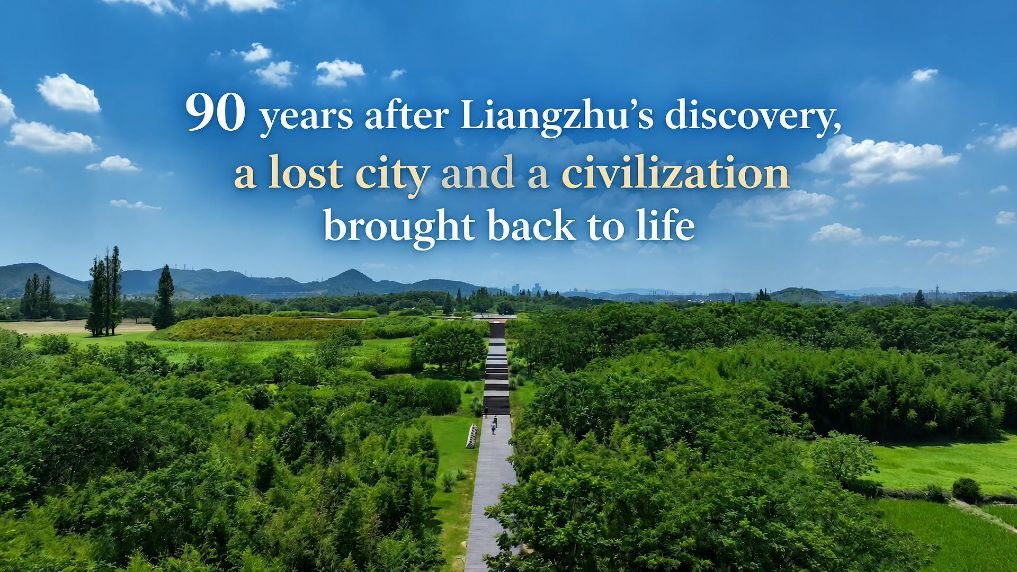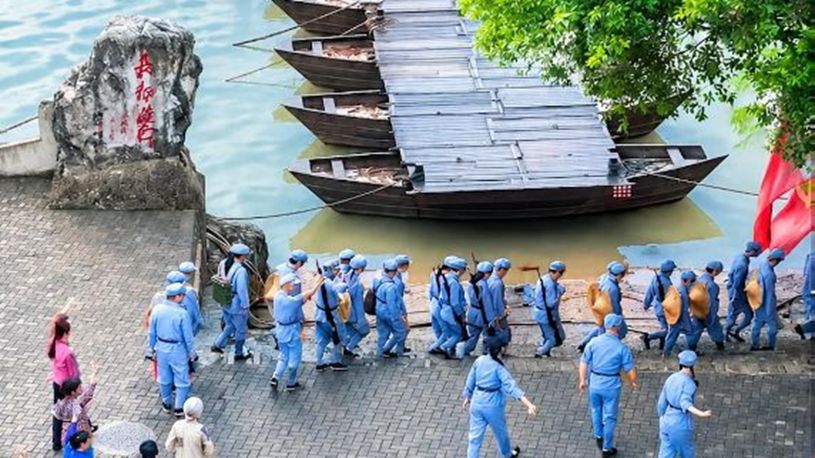
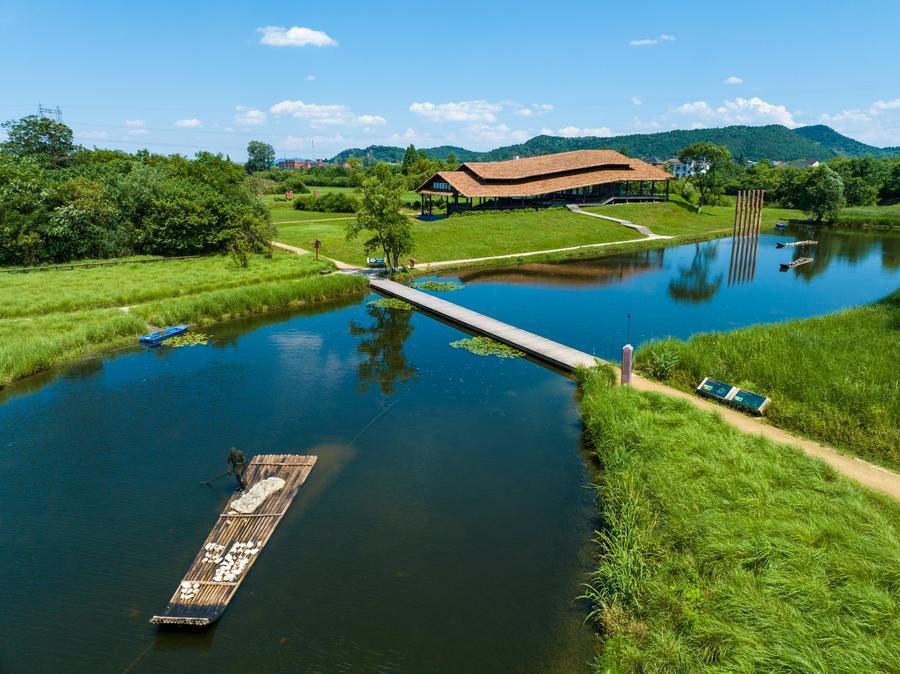
HANGZHOU, Oct. 21 (Xinhua) -- A silver self-driving shuttle glided past golden rice fields on the outskirts of Hangzhou in east China's Zhejiang Province, linking several cultural landmarks, including the Liangzhu ruins, where an early regional state flourished over five millennia ago.
This route, launched earlier this month, points to a question facing many World Heritage sites: how to protect fragile ruins without turning them into isolated monuments, and how to let surrounding communities share in their value without putting the heritage at risk.
This year marks 90 years since the Liangzhu ruins were first discovered. From Oct. 18 to 20, the fourth Liangzhu Forum brought together officials, archaeologists and scholars from about 60 countries and regions in Hangzhou to discuss issues including advances in technologies for protecting and utilizing cultural relics and sustainable tourism.
"UNESCO believes that sustainable tourism can help safeguard cultural heritage by raising awareness of the importance of heritage for future generations, improving cultural understanding and strengthening local livelihoods," said Nayef Al-Fayez, UNESCO assistant director-general for culture, in his video speech.
"Liangzhu was inscribed on the World Heritage List in 2019. Much of Liangzhu's ancient city layout and its water conservancy system lie beneath the surface, so non-specialist visitors may easily miss what makes the site remarkable," said Wang Shu, director of the Hangzhou Liangzhu Archaeological Site Administrative District Management Committee.
"If the public cannot see or understand it, the social value of the heritage cannot be fully realized. Our focus is on how to translate archaeological evidence into cultural experiences that the public can understand, participate in and share," Wang added.
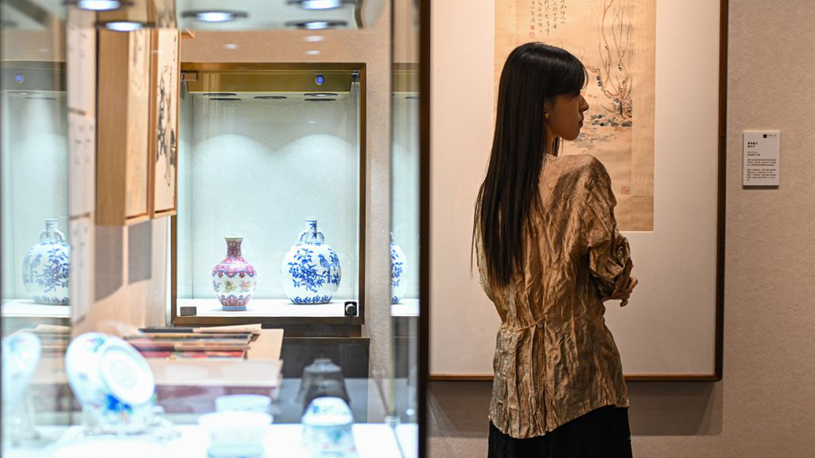
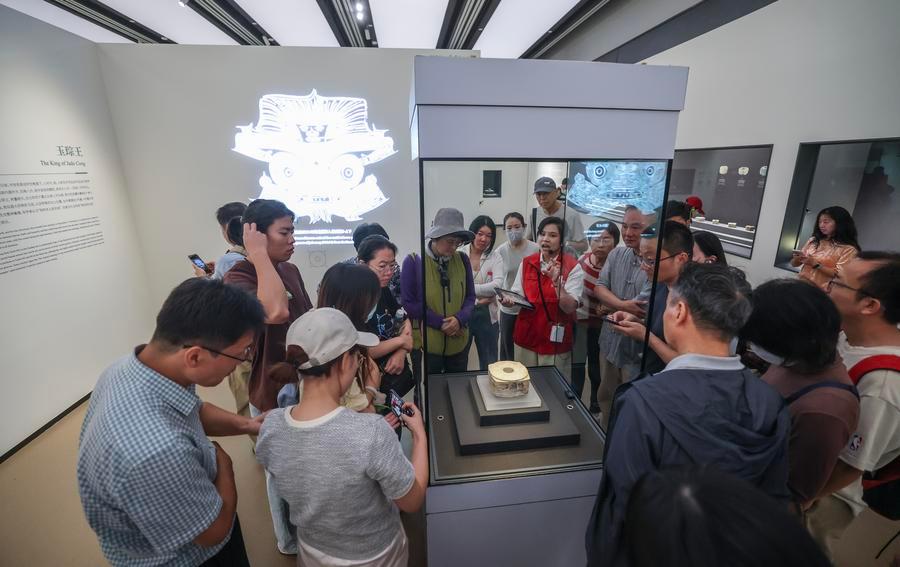
Technology is helping make such translation possible. At the Liangzhu Museum, visitors can put on augmented reality glasses and watch a virtual exhibit appear to float out of its display case, revealing intricate carvings from every angle without touching the original.
In the virtual reality experience at the ruins, tourists can drift through ancient waterways on a bamboo raft, stand atop the palace to take in the city's grand layout, or walk into a virtual altar to witness a sacred ceremony firsthand.

"Just as tourism needs heritage, heritage also needs tourism," said Michael David Robinson, vice chair and non-executive director for culture, UK National Commission for UNESCO, adding that management plans and clear rules are needed to prevent excessive damage. "You have to ensure that the tourists understand how sensitive some of the archaeology is."
At many sites, conservation has focused on the ruins themselves and the museums built to tell their stories, while development in surrounding areas has followed a separate course. Residents may live alongside extraordinary cultural heritage yet have few opportunities to benefit from it.
Liangzhu's efforts have offered a window into China's practice regarding this global issue.
That effort now stretches across a 634-square-kilometer cultural corridor linking the Liangzhu ruins with the nearby Grand Canal, the world's oldest artificial waterway system and a UNESCO World Heritage Site inscribed in 2014, and with surrounding hills, waterways, woodlands and cultural institutions.
"Archaeology shows that over 5,000 years ago, Liangzhu was an early thriving regional state. Today, the same land is still buzzing with innovation and entrepreneurship," Wang said. "Liangzhu is using a corridor-style development approach to strike a balance between protection and growth."
"We have been trying to bring rural communities, urban centers and industry together to let culture benefit people," said Yao Huimin, deputy director of the Liangzhu Museum.
Driven by Liangzhu's cultural resources, the corridor has gathered more than 1,000 cultural enterprises above the designated size. In the first half of 2026, it added 50 such enterprises, with combined revenue exceeding 89.1 billion yuan (around 13.26 billion U.S. dollars), up 37 percent year on year.
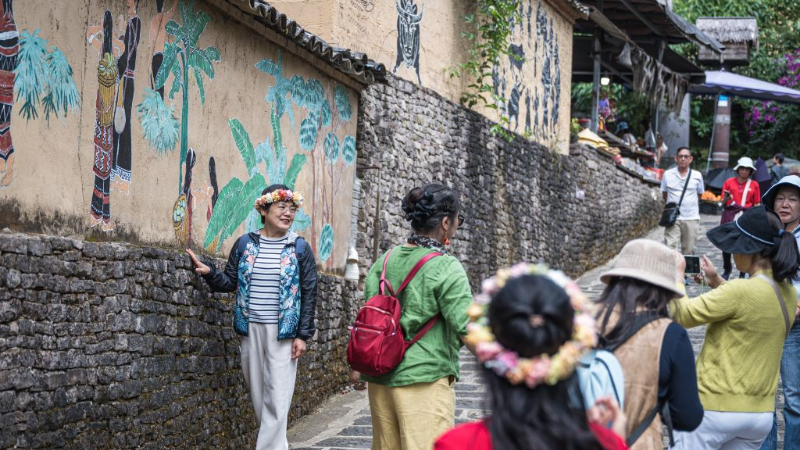
Rather than simply restricting construction, Liangzhu has sought ways to turn protection into opportunity for its villages, which are home to residents who have lived on the heritage belt for generations.
In Xin'gang Village, idle land left by the closure of six furniture and brick factories in 2016 was transformed into a standard football pitch. This field quickly drew city dwellers to the countryside, hosting 12 corporate league matches in its first year.
This single move set off a chain reaction. Xin'gang has since built more sports venues, becoming a sports hub on Hangzhou's outskirts. The model is spreading across villages in Liangzhu, with softball, rugby, archery, tennis and pickleball centers now in use.
Raphael Callou Neves Barros, director general for culture, Organization of Ibero-American States, emphasized the need for continuous dialogue with local communities and to ensure tourism does not undermine the sustainability of culture and heritage.
The deeper value of sustainable tourism lies in what visitors take away and what they leave behind, Barros added. They take away not just a sightseeing experience, but an understanding of a civilization. And they leave behind not only short-term consumption, but a positive force supporting heritage protection, community development and the continuation of local culture.
"Heritage conservation does not end at the fence. Its true destination is people's hearts," said Liu Jiecheng, deputy director of Peking University's Institute for Cultural Innovation. ■