KUNMING, Oct. 21 (Xinhua) -- Driving up Jingmai Mountain is both a pleasure and a challenge. Towering trees rising above rugged valleys and mountains make for a fine view, but halfway up the slopes, smooth asphalt gives way to bumpy stone road.
The rough surface is intentional. Villagers endure the bumpy ride to protect their ancient tea trees, as asphalt at high temperatures can release chemicals that may seep into the soil and contaminate the trees.
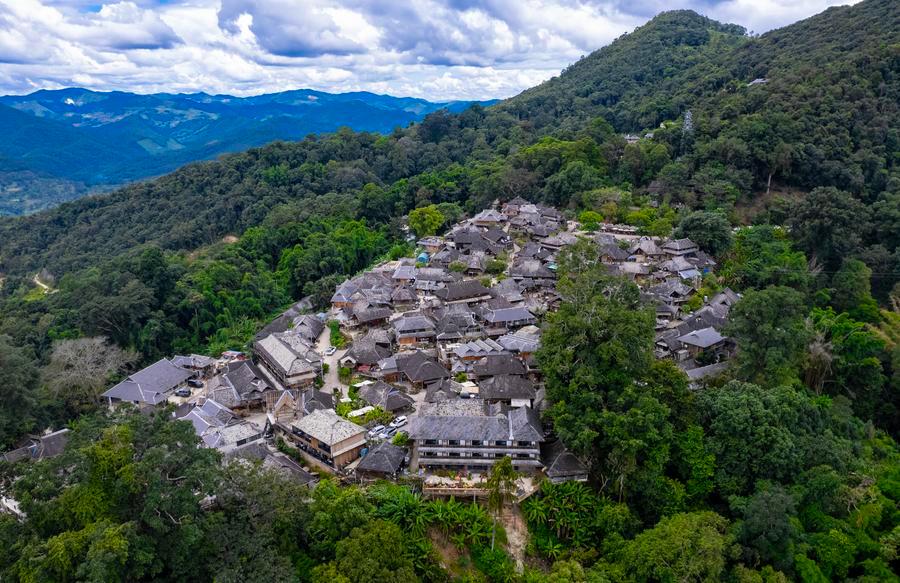
Located in Lancang Lahu Autonomous County, Pu'er City, in southwest China's Yunnan Province, Jingmai Mountain is home primarily to the Blang and Dai ethnic groups. On Sept. 17, 2023, the Cultural Landscape of Old Tea Forests of Jingmai Mountain in Pu'er was inscribed on the UNESCO World Heritage List, making it China's 57th World Heritage Site and the world's first tea culture UNESCO heritage site.
Since the UNESCO inscription, the average annual income of residents engaged in the tea industry has increased from 15,400 yuan (about 2,291 U.S. dollars) to 26,000 yuan, demonstrating how merging cultural heritage with traditional industry is proving a winning formula for many rural regions.
Tea production and sales have long been the main source of income for local residents.
Around 2008, rising tea prices prompted some villages elsewhere to replace ancient tea trees with densely planted bushes arranged in terraces to boost yields. Jingmai's villagers resisted the trend, said Li Ping, a Hani ethnic official and deputy head of Huimin Township, which administers Jingmai Mountain.
The centuries-old practice here, known as forest-based tea cultivation, allows tea trees to grow naturally beneath tall forest trees, with ground vegetation helping protect the soil. The trees are scattered rather than planted in neat, dense rows. A mu (about 667 square meters) produces just over 30 kilograms of dried tea, far less than a terraced plantation.
Following the UNESCO inscription, environmental regulations have become stricter. Farmers who need chemical fertilizers for rice cultivation must report the types and quantities to their villages. Fertilizers brought up the mountain along its only access road are inspected at a checkpoint, and unregistered or excessive quantities are not allowed through.
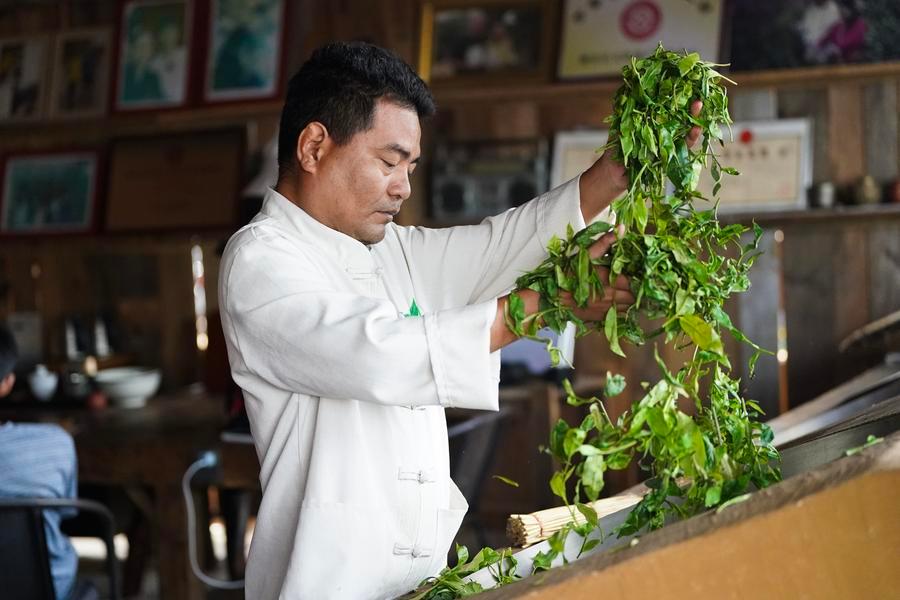
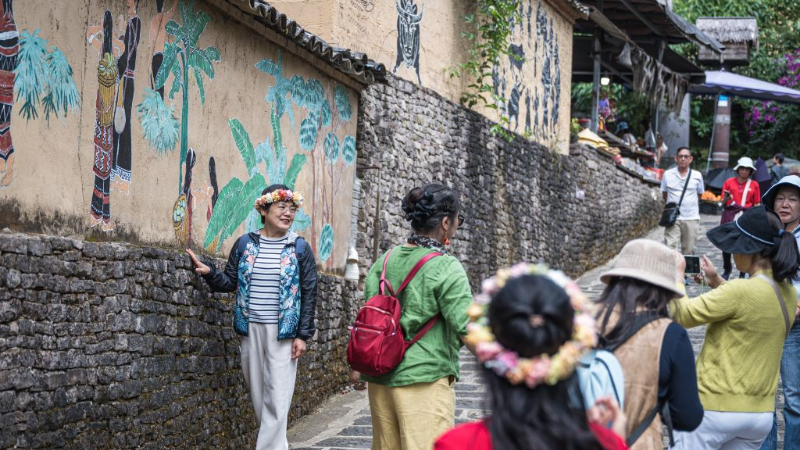
While preserving tradition, residents are also finding new ways to share their culture with visitors.
San Wen, a Blang tea-roasting craftsman recognized as a municipal-level inheritor of intangible cultural heritage, has turned his tea garden into an interactive experience site. Visitors can pick fresh leaves, roast them and press them into tea cakes to take home.
The activity is particularly popular with families. By taking part in the labor involved in making tea, children gain a better understanding of how much hard work goes into the products they see every day, and come to appreciate both food and nature more.
Jingmai Mountain also offers something increasingly rare for urban visitors: quiet. At night, people can gather around a fire to brew tea beneath the moon and stars.
"This would not have been possible without the government's efforts to improve road access and secure World Heritage status for Jingmai Mountain," San said.
Tourism has also brought older residents new income and a new rhythm of life. Some who once had little to do now sell locally made roasted milk tea from stalls outside their homes, while others simply enjoy chatting with passing tourists -- that's what San's 85-year-old grandmother likes doing at her courtyard gate.
Official figures reflect the transformation. In 2025, Lancang County received 694,300 tourist visits, up 56.27 percent year on year, with cultural and tourism revenue reaching 563 million yuan.
The tourism boom has also drawn young people back to the mountain. Xian Jin, a young Dai woman born in the 2000s, was among the first villagers to sell tea through livestreaming.
"After the county organized e-commerce training and Jingmai Mountain gained World Heritage status, my livestream audience has grown from just a handful of people to tens of thousands," she said.
She also introduced Pu'er tea ice cream to the mountain. In 2025, while staying in Pu'er during her pregnancy, she craved ice cream from KFC. Her husband then experimented with tea from their own garden to create a Pu'er tea-flavored version. After two months of testing, they launched the product during the May Day holiday, selling 680 cones at 10 yuan each on the first day.
Its strong tea flavor and grainy texture from tea powder quickly made it a local hit. Xian shared the recipe and introduced the equipment to other villagers. Now the annual ice cream sales across the village are estimated at around 1 million yuan.
Young returnees and newcomers settling in the area have also introduced walking tours, travel photography, bakeries and coffee shops, allowing visitors to enjoy mountain life without giving up familiar urban comforts.
Local authorities, however, are mindful of the risk that fluctuating tea prices pose to local incomes, given that tea production remains the main pillar of the local economy. Pu'er City issued a 2025-2027 action plan to strengthen the Jingmai Mountain tea brand and cushion farmers against the effects of tea price fluctuations.
The plan calls for assessing the output and quality of tea trees across the mountain and standardizing tea-roasting and processing practices to ensure consistent product quality. Each tree in the ancient tea gardens now has an identification plate and number. In the future, products will carry QR codes enabling consumers to trace their origins and helping keep unverified tea out of the market.
"The goal is to strengthen the value and credibility of the Pu'er Jingmai Mountain tea brand, help tea farmers increase their incomes steadily and improve the industry's quality and efficiency," Li said, adding that the aim is to ensure the fragrance of Jingmai's 1,000-year-old tea tradition reaches an ever-wider audience, while building a stronger foundation for the industry. ■