BEIJING, Oct. 12 (Xinhua) -- In June 2024, China's Chang'e-6 probe brought back humanity's first samples ever retrieved from the far side of the moon, an achievement hailed by global media as historic.
Seven months later, DeepSeek's R1 reasoning model drew worldwide attention to China's advances in artificial intelligence (AI), with a Silicon Valley venture capitalist calling it AI's "Sputnik moment."
The wave of innovation milestones carried into 2026. In March, China approved the market launch of an invasive brain-computer interface medical device by a Chinese company, indicating that the device has now entered the phase of clinical application. Last week, the journal Nature published a research article reporting that Chinese scientists had developed a nuclear clock capable of stable operation, marking a breakthrough in ultra-precise time measurement with potential applications in satellite navigation and deep-space exploration.
How to transform breakthroughs in individual fields into lasting gains in productivity across the economy? China has made headway in this regard, as it is pursuing "new quality productive forces," an innovation-centered major task put forward by President Xi Jinping.
During an inspection tour of northeast China's Heilongjiang Province in September 2023, Xi, also general secretary of the Communist Party of China (CPC) Central Committee and chairman of the Central Military Commission, brought the concept of new quality productive forces to the public's attention, calling for better integration of sci-tech innovation resources and the development of strategic emerging and future industries.
At the Central Economic Work Conference that December, Xi urged efforts to drive industrial innovation through sci-tech innovation, particularly by leveraging disruptive and cutting-edge technologies to foster new industries, new models and new growth drivers, and to develop new quality productive forces.
The policy drive stepped up on Oct. 9, when the CPC Central Committee and the State Council issued guidelines setting out 19 key measures to accelerate the development of new quality productive forces.
INNOVATE TO WIN THE FUTURE
"Innovation drives development and innovation shapes the future," Xi has stressed.
Shifting toward innovation-driven growth is imperative for China. The country has built a complete industrial system covering all industrial categories in the United Nations classification, yet it is still grappling with major pressures from demographic shifts to resource and environment constraints. The fact that some of its key technologies remain dependent on other countries, along with intensifying technological revolution and competition, adds urgency to this shift.
Xi's expositions on this concept have provided guidance for the country's high-quality development as well as for Chinese modernization.
At a group study session of the Political Bureau of the CPC Central Committee in January 2024, Xi said "developing new quality productive forces is an intrinsic requirement and an important focus of promoting high-quality development."
With innovation playing the leading role, new quality productive forces mean advanced productivity that is freed from traditional economic growth mode and productivity development paths, features high-tech, high efficiency and high quality, and comes in line with the new development philosophy, said Xi.
From quantum technology and new energy to AI and future industries, sci-tech innovation has been a recurring focus of the Political Bureau's group study sessions in recent years.
The emphasis on breaking new ground echoes a long-standing idea in Chinese philosophy. At a meeting on cultural inheritance and development in June 2023, Xi identified innovation as one of the five defining characteristics of Chinese civilization.
Acutely aware of what matters for an economy with a vast industrial base, Xi has stressed that developing new quality productive forces "does not mean neglecting or abandoning traditional industries." He also stressed that developing new quality productive forces should be tailored to local conditions, warning against both a headlong rush into new industries and the neglect of traditional industrial strengths.
The guidelines issued on Oct. 9 align with this approach, calling for measures tailored to local conditions and for "establishing the new before abolishing the old." An official with the National Development and Reform Commission (NDRC) said these principles are intended to correct problems seen in practice, including investment and planning divorced from reality, a rush into emerging and future industries, and neglect of upgrading traditional industries.
FROM DISCOVERY TO PRODUCTIVITY
The crucial link is turning knowledge into application. Addressing a national science and technology gathering in Beijing in July 2026, Xi summed up the relationship: sci-tech innovation should highlight an application-oriented approach, while industrial innovation should raise scientific questions.
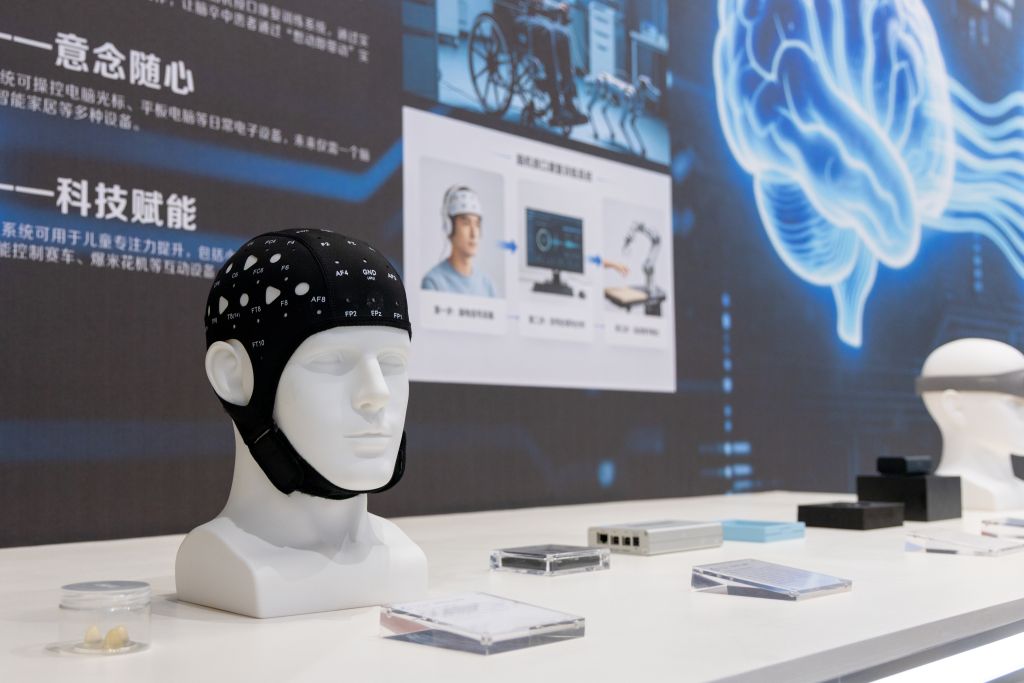
The brain-computer interface device approved in March illustrates how this works in practice. By decoding neural signals and transmitting commands to a pneumatic glove, it helps eligible patients with cervical spinal cord injuries perform grasping movements. Its market approval marks an important step toward wider clinical use.
In manufacturing, the demand for better products can itself steer research. At Yangquan Valve Co., Ltd., a century-old manufacturer in north China's Shanxi Province, engineers have developed ball valves for hydrogen pipelines, opening possibilities beyond its traditional products.
During a visit to the factory in July 2025, Xi emphasized responding to market demand and using technological innovation to breathe new life into traditional industries.
During a November 2025 visit to south China's Guangdong Province, Xi reviewed progress in integrating sci-tech innovation with industrial innovation, and called for the building of an internationally competitive modern industrial system.
He also stressed the need to accelerate indigenous innovation, vigorously support the adoption of homegrown innovative products, and foster a favorable environment for their application.
China's large market, extensive supply chains and strong research capacity create opportunities to turn scientific advances into industrial applications.
In Guangdong, a manufacturing powerhouse, the value added of the province's 20 major industrial clusters accounted for 31.7 percent of its GDP in 2025. In east China's Anhui Province, an expanding network of vehicle manufacturers and suppliers brings together batteries, chips, materials and vehicle assembly, making it possible to build an entire new energy vehicle without leaving the province.
The broader shift is visible in national figures. In August 2026, value added by high-tech manufacturing enterprises above the designated size rose 16.7 percent year on year, compared with a 5.2 percent increase for industrial enterprises above the designated size overall. The green transition offers another marker: renewable energy accounted for 73.9 percent of all newly installed power generation capacity in the first half of 2026, according to the National Energy Administration.
These changes show the scale of the transformation under way. Making the gains durable, however, requires more than successful products or fast-growing sectors. It requires an innovation system that can generate, test, finance, and spread successive rounds of advances.
SUSTAINING INNOVATION, SHARING OPPORTUNITIES
Xi has repeatedly focused on what happens between an invention and its wider adoption. During a November 2024 visit to the Wuhan Institute of Industrial Innovation and Development in central China's Hubei Province, he asked about development timelines, cost reductions, international competitiveness and cooperation with enterprises -- practical questions about how technology reaches the market.
There is also a longer horizon. Xi has emphasized basic research, which may not yield immediate commercial returns but provides the discoveries on which future industries depend. At a symposium on basic research in Shanghai in April 2026, Xi said, "We must seize opportunities, rise to challenges, put basic research high on the agenda, advance it with sustained commitment, and strive for continuous achievements."
China's 15th Five-Year Plan (2026-2030) places the development of new quality productive forces and greater self-reliance and strength in science and technology among its strategic priorities.
Liu Zhenzhong, a researcher at the Institute of Industrial and Technological Economics of the NDRC, noted that transformative technologies are changing how innovation is organized and how resources are allocated. Institutional reform, he said, is therefore needed to clear barriers to development.
Xi has charted a practical path for empowering new quality productive forces through reform. He called for efforts to deepen reform of economic and sci-tech systems to "remove bottlenecks and blockages that constrain the development of new quality productive forces." He also urged establishing a high-standard market system and developing new ways to allocate production factors.
Reform efforts include guidelines issued in April 2026 to deepen reform of the ChiNext board of the Shenzhen Stock Exchange, the country's Nasdaq-style board of growth enterprises; an initiative launched in 2024 to promote mutual recognition of data products across trading platforms; and measures aimed at improving market-access rules.
Xi has also emphasized that innovation is not confined within national borders. At the second session of the 32nd Asia-Pacific Economic Cooperation (APEC) Economic Leaders' Meeting in November 2025, he stressed digital, smart and green development and called on Asia-Pacific economies to "move faster to nurture and promote new quality productive forces." He advocated deeper cooperation on open-source technologies and an open, competitive ecosystem for innovation.
The core technology behind the signature substrate product of Austrian semiconductor materials company AT&S was first commercialized in southwest China's Chongqing Municipality and has since been refined there. CEO Michael Mertin said China has long made it a priority to train scientists and engineers, and the new generation of Chinese engineers "not only possesses outstanding mathematical skills but is also increasingly creative."
"In today's digital age, no company, city or country can innovate in isolation," Mertin said. "High-tech progress depends on trusted global networks, cross-border collaboration, and the exchange of talent, expertise and ideas."
In the latest signal of openness and cooperation, the new guidelines call for allocating advanced factors of production globally, building global networks for innovation cooperation, and establishing efficient, convenient and secure mechanisms for cross-border data flows.
"The more complex the international environment, the more we should be open-minded and engage with the world. We should determine the right balance between opening up and security, and achieve greater strength and self-reliance in science and technology through international cooperation," Xi once said. ■