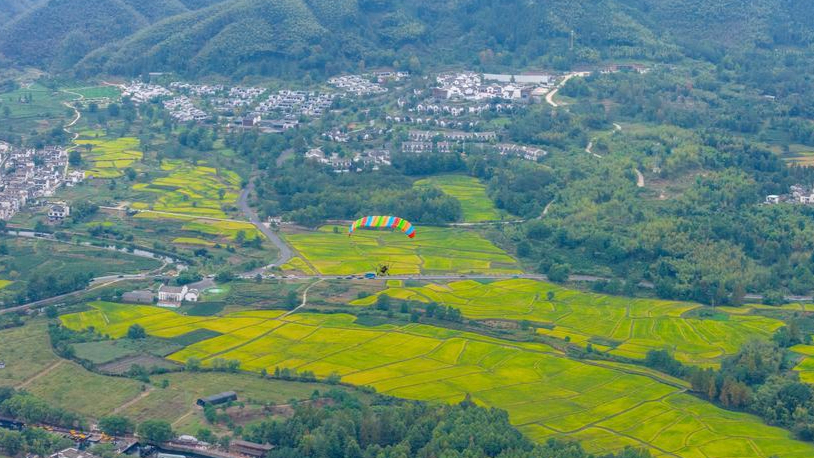
*The Long March spirit highlights the firm faith, strong will, and never-give-up attitude of the whole Party and all Chinese people to overcome major challenges during the revolutionary years.
*In today's environment, people need to hold fast to the same values that made the Long March an epic undertaking in modern Chinese history, said Khairy Tourk, professor of economics at the Stuart School of Business at the Illinois Institute of Technology in Chicago.
*The Long March is not only a towering monument in the development of the Chinese nation, but also a precious spiritual asset for all humanity in the pursuit of independence, freedom and liberation, said Etienne Bankuwiha, a Burundian sinologist.
BEIJING, Oct. 10 (Xinhua) -- This year marks the 105th founding anniversary of the Communist Party of China (CPC) and the 90th anniversary of the victory of the Long March. The arduous journey, which lasted from 1934 to 1936, helped lay the foundation for the eventual victory of the Chinese revolution.
Nearly a century later, the Long March remains an important window into China's history and development. "The Long March is like a spine of your body that goes right through the modern history of China," said Harold Weldon, an Australian publisher and filmmaker.
For China watchers, understanding this pivotal chapter is essential to understanding the CPC's founding ideals and enduring mission, as well as the resilient spirit of the Chinese nation.
GREAT TURNING POINT
The victory of the Long March marked a great turning point for the CPC and the Chinese revolution, and stands as a towering monument in the historic process of the rejuvenation of the Chinese nation.
During the epic military trek, the CPC-led Red Army broke through encirclement by Kuomintang forces. Red Army soldiers braved raging rivers, snow-covered mountains and treacherous grasslands, with some marching as far as 12,500 kilometers.
"It was probably the greatest tale of human endurance in recorded history, I think, in terms of the hardships faced," said Weldon.
The Long March is a classic example of the ability of the Chinese people to defy overwhelming odds, and is ready to put up with huge sacrifices in treasure and blood in order to achieve their goals, said Khairy Tourk, professor of economics at the Stuart School of Business at the Illinois Institute of Technology in Chicago, noting that "sacrifice is an essential part of achieving glorious victories."
Paul Ilado, editorial director of Kenya's Radio Africa Group, said the Long March transformed a military retreat into a decisive political and historical turning point. The Red Army was under enormous pressure, he noted, and their ability to survive the encirclement campaign was crucial to the continuation of the movement.
The historical significance of the Long March extends beyond military survival, Ilado said.
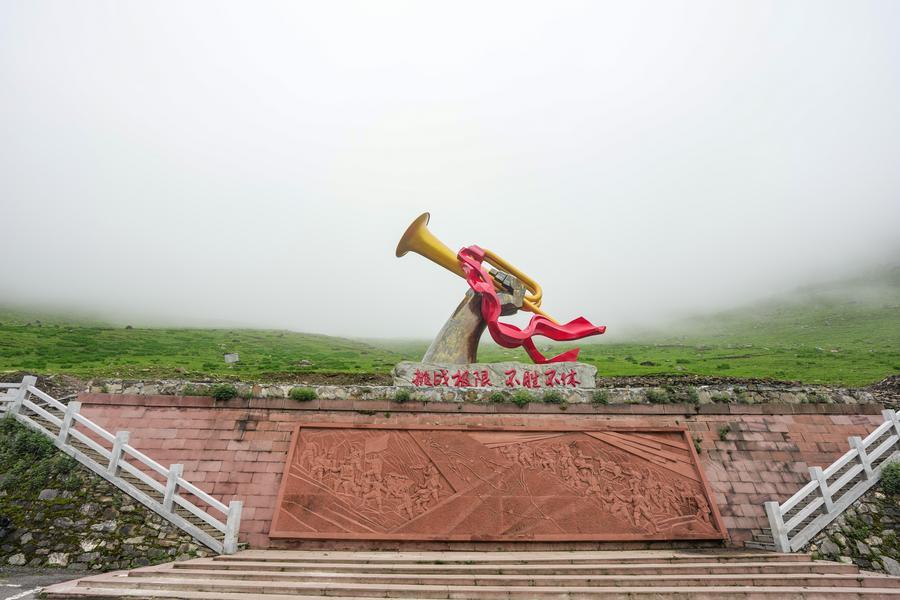
As part of the CPC's revolutional legacy, he said, the Long March demonstrated that hardship had to be overcome, objectives pursued over the long term, and survival under extreme pressure sustained by organization and discipline.
During the Long March, Red Army officers and soldiers were pushed to the extremes of their physical limits, turning this dramatic episode in world military history into a "glorious human miracle."
The Long March spirit highlights the firm faith, strong will, and never-give-up attitude of the whole Party and all Chinese people to overcome major challenges during the revolutionary years.
Wagner Lacerda Dantas, a Brazilian journalist with China International Communications Group, described the spirit as the determination to continue fighting for a collective goal even when circumstances appear almost impossible, bringing together conviction, courage, discipline, solidarity, sacrifice and confidence in victory.
"What impressed me the most was the organizational cohesion and belief of the Red Army, although under extremely tough conditions," said Balew Demissie, senior consultant at the Policy Studies Institute of Ethiopia.
When facing extreme natural environments such as snow-capped mountains and marshlands, as well as the chasing and interception by the enemy's materially superior forces, this army did not collapse, but instead demonstrated astonishing discipline and idealism, and ultimately achieved success, he added.
Yuri Tavrovsky, head of the Expert Council of the Russian-Chinese Committee for Friendship, Peace and Development, likewise identifies endurance, sacrifice, patriotism and wisdom as qualities forged during the Long March. In his view, the experience helped shape a generation of leaders capable of confronting crises, assessing changing circumstances and finding a way forward.
CONTEMPORARY ECHO
The Long March belongs to a specific historical period, and China's circumstances today are vastly different from those of the 1930s, but foreign observers see its enduring relevance in the CPC's strong leadership and China's rapid development.
In today's environment, people need to hold fast to the same values that made the Long March an epic undertaking in modern Chinese history, said Tourk, the economics professor at the Illinois Institute of Technology. "Without values such as sacrifice, patriotism, perseverance, and firmness, the people would lose their sense of direction," he said.
"I believe that understanding the Long March is truly one of the best ways to understand how the Communist Party of China managed to grow under such adverse circumstances," said Dantas, the Brazilian journalist, adding that it demonstrated characteristics such as discipline, unity, organizational capacity, independence and autonomy, seeking truth from facts, and, above all, confidence in the masses.
"The great strength of the Party during that period lay not only in its weapons, but in its ability to maintain close ties with the people," he said.
Etienne Bankuwiha, a Burundian sinologist, said that amid life-and-death trials, Chinese Communists demonstrated unshakable ideals and convictions and made strategic choices decisive for the future of the Chinese revolution. "For China today, it remains a powerful source of motivation that encourages the people to overcome difficulties, advance Chinese modernization, and realize the great rejuvenation of the Chinese nation," he added.
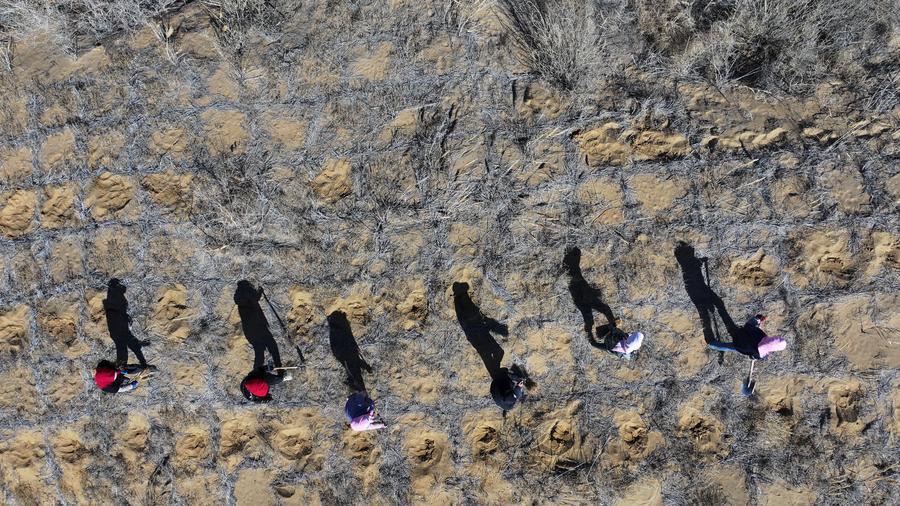
During a visit to China's Ningxia Hui Autonomous Region, Ilado, the editorial director of Kenya's Radio Africa Group, was struck by the transformation of land that had once been difficult to cultivate, which offered him a tangible way to think about the legacy of the Long March.
"When I arrived in China and went to Ningxia, I was amazed at how a desert had been turned into productive land, and how today that area has become a breadbasket for the country and the world," he said.
The connection, Ilado stressed, is the idea of undertaking a difficult journey over a long period without losing sight of the destination.
A farmer cultivating difficult land, an engineer building irrigation infrastructure, a technician improving food processing or a young person leaving a poor rural community to pursue education may seem far removed from the Red Army of the 1930s, yet all can be understood through the determination to continue when the destination is still far away, Ilado noted.
Joshua Kingdom, a research fellow at Uganda's Development Watch Center, sees the Long March spirit reflected in China's response to contemporary challenges. He said China's efforts to withstand external pressure demonstrated resilience and a determination to deepen cooperation with Global South economies rather than succumb to difficulties.
BEYOND CHINA
The significance of the Long March extends beyond the history of China. The Long March spirit of unwavering faith, perseverance and collective spirit transcends borders and ideologies, inspiring humanity to overcome adversity and strive for a brighter future.
Demissie, the senior consultant at Ethiopia's Policy Studies Institute, said the success of the Long March contributed directly to the eventual victory of the Chinese revolution. In his view, the independent and modern state that emerged from that history has since become an important force in promoting multipolarity, South-South cooperation and the rise of the Global South.
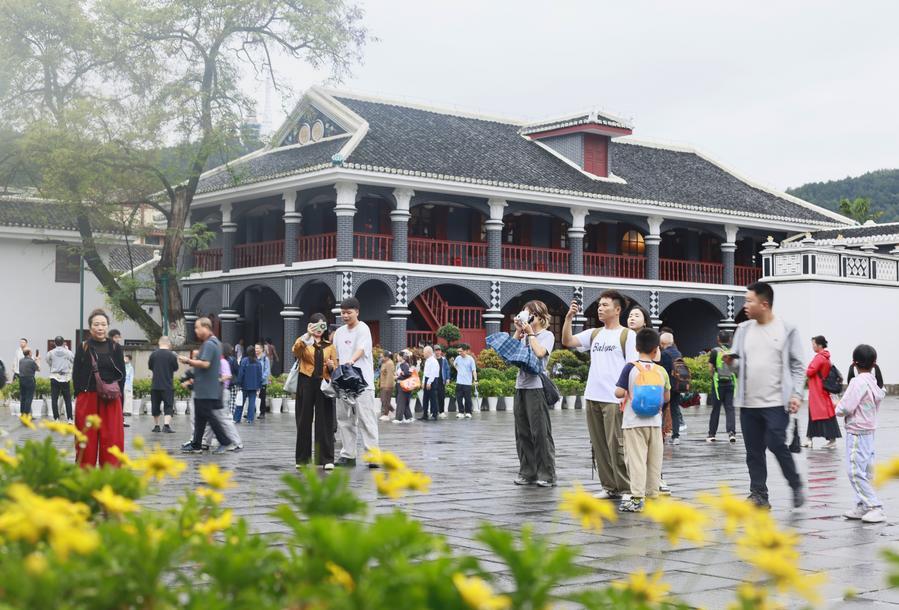
The Long March is not only a towering monument in the development of the Chinese nation, but also a precious spiritual asset for all humanity in the pursuit of independence, freedom and liberation, said Etienne, the Burundian sinologist.
"Seen from the broader perspective of the Global South, the Long March proves a compelling point: to achieve genuine liberation and prosperity, a country and its people must proceed from their own conditions, uphold independence and self-reliance, and defeat every obstacle through unity and struggle," he said.
Dennis Munene, executive director of the China-Africa Center at the Africa Policy Institute, said the Long March spirit could encourage the international community to unite around common goals and pursue dialogue across civilizations to address conflicts, climate change and poverty.
These challenges cannot be resolved overnight; they require sustained commitment, cooperation and a willingness to keep working despite setbacks, he added.
Kingdom, the research fellow at Uganda's Development Watch Center, said that writings by people like Edgar Snow about the Long March have moved people across the globe, "because every individual, wherever they are living, they usually have fears to conquer."
"So, I feel like when you have examples of people who have gone the extra mile to conquer different things that are really relatable in some sense, it moves people," he said. (Video reporters: Zhu Yinan, Chu Yi and Du Zheyu; Video editors: Wu You, Liu Xiaorui, Zhang Yueyuan, Wei Yin, Liang Wanshan and Wang Han)■