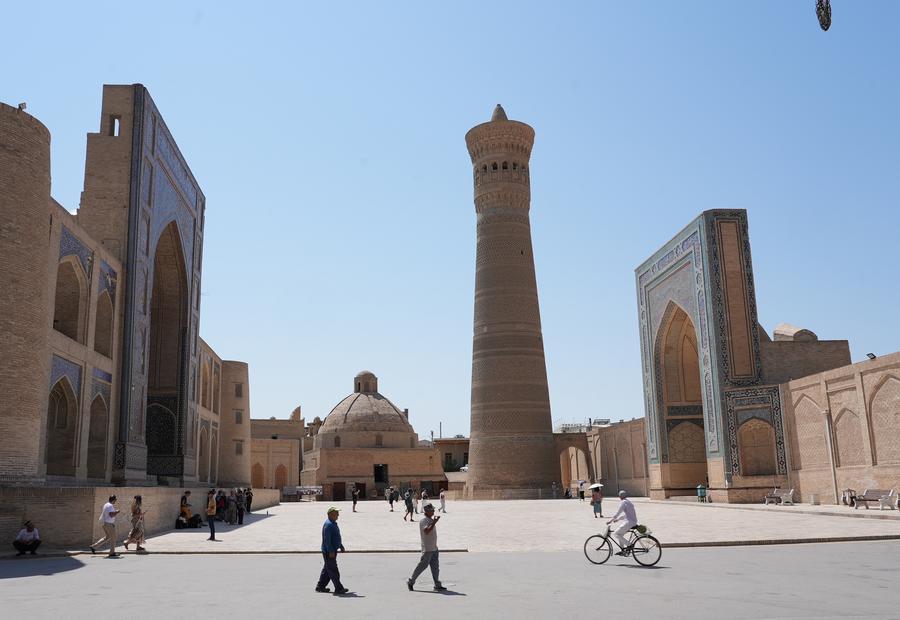
BUKHARA, Uzbekistan, Oct. 10 (Xinhua) -- As the setting sun cast a golden glow over the ancient streets of Bukhara, the historic city bustled with tourists, while local vendors called out to passersby.
Holding a hand-painted ceramic bowl, Yan Hong, a tourist from northeast China's Harbin, marveled at the intricate floral patterns adorning the craft at a roadside stall, accompanied by her parents.
"Uzbekistan has so many historic cities along the Silk Road: Samarkand, Bukhara and Khiva," she said. "I'd read about them in books. I had to see them for myself."
Walking through the ancient city, she said the experience surpassed her expectations, with history and modernity blending seamlessly and different civilizations engaging in a quiet dialogue.
Yan is among a rapidly growing number of Chinese travelers choosing Uzbekistan as a holiday destination.
A mutual visa-exemption agreement, which officially took effect on June 1, 2025, has given fresh impetus to cross-border tourism.
According to official reports from Uzbekistan's Tourism Committee, the number of Chinese tourists visiting the country increased by 3.5 times following the launch of the reciprocal visa-free policy.
"By now, the entire city of Bukhara knows that China enjoys a seven-day 'Golden Week' holiday in October," said Khamrayev, a local vendor specializing in miniature paintings and traditional handicrafts.
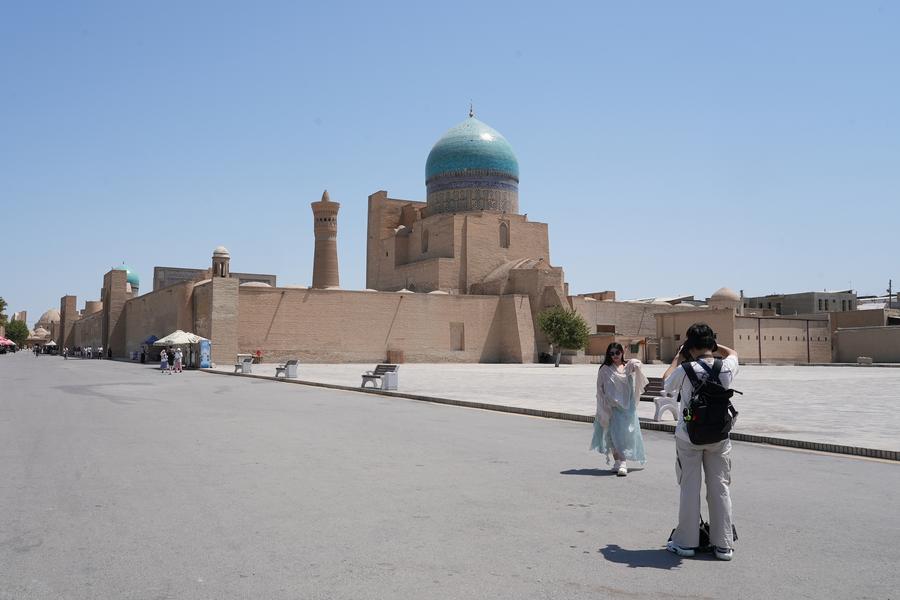
Recalling the holiday period last year, Khamrayev said Chinese tourists had flocked to his courtyard shop, making it his busiest sales period of the year.
A similar tourism boom is unfolding in neighboring Kazakhstan, which also benefits from a mutual visa-free arrangement with China.
At Shymbulak resort near Almaty, with the towering Tianshan Mountains in the background, Qi Yue and his wife from Hangzhou, east China's Zhejiang Province, waited in line for a cable car.
"We decided on a whim," Qi said. "Visa-free travel was a big factor." He added that many Chinese tourists now travel to Kazakhstan from Xinjiang Uygur Autonomous Region after exploring the region.
Some travelers are taking advantage of improved cross-border access to embark on longer and multi-country journeys across Central Asia.
Zhang Dongni, a solo backpacker traveling overland across the region, made her way from Almaty to Lake Issyk-Kul in Kyrgyzstan. She was heading to Osh, the country's second-largest city, before continuing to Khujand in Tajikistan.
"People here are remarkably warm and hospitable," Zhang said. While traveling from Bishkek to Osh, she was unable to board a bus because of her oversized luggage, so she arranged to share a taxi with local residents.
"We chatted using translation apps the whole way. When we arrived, they insisted on covering my fare as their guest," Zhang said. In return, she gave them traditional Chinese knots as tokens of appreciation.
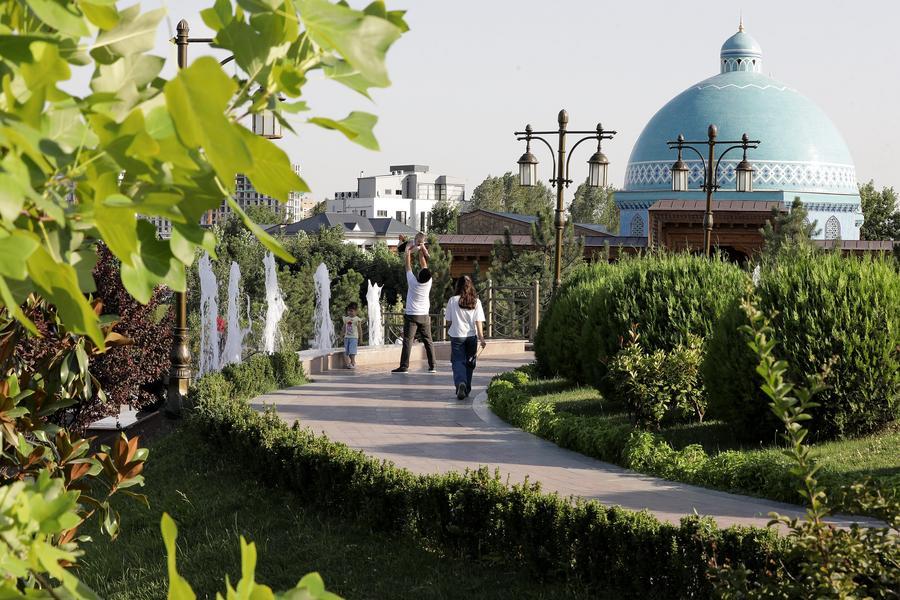
In Tashkent, Uzbekistan's capital, Chinese tourists Zhou Yushan and Tang Suyu stopped to take photos outside the Holy Assumption Cathedral.
"We took three days off to bridge the Mid-Autumn Festival and National Day holidays," Zhou said. "That gave us enough time to explore Xinjiang alongside several destinations across Kazakhstan and Uzbekistan on a single trip."
As China and Central Asian countries continue to facilitate cross-border travel, growing tourism flows are increasingly becoming a two-way exchange, with more visitors from Central Asia also traveling to China.
According to data from the Guangzhou Baiyun exit-entry frontier inspection station, more than 90,000 passengers from the five Central Asian countries had passed through Guangzhou Baiyun International Airport by June 2 this year, up 286.6 percent year on year. Arrivals from Kazakhstan, Uzbekistan and Kyrgyzstan rose by 258.4 percent, 351.9 percent and 660.6 percent, respectively.
Linked by mountains and rivers and bound by longstanding cultural ties, China and Central Asian countries are seeing closer people-to-people exchanges as cross-border travel becomes more convenient, opening new avenues for mutual understanding and lasting friendship.■