GUIYANG, Oct. 10 (Xinhua) -- Thousands of visitors flocked to the Huajiang Grand Canyon Bridge during China's recent week-long National Day holiday, not simply to cross the world's highest bridge in southwestern Guizhou Province, but to stop and explore the surrounding area.
Built to cut a two-hour journey across the canyon to about two minutes, the bridge is now drawing travelers who come for the wonder itself, and for a growing mix of sightseeing, adventure sports, dining and nighttime experiences.
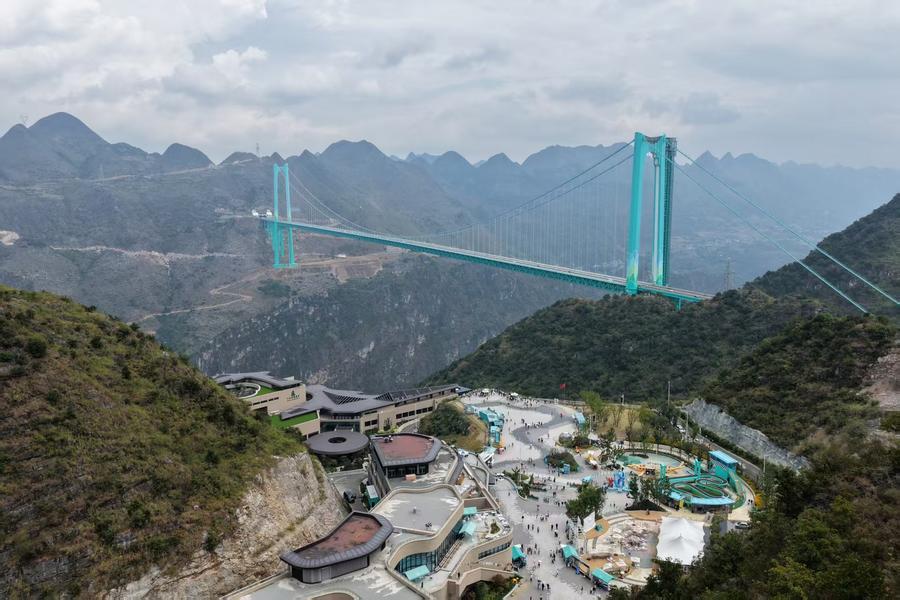
Spanning the Huajiang Grand Canyon, the 2,890-meter-long bridge connects Bouyei-Miao autonomous county of Guanling with Zhenfeng County in Guizhou. In April 2026, the bridge was certified by Guinness World Records as the world's highest bridge, with a confirmed height of 626.01 meters.
However, setting a record-breaking height was not a goal in itself. The Huajiang Grand Canyon runs east to west for about 80 kilometers and cuts directly across the route of the Liuzhi-Anlong Expressway, making a major crossing difficult to avoid.
Yang Jian, chief engineer responsible for the bridge's design, said lowering the structure would have required longer tunnels through the mountains on either side, increasing overall construction costs and potentially adding to driver fatigue.
The final route therefore struck a balance between the bridge and tunnels, and almost incidentally placed the bridge more than 600 meters above the river, Yang added.
Integrating tourism into the project was part of the plan long before the first cars crossed the bridge.
From the design stage, the bridge and more than 50 square kilometers of surrounding area were incorporated into an overall tourism plan. Rather than adding attractions after construction was completed, designers looked for ways to turn parts of the bridge into visitor spaces.
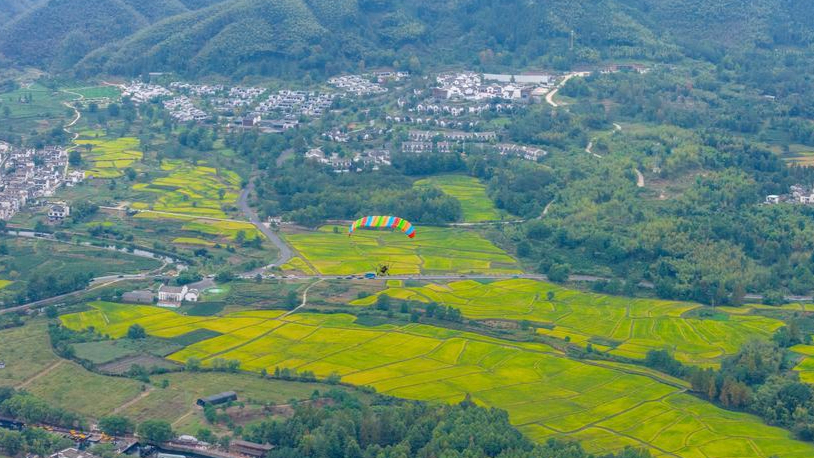
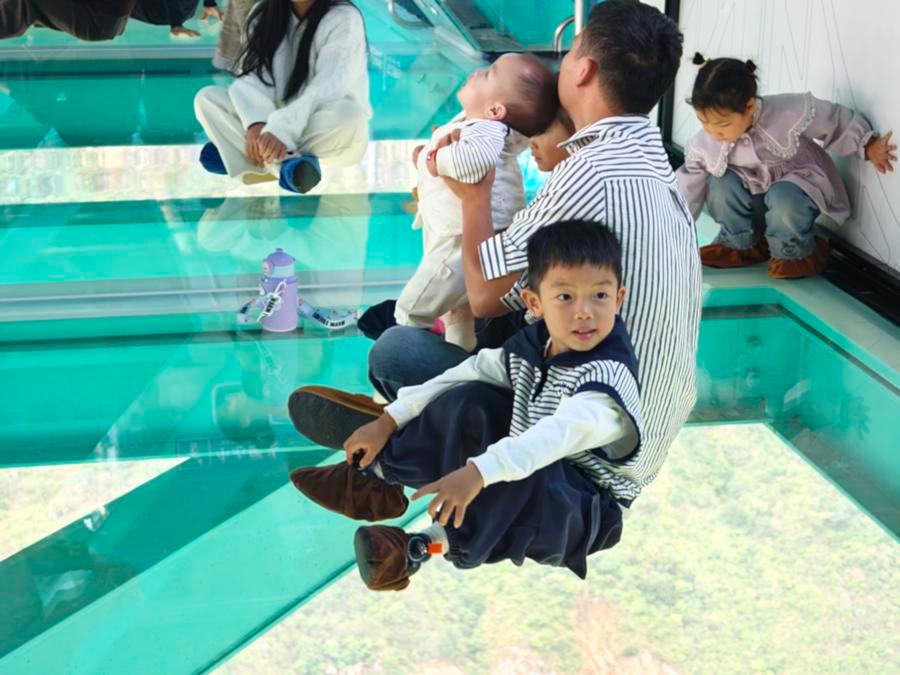
A maintenance passage inside the steel truss was converted into a 796-meter sightseeing corridor. A glass observation hall and a platform for aerial sports were built near the center of the bridge, while structural elements originally designed to improve wind stability were adapted to support a 1,411-meter elevated running track.
Visitors can take elevators into the bridge structure, walk along the sightseeing corridor and look out over the canyon from hundreds of meters above the river. Those seeking more thrills can try bungee jumping, a narrow-plank walk suspended over the canyon or running on the elevated track.
At night, water screen and light shows offer a different view of the bridge. During the National Day holiday, concerts, racing activities and food events further broadened the range of experiences available to visitors.
On the Zhenfeng County side, shuttle buses carry visitors to the bridge tower, where elevators lead directly to the sightseeing area inside the structure.
Since the bridge-tourism project began operation, it has recorded about 3.3 million visits, according to the project operator.
Cheng Guojian, who visited the bridge with his family from southwest China's Chongqing Municipality, said the bridge was a much-anticipated stop they had planned before setting out. He set aside a full day to visit the bridge and its sightseeing facilities.
"If there were no bridge, we might still pass through this area, but we would not stop and spend so much time," Cheng said.
Liang Yan, a visitor from Guiyang, also made a special trip to the bridge and chose to stay overnight nearby to see both the daytime scenery and the evening light and water screen shows.
Some visitors have come from far beyond Guizhou. In May, Iseult Alice Fitzpatrick, an Irish student at Harvard University who was visiting China for the first time, chose an unusual way to see the bridge.
Wearing a safety harness, she took on a narrow-plank walkway suspended high above the canyon, crossing from one side and then making her way back.
An outdoor enthusiast who enjoys hiking and rock climbing, Fitzpatrick said she did not want to miss the chance to try something so unusual on the world's highest bridge.
On her return, she stopped midway, more than 600 meters above the water, simply to take in the scenery. "It's a very fun way to view it, because you're by yourself. And you're really high up, and it feels like being very close with nature, and you're just looking down at it. It's an incredible view. It's like nothing I've ever seen before," she said.
The growing tourism economy around the bridge offers another measure of its impact.
Since the bridge opened to traffic, Huajiang Township and nearby areas have received more than 1.48 million visits, according to local officials.
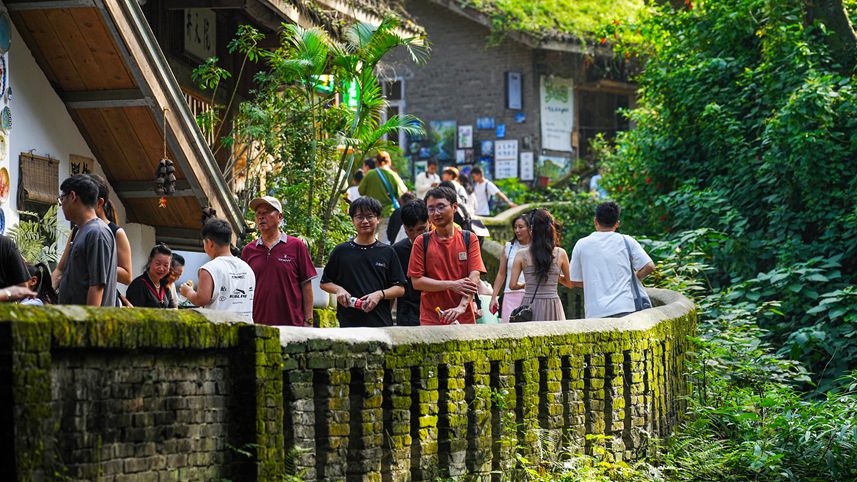
The township has added 124 food and beverage businesses and 15 hotels and guesthouses, while tourism-related growth has indirectly created jobs for more than 2,000 local residents.
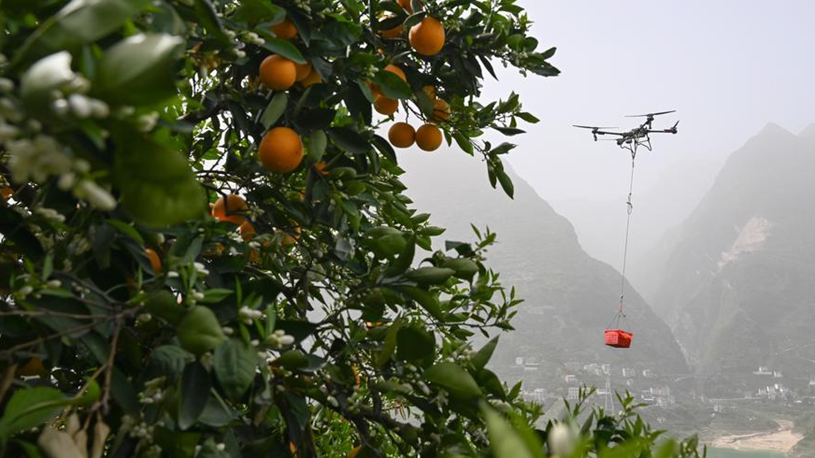
For fruit trader Huo Zhenggui, who has long done business in Huajiang Township, the bridge has shortened delivery times and brought more customers.
"Before, the mountain roads were rough, and the journey was long. Transporting fruit took a lot of time and caused heavy losses," Huo said. "Now that the bridge is open, the fruit looks as fresh as if it has just been picked from the tree. There are more tourists, and business is better than before."
Hotels have also benefited from the influx of visitors. "There used to be very few guesthouses in the town, and many houses stood empty for long periods," said Wu Fuying, manager of Xiyuan Hotel in Huajiang Township. "Now that the bridge is open, rooms are often fully booked on weekends and public holidays. Visitors are coming, and they are willing to stay." ■