
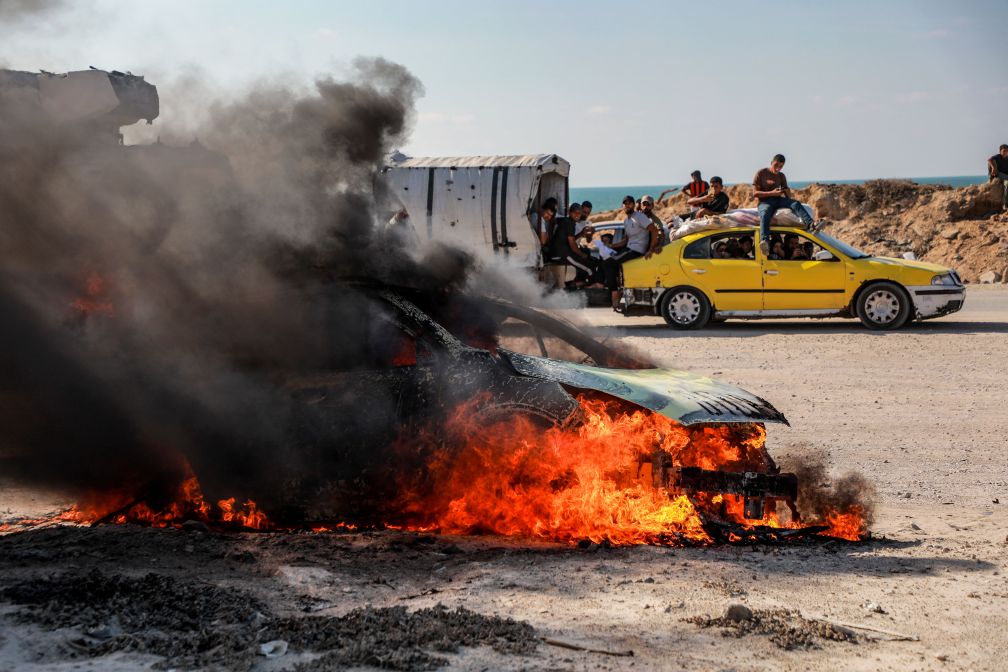
CAIRO, Oct. 7 (Xinhua) -- Three years after the Gaza conflict broke out on Oct. 7, 2023, the coastal enclave lies in ruins and tens of thousands have been killed. A ceasefire has been reached, but the fundamental deadlock remains unresolved.
Analysts contend that irreconcilable differences between Palestinian and Israeli demands, coupled with the United States' perceived bias, have left a comprehensive end to the conflict and lasting peace out of reach. The was has also had far-reaching repercussions across the region, with instability spilling over into Lebanon, Syria, Iran and the Red Sea.
GAZA IN RUINS, WEST BANK SQUEEZED
On Oct. 7, 2023, Hamas's "Al-Aqsa Flood" assault saw thousands of rockets fired from Gaza and fighters infiltrating southern Israel, killing around 1,200 people and taking about 250 hostages.
Israel then declared war and launched "Operation Iron Swords," pounding Gaza with airstrikes and a ground offensive that evolved into a prolonged and devastating conflict.
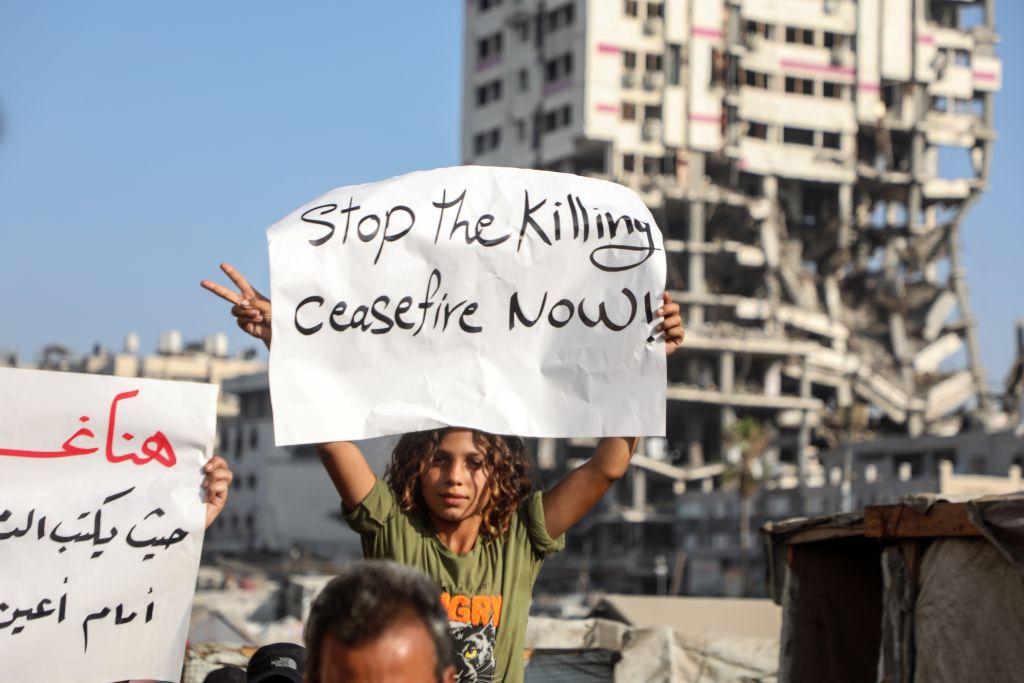
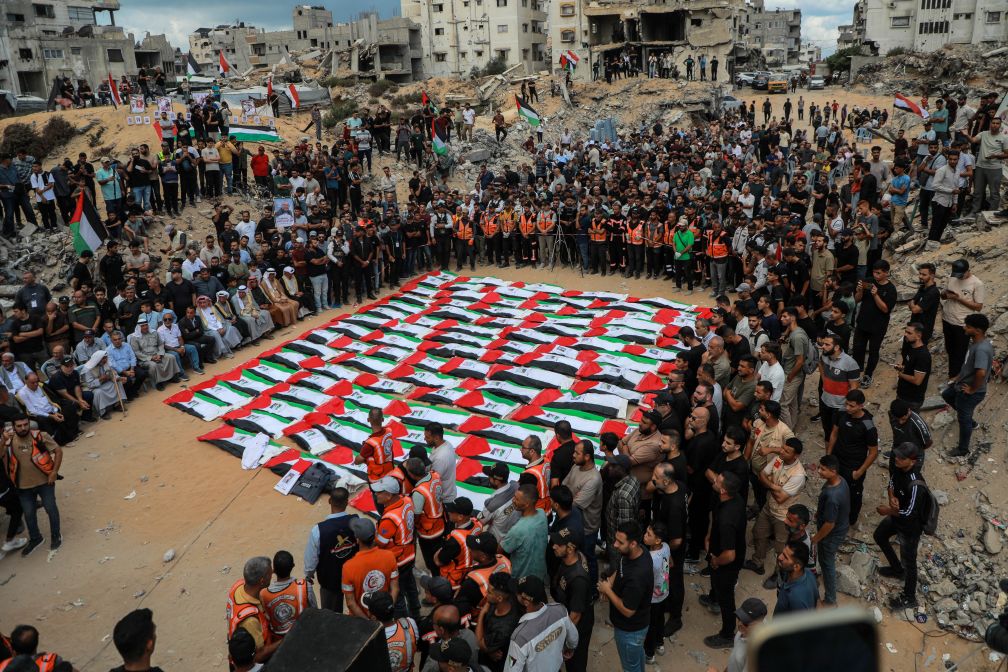
Over the past three years, Gaza has suffered catastrophic destruction, leaving a profound humanitarian catastrophe across the territory. More than 74,000 people had been killed in the enclave since Oct. 7, 2023, according to Gaza health authorities.
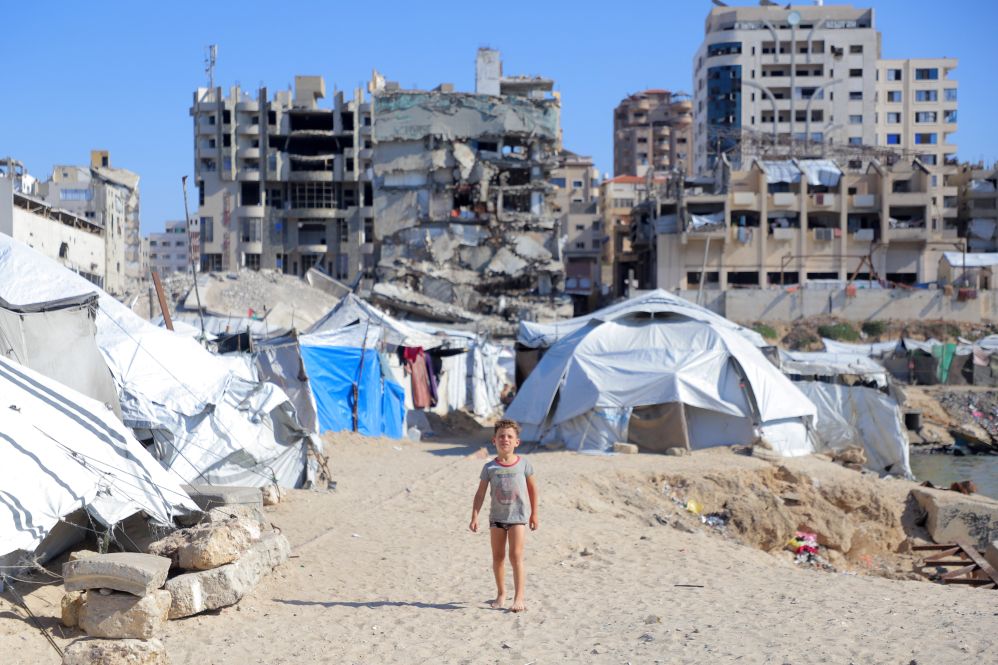
"Large-scale Israeli military campaign resulted in a significant number of casualties, particularly among women and children, widespread destruction of homes and infrastructure, and the displacement of more than two million Palestinians," Bahraini political analyst Abdullah Al Huwaihi commented.
Amid mounting global outrage over the killings in Gaza, a ceasefire was eventually reached in October 2025. Under phase one of the U.S.-proposed Gaza ceasefire plan, Israeli forces were required to retreat to the "Yellow Line" and swap hostages for prisoners. Phase two, launched in mid-January, focused on the demilitarization of Gaza and the establishment of technocratic governance.
By the end of July, Hamas had agreed to include the handover of heavy weapons in the demilitarization arrangements, conditional on Israel's full withdrawal and a halt to "aggressions."
Yet the phased agreements have failed to translate into lasting peace. Khaled Al Hroub, professor of international conflicts at Northwestern University in Qatar, said the failure of successive frameworks shows that any real settlement requires moving beyond managing recurring violence to tackling the political roots of the conflict.
Alongside the devastation in Gaza, violence and the erosion of Palestinian territory in the West Bank have also intensified.
UN data shows that as of Aug. 10, some 3,800 Palestinians had been displaced by settler violence, house demolitions and evictions this year. The UN has recorded over 1,430 settler-related incidents this year, affecting about 260 Palestinian communities.
"The West Bank is at the breaking point," Ramiz Alakbarov, the UN humanitarian coordinator for the occupied Palestinian territory, has said.
DEADLOCK AND WASHINGTON'S DOUBLE BIND
Analysts attribute the prolonged deadlock in Gaza to irreconcilable differences between Israel and Hamas.
Akram Attaallah, a political analyst from Gaza, explained that Israel insists on Hamas's complete disarmament before any full withdrawal, while Hamas demands an end to Israeli military operations and a total Israeli retreat before discussing weapons.
"Israel and Hamas view the issue as a completely zero-sum equation. Hamas wants to remain, while Israel wants to eliminate any presence of Hamas in the Gaza Strip," he said. "Between these two positions, the crisis continues."
Baghdad University professor Adel al-Ghurairi said the U.S.-proposed framework, including the so-called "Board of Peace," the stabilization force and the transitional committee, remains largely on paper, with disarmament and Israeli withdrawal still pending.
"The big pieces of the roadmap -- disarmament, an Israeli pullout, who governs during the transition -- are all still sitting unfinished," he said.
Behind the scenes, the United States plays a deeply contradictory role, observers told Xinhua.
Ali Al Hail, professor of political science at Qatar University, said Washington's role as chief mediator is undermined by its military aid and diplomatic backing for Israel, raising questions about its impartiality and allowing the conflict to persist.
"The United States has played a dual role: it remains Israel's principal strategic ally while also being an essential actor in diplomatic efforts," he said. "This dual position creates questions about how effectively it can act as an intermediary acceptable to all sides."
Al-Ghurairi added that the United States wants the war over, but it hasn't shown the will to actually force that outcome. "The absence of a genuine multilateral mechanism, and the reliance on unilateral American hegemony, renders any settlement fragile."
SPILLOVER AND THE TWO-STATE SOLUTION
Across the region, analysts see the conflict as having profoundly reshaped the geopolitical landscape.
Sudanese political analyst Mohamed Amin noted that the conflict's regional spillover has been felt in the Red Sea, where Yemen's Houthis have attacked ships in what they describe as support for the Palestinians.
"This has turned part of the repercussions of the Gaza war into an issue involving the security of international shipping and trade," he said.
The balance of power between the U.S.-Israel alliance and the Iran-led resistance front, including Hamas, the Houthis and Lebanon's Hezbollah, has shifted, Al Huwaihi added.
"Israel came to believe that, after what it viewed as its gains in Gaza, the confrontation should move toward Iran as the principal state supporting these groups," he said. "It subsequently succeeded in persuading the U.S. president to launch war against Iran on Feb. 28."
Amid such complexity, the prevailing view is that true and lasting peace remains impossible without fully implementing the two-state solution and restoring legitimate Palestinian rights.
Lebanese political analyst Youssef Diab said the Palestinian cause may remain a central conflict shaping the region.
"There can either be peace for the Palestinians, including the establishment of a sovereign Palestinian state with genuine authority, or there will continue to be instability and chaos," he said.
"Regional stability will also depend on the ability of regional and international powers to contain interconnected tensions in Iran, Yemen, the Red Sea, and the Gulf and establish broader security and political arrangements," Amin added.■