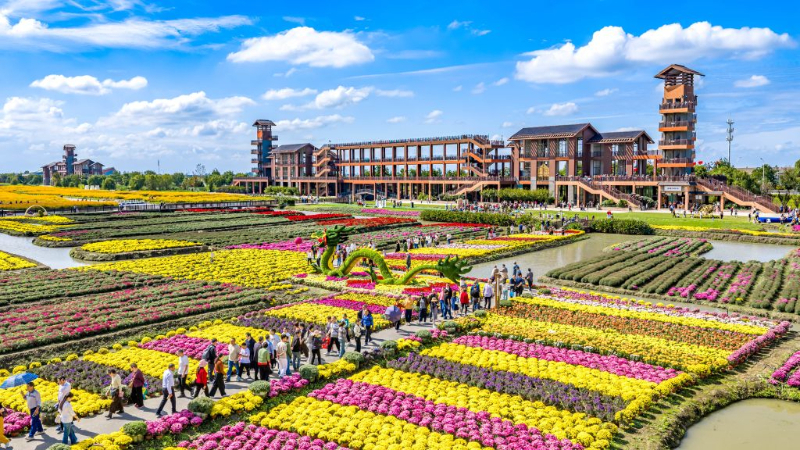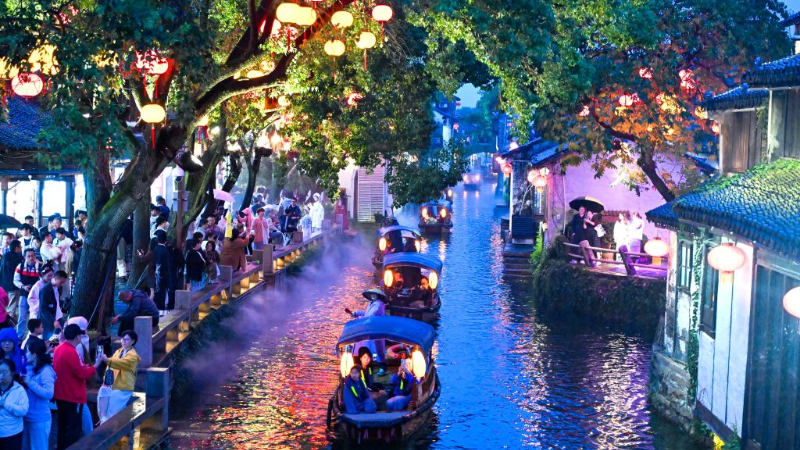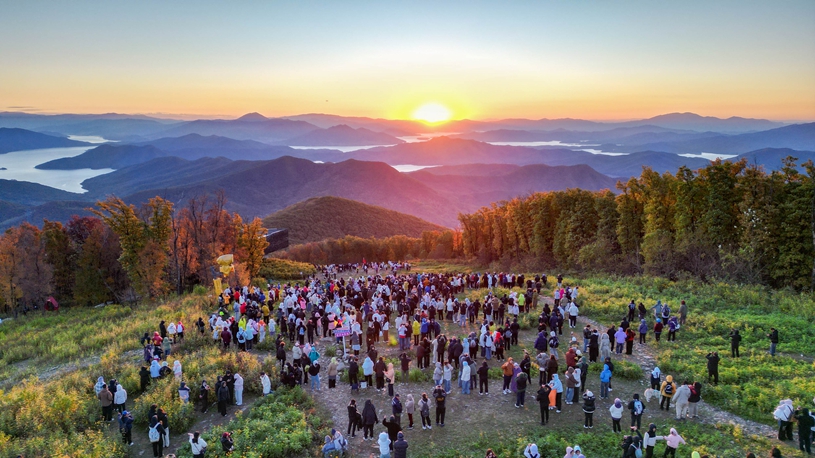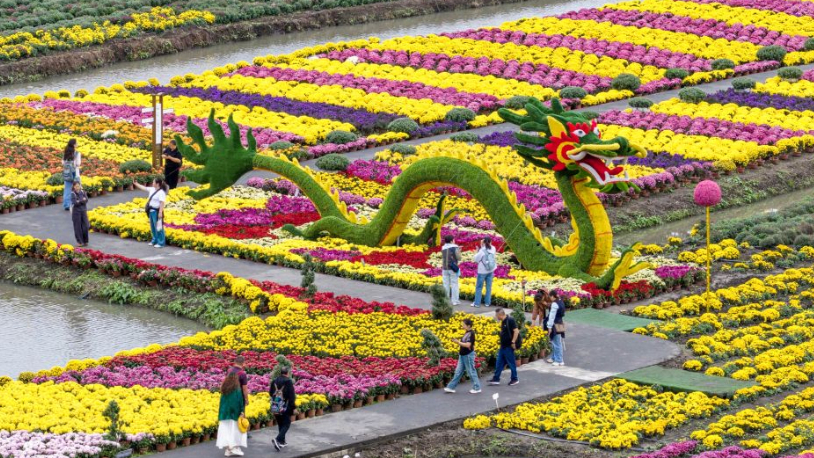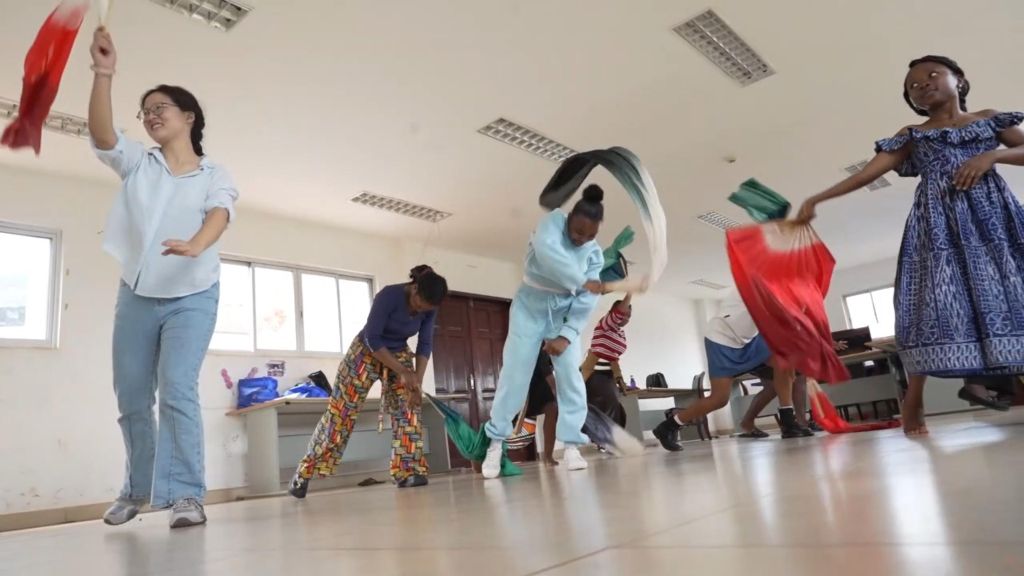
* Chinese travelers have ventured farther during the National Day holiday, with family trips and experience-oriented travel on the rise.
* Former revolutionary base areas have drawn renewed interest from holidaymakers, with visits offering travelers a chance to learn about the country's revolutionary history and reflect on the difficult years that helped shape modern China.
* More international travelers are flocking to China to experience the country for themselves, riding a rising wave of global fascination with everything from the scenery and culture to its lifestyles and, more recently, Chinese brands and design.
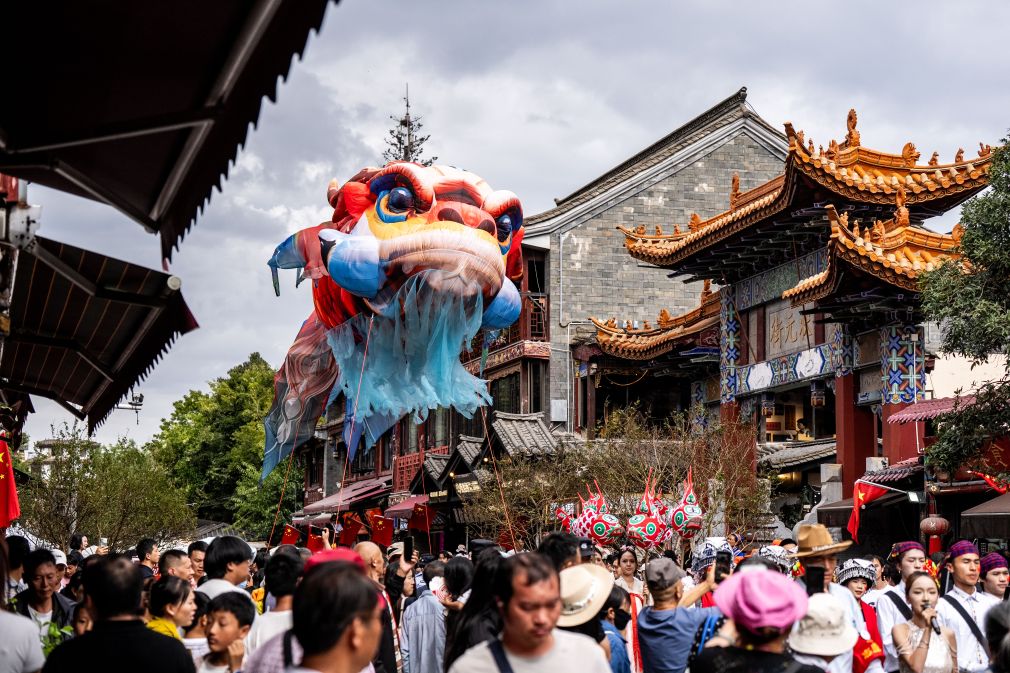
BEIJING, Oct. 5 (Xinhua) -- Five days into China's week-long National Day holiday, millions are still immersed in the sights, sounds and flavors of the season -- traveling, dining, exploring and enjoying the break. Yet this year, the scenes are subtly different.
Travelers have ventured farther as the Mid-Autumn Festival holiday fell just three days before the National Day holiday, while family trips and experience-oriented travel are on the rise, according to travel agencies.
"It points to a fundamental shift in the logic of tourism consumption, as travelers focus more on the quality of time and the richness of their experiences," said Bu Xiting, a researcher with the Communication University of China.
LONGER BREAKS, RICHER CHOICES
Data from Chinese online travel platform Tuniu shows that tours of 10 days or more are particularly popular during this holiday period, accounting for 26 percent of bookings.
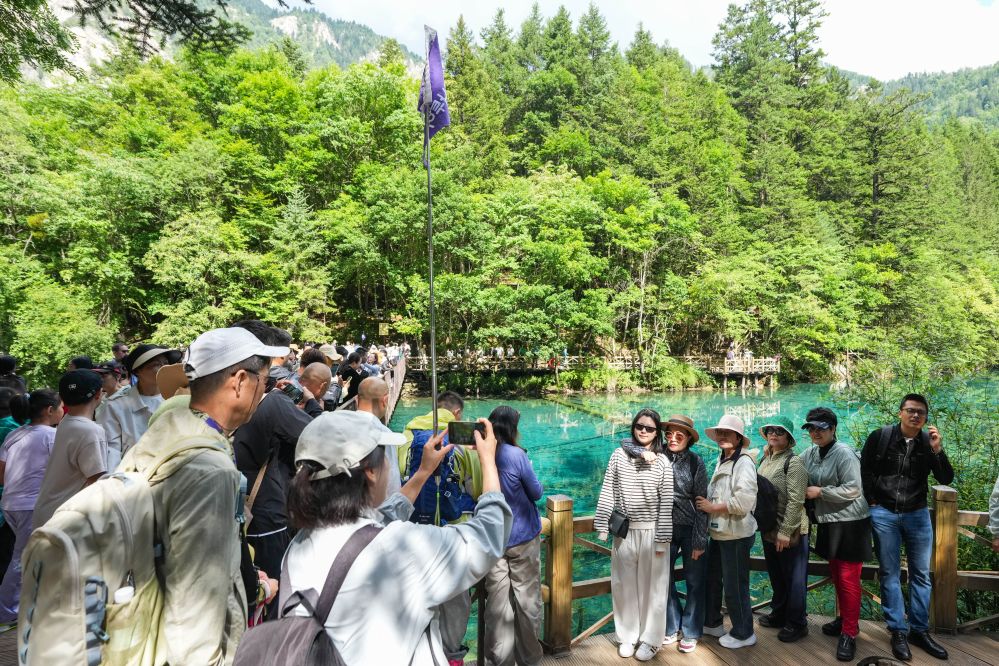
Yuan You, an internet company employee, spent three days of her 13-day break in Jiuzhaigou, southwest China's Sichuan Province, before heading to the provincial capital Chengdu for woodworking classes.
"The holiday is rich while maintaining a relaxed pace," she said.
Authorities across the country have rolled out a wide range of activities, consumer vouchers and subsidies to spur holiday spending. Shanghai, for example, has launched about 200 major consumption events, backed by consumer vouchers worth roughly 100 million yuan (around 14.85 million U.S. dollars).
The offerings range from watching films and dining to purchasing digital products and cars, encouraging consumers to explore a broader spectrum of spending experiences.
Cultural institutions, too, are broadening the ways people can experience and consume culture. The Sichuan Museum extended its holiday hours and launched a themed night tour, while Beijing's Zhongshan Park brought museums, cultural institutions and innovative brands together to create a market street featuring culture-inspired products.
As more new energy vehicles hit the roads during the holiday, authorities have taken measures to ensure adequate charging facilities and convenient services.
During last year's eight-day Mid-Autumn Festival and National Day holiday period, Chinese travelers made 888 million domestic trips and spent a combined 809 billion yuan, according to the Ministry of Culture and Tourism.
This year, data shows that foot traffic and revenue at 78 major shopping streets and commercial districts monitored by the Ministry of Commerce rose 3.4 percent and 5.3 percent year on year, respectively, from Oct. 1 to 3.
RED TOURISM, ROBOTS AND RURAL EXPERIENCES
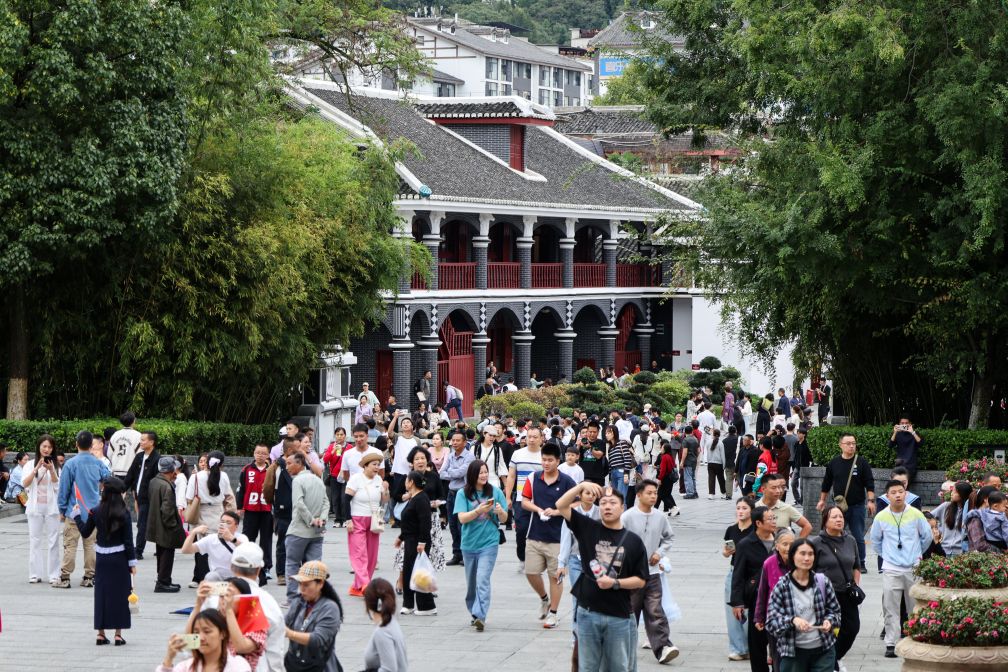
As China marks the 90th anniversary of the victory of the Long March, former revolutionary base areas have drawn renewed interest from holidaymakers, with visits offering travelers a chance to learn about the country's revolutionary history and reflect on the difficult years that helped shape modern China.
In Yan'an, northwest China's Shaanxi Province, a street has staged special activities including performances of songs from the revolutionary years and a large-scale bonfire gathering. Visitor numbers on the first day of the holiday rose about 20 percent year on year.
The holiday has also turned some of China's newest robots into part of the consumer experience, putting embodied intelligence to work alongside traditional culture in tourist attractions, shopping districts and ancient towns.
At a cultural district in Chengdu, robots performed dances inspired by local opera's face-changing art and used digital technology to recreate tanghua, a traditional form of sugar painting.
On Chunxi Road, a humanoid robot has gone beyond entertainment to take on the role of a store manager, greeting customers and recommending products rather than simply performing for them.
China's growing network of robot training bases is preparing more machines for roles beyond the factory floor -- and beyond the country's borders. In the first half of 2026, Chinese manufacturers accounted for 97 percent of humanoid robot shipments worldwide, according to a report released at the 2026 World Robot Conference.
Years of efforts to restore the environment and revitalize rural areas are also paying off. On a ridge overlooking the Miyun Reservoir in Beijing, visitors can hike to a viewing platform and enjoy outdoor concerts amid the pine trees.
With roads, infrastructure and public services extending deeper into the countryside, some once-remote villages are emerging as new destinations for holidaymakers.
Caijiagou, a former impoverished hillside village in east China's Shandong Province, has transformed into an art-themed destination, with murals adorning residential walls.
Village official Liang Yunhui said the village has repurposed idle rural homes into cultural spaces such as an art gallery and a musical instrument museum, while hosting events featuring traditional crafts, cultural fairs and folk music. "In total, we have received more than 500,000 visits over the years," he said.
On travel platform Fliggy, the number of users purchasing travel products featuring natural scenery and villages surged by nearly 50 percent from the same holiday period last year.
"More travelers are seeking immersive experiences, from sampling local cuisine and making intangible cultural heritage crafts to watching distinctive performances, allowing them to gain a deeper appreciation of local culture," said a manager with Tuniu.
CHINA HAUL
While many Chinese tourists are venturing farther around the world, more international travelers are flocking to China to experience the country for themselves, riding a rising wave of global fascination with everything from the scenery and culture to its lifestyles and, more recently, Chinese brands and design.
Tennis star Novak Djokovic, in Beijing for the China Open, was seen trying his hand at Chinese calligraphy at the Summer Palace, a former imperial garden. After a match, he used a traditional Chinese seal to put his mark on fans' keepsakes instead of signing autographs.
Huaqiangbei, a sprawling electronics marketplace in south China's tech hub Shenzhen, has become a magnet for foreign shoppers looking to experience China's tech scene firsthand.
Bryan Lamothe-Arice from the United States was browsing smart devices. "I'm particularly interested in the electric bikes and all kinds of flying devices here. I'm going to tell my friends to come here. There are tech products everywhere."
China's border crossings are expected to see about 2.15 million passenger trips a day on average during the National Day holiday, according to the National Immigration Administration.
That growing international interest is also showing up in spending. Overseas visitors spent 263.6 billion yuan in China in the first seven months of 2026, up 27.8 percent year on year, according to the commerce ministry.
(Video reporters: Chen Si, Lin Long, Ji Zijian, Sun Qing and Zhong Chao; Video editors: Zhang Mocheng and Hong Ling) ■