TAIYUAN, Oct. 5 (Xinhua) -- For years, Yang Liangen saw strangers as a threat.
After a series of break-in attempts at a 900-year-old temple in north China's Shanxi Province, Yang moved into the compound in 1997, sleeping behind its gates and guarding its rare sculptures and wooden structures.
Nearly three decades later, he eagerly waits for strangers to arrive. "We used to be afraid when people came," Yang said. "Now we hope they will come."
Located in Xiaonan Village in Jincheng City, Erxian Temple fully opened to the public in 2024 as interest in Shanxi's ancient architecture surged following the release of "Black Myth: Wukong," a blockbuster Chinese video game.
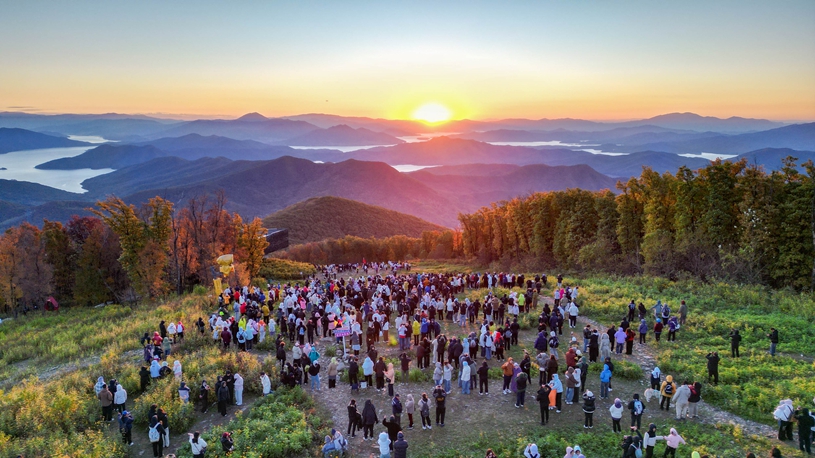
During China's National Day holiday that year, Yang counted 1,280 visitors in a single day -- a record for a site whose gates had long been kept mostly shut. The crowds have continued to grow, with more than 4,300 people visiting the temple from Oct. 1 to 3 this year.
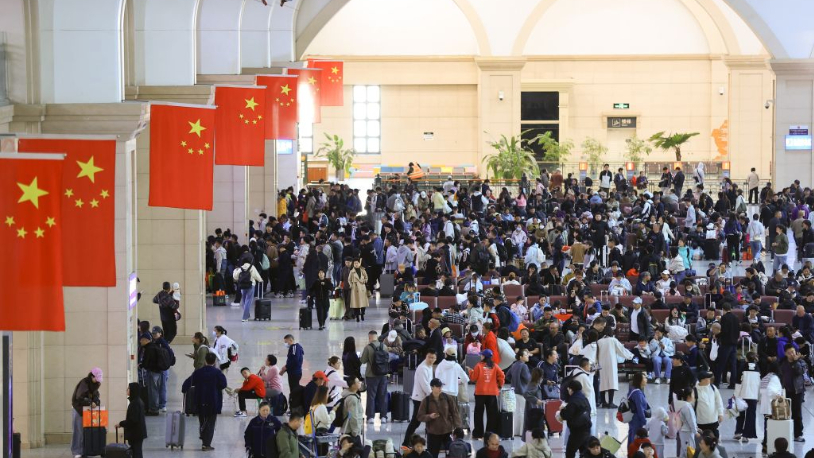
The change at Erxian Temple reflects a broader shift across China, as growing interest in cultural tourism brings new attention to historic buildings that for decades were little known beyond their local communities.
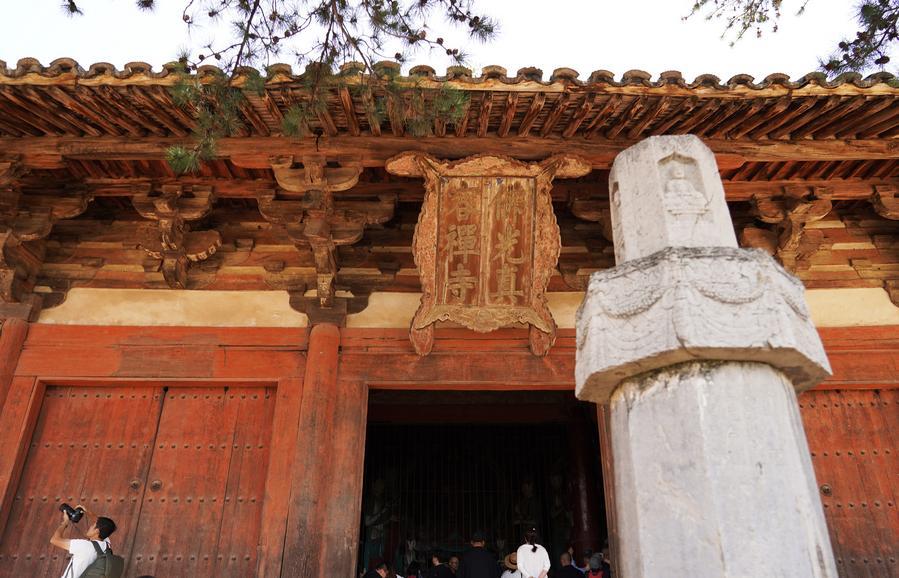
Built in 1097, Erxian Temple is a major national cultural heritage site. Its main hall is known for rare Song Dynasty (960-1279) painted sculptures and an exceptionally well-preserved miniature wooden architectural structure known locally as the "sky bridge."
Dubbed China's "above-ground cultural relics museum," Shanxi is home to over 28,000 ancient structures. The province also preserves more than 12,000 painted sculptures and 24,000 square meters of murals from the Tang Dynasty (618-907) onward.
PRESERVED BEHIND THE GATES
For Yang, the new attention marks a dramatic change from the late 1990s.
Facing growing risks to the temple in 1997, Yang, then the village Party secretary, took responsibility for Erxian Temple and moved in with his wife.
The couple kept watch day and night. On one occasion, Yang's wife rushed outside with a flashlight after two people were spotted apparently chiseling through a wall, sending them fleeing.
No theft has occurred since Yang became its caretaker.
A major restoration completed in 2014 repaired the compound and revived its two-courtyard layout. Surveillance cameras were installed, giving the couple what Yang described as their first truly restful sleep in years. But the gates largely remained closed.
Visits by preservation experts became important opportunities for Yang. He followed them around, learning about Song Dynasty construction and the temple's rare architectural features.
As architecture enthusiasts began making their way to the village, Yang sometimes made exceptions to let them inside and shared what he had learned.
"They had come such a long way," Yang said. "Maybe they would only come once in their lives. How could I not let them see it?"
Over time, Yang turned himself from a guard into an unofficial guide.
FINDING NEW AUDIENCES
Years of restoration and improved security eventually made it possible for more people to see what Yang had spent decades protecting.
In late 2022, an upgrade of Erxian Temple's security system was launched. Around the same time, local heritage enthusiasts formed a volunteer association in Jincheng City to support heritage site caretakers, organize educational visits and train volunteer guides.
In August 2024, Jincheng began opening 18 nationally and provincially protected heritage sites to the public on Sundays on a trial basis before fully opening them in October. Erxian Temple was included.
"The temple didn't become popular overnight," said Zhang Jianjun, one of the association's founders. "Without all those years of preparation, we wouldn't have been ready when the crowds came."
The association now has more than 400 members, including Zhang Jie, a local charter driver who first visited Erxian Temple while taking customers around Shanxi in 2024. Standing among centuries-old sculptures and elaborate woodwork, he realized how little he knew about the heritage of his own home province.
"I felt ashamed, but also curious," he said. He began studying traditional architecture, joined the volunteer association and now shares what he has learned with tourists.
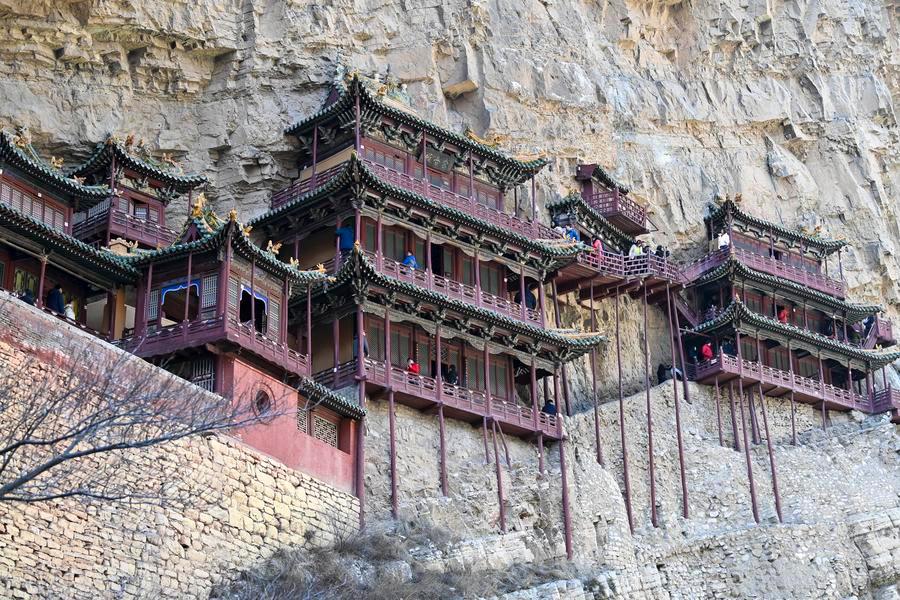
At the Hanging Temple in Datong City, Chen Ruiyan recalled a recent road trip she and her husband had taken from Guangdong Province to Shanxi, visiting more than a dozen historic sites across the province. Inspired by films and animations featuring Shanxi's ancient architecture, they had studied traditional architectural features before setting out.
"Beyond their aesthetic impact, ancient wooden buildings have a sense of quietness and vitality," Chen said.
Beyond Shanxi, efforts to preserve historic architecture are also bringing old buildings closer to contemporary life. In Fujian Province, traditional Tulou, or earthen buildings, are being preserved and given new uses, while in Guizhou Province, more than 12,000 endangered traditional buildings have undergone emergency restoration.
China's latest five-year plan for cultural heritage calls for stronger systematic protection while making preservation efforts more accessible and beneficial to the public.
Wang Chunbo, a researcher specializing in ancient architecture, sculptures and murals in Shanxi, said the growing interest in historic architecture reflects a deeper engagement with traditional culture among younger Chinese.
"Young people are no longer satisfied with simply checking a destination off their list," Wang said. "Historic buildings are becoming cultural spaces they can experience, engage with and share."
Li Junda, a university student studying anthropology in London, traveled to Shanxi after encountering Yang's story online. What struck him was how the temple's history was still carried by the people around it.
"At the British Museum, I saw many Chinese artifacts on display, identified simply by their dynasties," Li said. "Here in Shanxi, the heritage is still 'alive,' because villagers like Yang are here to tell the stories behind it." ■