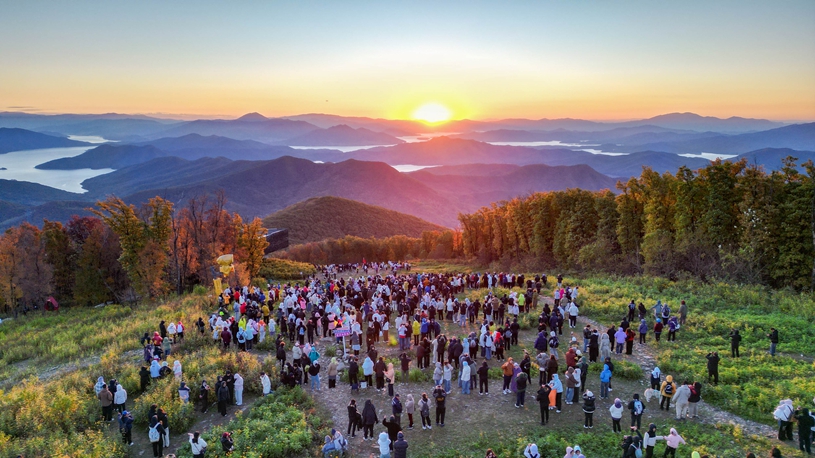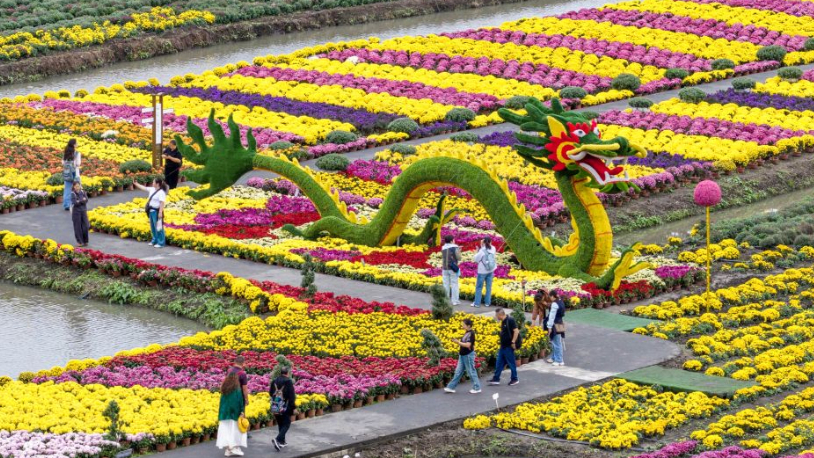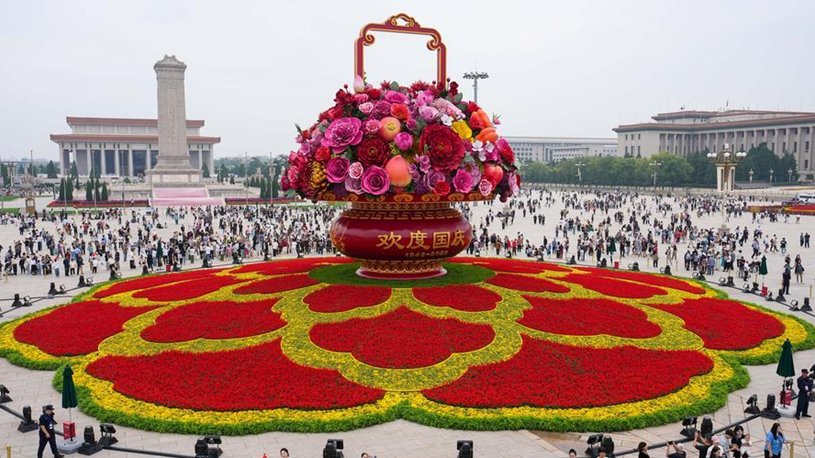
BEIJING, Oct. 3 (Xinhua) -- China's National Day travel market kicked off on a strong note, as many travelers linked the Mid-Autumn Festival and National Day breaks with their annual leave. This trend has led to longer trips and a surge in bookings for long-haul journeys, multi-city itineraries and experience-based travel products.
LONGER BREAKS, FARTHER JOURNEYS
With the Mid-Autumn Festival and National Day separated by only three working days this year, some travelers used three days of leave to link the two breaks into a 13-day holiday. Trip.com Group data showed that one in every 10 travelers combined the two holidays into an extended break.
Cao Shuai, CEO of Tongcheng Travel's destination business division, said strong demand for the 13-day break has lengthened the overall consumption cycle and helped release demand for long-haul and in-depth travel.
Data from online travel platform Qunar showed that by Oct. 1, the first day of the National Day holiday, 20 percent of travelers had already reached the second city on their itineraries. Nearly 30 percent had booked hotels in at least two cities, while bookings involving stays in four or more cities surged 53 percent year on year.
For Yuan You, who works for an internet company, the 13-day break made it possible to split one holiday into two distinct stages. She planned to first spend three days in Jiuzhaigou, a UNESCO-listed scenic area in southwest China's Sichuan Province known for its turquoise lakes and waterfalls, before continuing to Chengdu for the remainder of the break.
"With such a long break, spending the whole time either resting or sightseeing can become monotonous, so I opted for a mix of both," Yuan said. In Chengdu, she chose to spend part of that extra time learning woodworking.
Longer breaks are encouraging people to travel farther. Flight bookings for journeys of more than 2,000 km rose 76 percent year on year during the Mid-Autumn Festival and National Day period, accounting for more than a quarter of all flight bookings, according to Meituan.
Wang Peng, an associate researcher at the Beijing Academy of Social Sciences, said the extended break has encouraged more people to start traveling earlier, spreading trips over a longer period rather than concentrating them within a few peak days. That, Wang said, could help sustain demand across tourism, accommodation and catering services for longer periods of time.
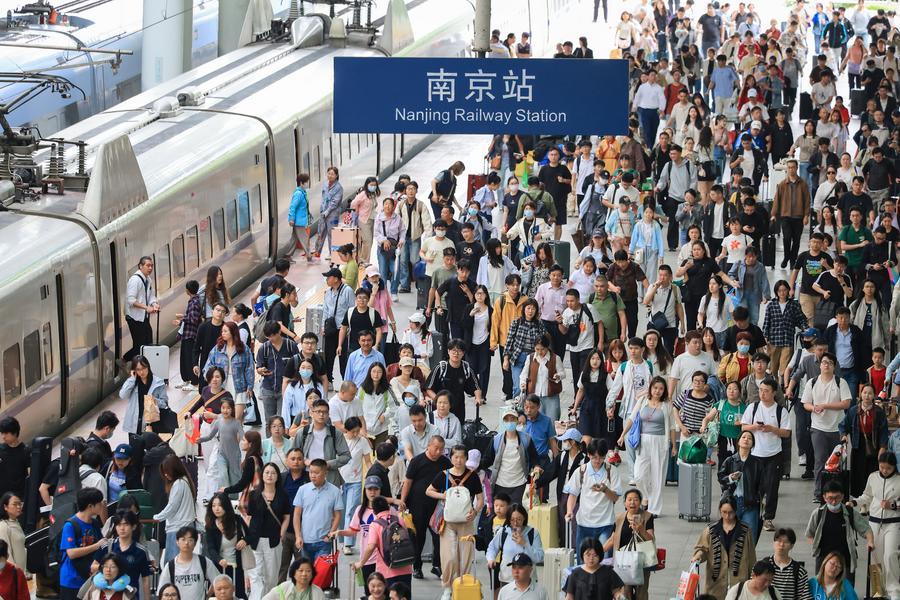
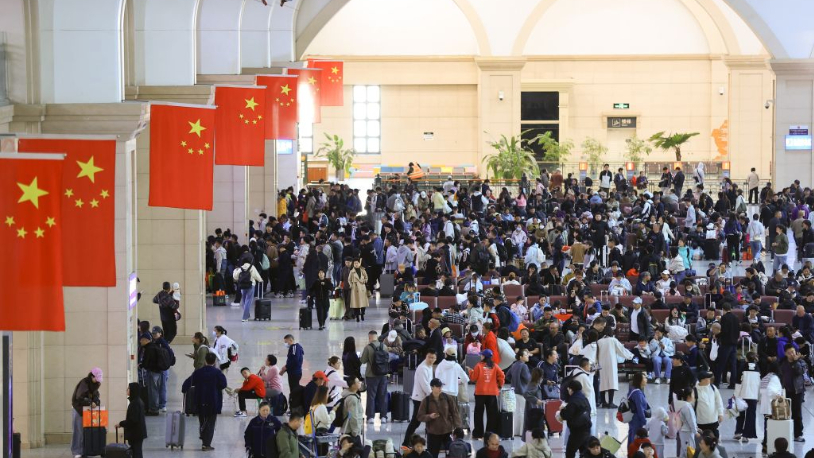
China State Railway Group Co., Ltd. (China Railway) said that China's railway network handled 25.204 million passenger trips on Oct. 1, setting a new single-day record.
RICHER EXPERIENCES, MORE TO EXPLORE
The surge in mobility has translated into demand for richer experiences at destinations. At the National Maritime Museum of China in north China's Tianjin Municipality, 19,000 visitors streamed through the doors on the opening day of the National Day break.
Among the new draws is "Echoes of the Whale Song," the museum's first customized full-sensory virtual reality experience. Unlike conventional walk-through VR attractions, visitors remain seated as the experience unfolds around them, allowing for a more immersive encounter.
Under blue lights, visitors see a giant whale entangled in discarded fishing nets and take part in a virtual rescue, learning along the way about the impact of marine debris on ocean life.
Such experience-oriented products are gaining traction well beyond one museum. On Fliggy, Alibaba Group's online travel platform, domestic attraction ticket bookings on Oct. 1 rose nearly 30 percent year on year, while the number of users purchasing products for natural scenic areas and villages increased by nearly 50 percent.
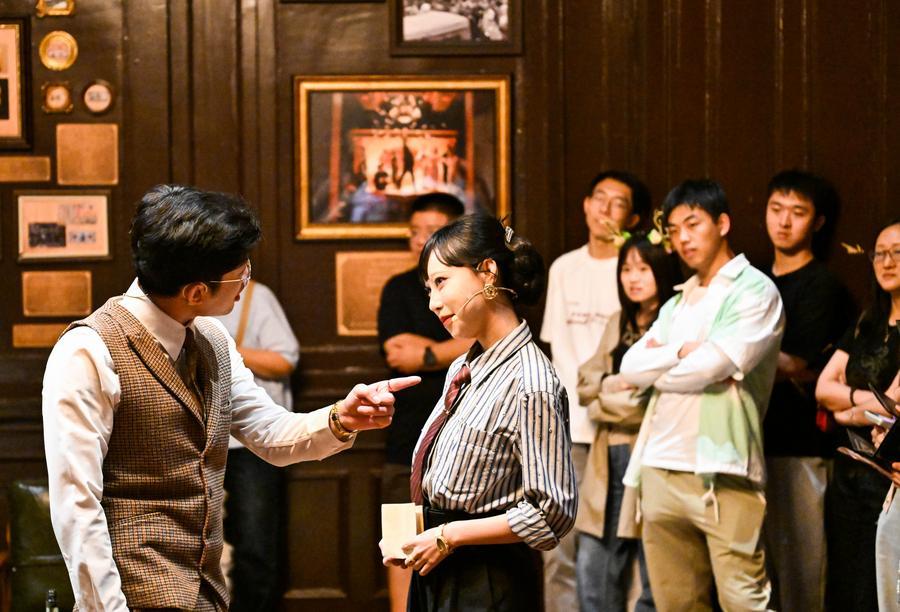
Searches on Qunar for "immersive performances," "fireworks shows" and "night tours" also climbed more than 50 percent year on year.
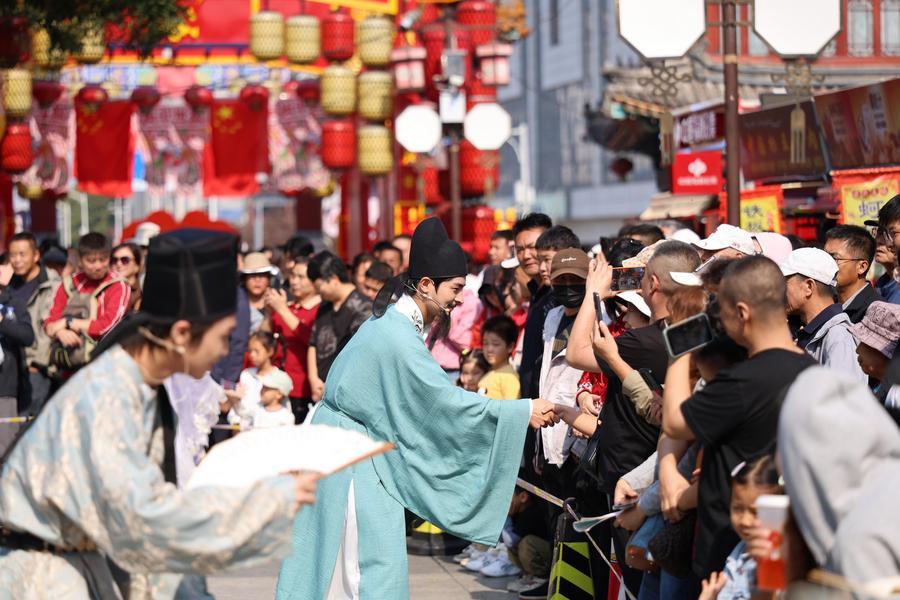
The growing demand for interactive travel experiences can be seen at Changchun Zoological and Botanical Park in northeast China's Jilin Province. There, a nighttime immersive show inspired by the Chinese classic "Journey to the West" has drawn large crowds into a vibrant fantasy world, with costumed performers mingling with visitors and transforming the park into a stage after dark.
Yang Han, a researcher with Qunar's big data research institute, said travelers are increasingly setting out to "enter a story" rather than simply view static scenery, with content-driven experiences gaining popularity and bringing new opportunities to less traditional tourism destinations.
Bu Xiting, an associate researcher in the School of Cultural Industries Management at Communication University of China, contrasted the current trend with the previously popular "special forces-style tourism," a fast-paced form of travel in which people try to pack as many sights as possible into a short period, and city walks, which offer smaller-scale urban experiences during pockets of free time.
By linking public holidays with annual leave, travelers now have more time to shape their trips around what they want to experience, Bu said. Tourism consumption, Bu noted, is shifting from a focus on "time efficiency" toward greater "experience density."■