by Xinhua writers Wang Meiqi, Wang Xiaopeng and Yang Yuanyuan
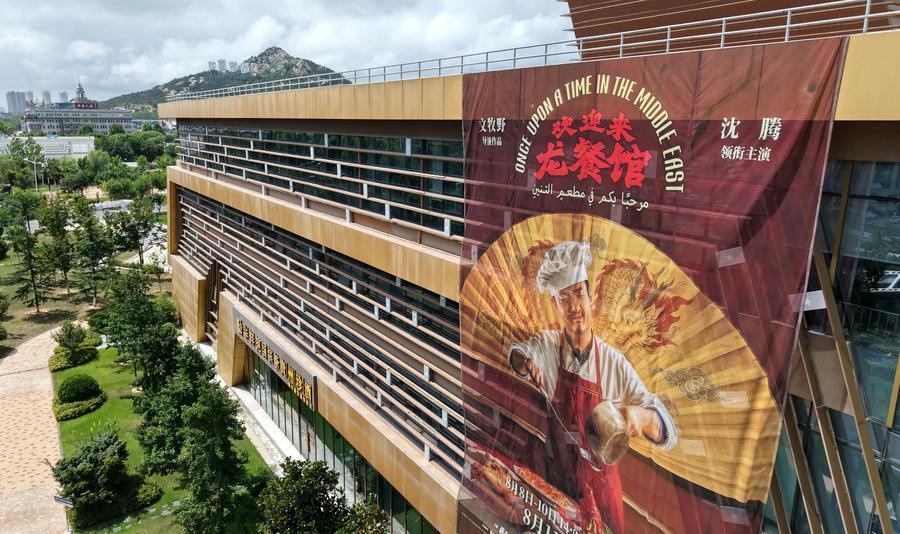
BEIJING, Oct. 3 (Xinhua) -- In the closing scene of the hit Chinese film "Once Upon a Time in the Middle East," sunlight fills a post-war restaurant as a waiter introduces the house specialty, namely "Xu Fu Rice Stew," a humble dish born out of wartime hardship.
It begins as a simple pot of braised rice, made by a Chinese cook named Xu Fu for hungry children fleeing a regional fight. Yet the dish holds something deeper -- a shared hope for peace.
The waiter is played by Ameen Muneer Mohammed Al-Obaidi, an Iraqi who goes by the Chinese name Fang Haoming. He is a young reporter and a survivor of the Iraq War launched by the United States. In 2003, when American missiles lit up the night sky over his hometown Baghdad, Al-Obaidi was barely three years old.
"The only food we had then was raw potatoes and rock-hard flatbread. Even that wasn't guaranteed," he recalled. "My father would queue for hours to get two or three potatoes for the family."
"When I saw the rubble and graffiti on set, it brought everything back," said Al-Obaidi. He moved to Yinchuan, the capital city of northwest China's Ningxia Hui Autonomous Region, in 2011 to reunite with his elder sister. She had married a Chinese man she met in the Middle East and later settled down in Yinchuan.
"Before I came to China, I didn't know what peace was," he said.
A few days after Al-Obaidi settled in the Chinese city, he encountered the Spring Festival, which is China's most important traditional festival, when families gather for reunion and celebration.
At night, the sound of firecrackers and fireworks startled the Iraqi family. "Where I come from, when you hear that sound, everyone tenses up and wants to get into a bomb shelter," Al-Obaidi noted.
But what he saw outside was very different: children laughing and cheering, families holding each other as colorful fireworks lit up the sky. "That was the first time I realized such sounds can bring happiness, not necessarily fear," he added.
Ever since, the Spring Festival has been Al-Obaidi's favorite holiday, and he makes sure to have Chinese New Year's Eve dinner with family and friends every year.
"Being able to sit down to a peaceful meal is the greatest joy for us," the young man said.
This idea lies at the heart of the film. According to Wen Muye, the film's director, the decision to tell a war story through a restaurant came from a simple contrast: war brings destruction, while food is closely associated with warmth, reunion and everyday happiness.
The film follows Xu's journey to the Middle East to work in a Chinese restaurant after falling into debt at home. Alongside restaurant manager Ma Junsheng, he helps build a popular eatery that becomes a gathering place for people from diverse backgrounds. Then war breaks out, and the restaurant, once a place of ordinary life, gets caught up in the violence.
The film frequently returns to the theme of cooking, from dumplings made before Xu leaves home to a wedding banquet where Chinese and Arab food traditions come together. Later, as Xu flees the fighting with a group of orphaned children, he prepares a simple pot of rice.
The meal is modest, Wen said, but for the frightened children, it offers something more important, providing a moment of security and a taste of normal life. The dish eventually becomes known as Xu Fu's braised rice at the restaurant.
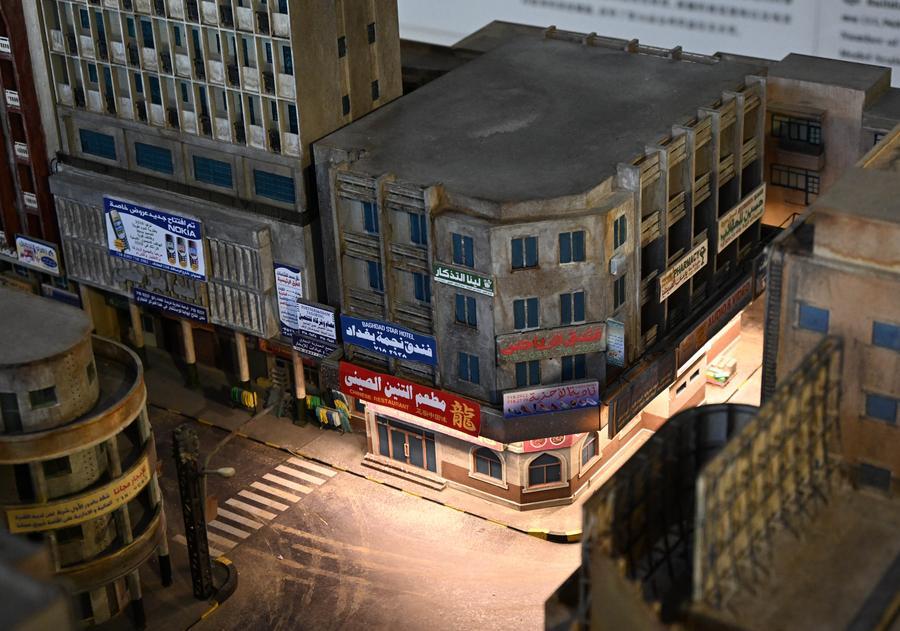
Since its release in August, the film has generated strong box-office numbers and positive reviews, grossing over 2.3 billion yuan (about 343 million U.S. dollars).
Though set in the Middle East, the war drama's emotional center lies elsewhere. It can be found in the universal desire for an ordinary life, where a person can eat, work and sit together with family without fear.
"Don't forget to eat properly" is an everyday Chinese expression of care. In the film, it becomes something much larger, a reminder of the normal life war threatens to take away.
Though Al-Obaidi had never acted before this film, Wen was determined to cast the young Iraqi who had lived through war and embraced peace. Explaining his rationale, Wen said, "Just him standing there is the best performance."
CHINESE RESTAURANT IN WARTIME BAGHDAD
The Loong Restaurant, where Xu works as a chef in the hit film, also draws on real-life stories. For decades, running restaurants has been one of the most common ways Chinese people make a living overseas, and some Chinese restaurants have become unexpected meeting places between cultures.
Chen Xianzhong, an Arabic-language graduate who first visited Iraq in 1984, left his stable job in a Chinese state-owned company years later and opened a Chinese restaurant named Yan Loong Wan in downtown Baghdad in 2003.
At the time, it was one of just a few Chinese restaurants in the city. As Iraq is a Muslim-majority country, Chen said, he made sure that all the ingredients used in the restaurant were in line with local customs and acceptable to Muslim diners.
Then the Iraq War broke out, and Chen nonetheless refused to give up his business. In a city where explosions shattered windows and fear emptied the streets, the restaurant became something rare: a taste of normal life. Diners could find authentic Chinese dishes, including dumplings, alongside local specialties such as samoon, a type of bread common in Iraq.
Local Iraqi families, international journalists and diplomats, and even American soldiers arriving in armored vehicles, all came to eat, Chen said, adding that the restaurant put him in touch with many walks of life. When car bombs eventually made the city too dangerous to live in, Chen closed the restaurant in 2005 and sent his Chinese staff home. But he chose to stay, continuing to run a hotel and a shopping mall.
"I had already got to know the country, and I could use the language I learned every day," he told Xinhua when explaining his decision to stay in Iraq despite the conflict. For Chen, opportunity and risk went hand in hand, and he was prepared to take that risk.
"Almost every penny I earned came from Iraq," the 72-year-old said. "Now I just want to give something back -- to the Iraqi people and to my fellow Chinese."
Hospitality, Chen recalled, is woven into the fabric of Iraqi life. His neighbors, some of them farmers with orchards, would drop by with fresh dates and sometimes even an entire grilled fish.
"I've been to many places in the Middle East, and Iraq is my favorite. People there are very friendly to the Chinese," he said, adding that he often gives his neighbors Chinese porcelain products as tokens of appreciation for their kindness.
Chen's real-life story echoes one of the film's central ideas: even in times of conflict, ordinary people keep looking for places to eat, talk and connect.
LONGSTANDING TIES
China and Arab countries boast a long history of friendly exchanges. For centuries, Chinese and Arab civilizations have traveled along the land and maritime Silk Roads, exchanging goods, knowledge and ideas across vast distances.
For Al-Obaidi, the young Iraqi who grew up in China, the warmth he has experienced across cultures is part of this longer history. China and the Arab world may lie far apart on the map, he said, but they share the same reverence for peace and yearning for a better life, cherishing family and hospitality alike.
When Al-Obaidi finally returned to Baghdad in 2024, he found construction cranes rising where shells once fell. Chinese companies are among those contributing to the rebuilding of his homeland, including by building schools.
"Looking at those children's smiling faces, I recalled my childhood, and at that moment, I was convinced that the future of Iraq would be different," he said.
On his third visit to China this June, former Iraqi President Abdul Latif Rashid spoke highly of China's constructive role in Iraq's post-war reconstruction and expressed gratitude for China's valuable support in energy, infrastructure and other areas.
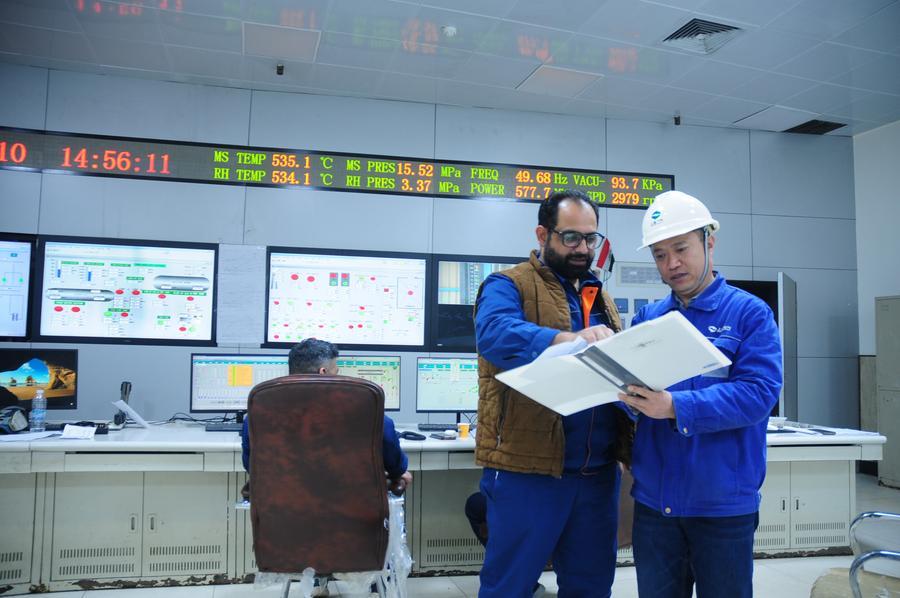
Speaking to Xinhua on the sidelines of the 2026 Forum on Global Human Rights Governance in Beijing in June, Rashid commended China's efforts to improve international relations and advance human rights.
Drawing on Iraq's own experience, he observed that his country has endured decades of war, sanctions and terrorism, which has convinced him that peace and stability are the prerequisites for development, and development in turn is the bedrock of human rights.
Today, around 10 Chinese restaurants operate in Baghdad, said Chen, who recently returned to Beijing. He noted that restaurants serving Middle Eastern cuisines can now be found in Beijing while Iraqi dates are available in China through online shops.
According to him, Chinese household goods have also found a growing market in Iraq, with tableware and everyday porcelain products particularly popular.
Such exchanges, he noted, go well beyond food. New-energy vehicles are also beginning to appear on Iraqi roads, with cars from Chinese brands becoming increasingly visible, he said.
For Al-Obaidi, who speaks fluent Chinese, China is the place where he was reborn. He now works for an Arabic-language satellite broadcaster, covering China-Arab relations.
"China has always worked to bring peace to the world. That is not empty diplomatic language. It is a fact I have felt with my own life," he said.
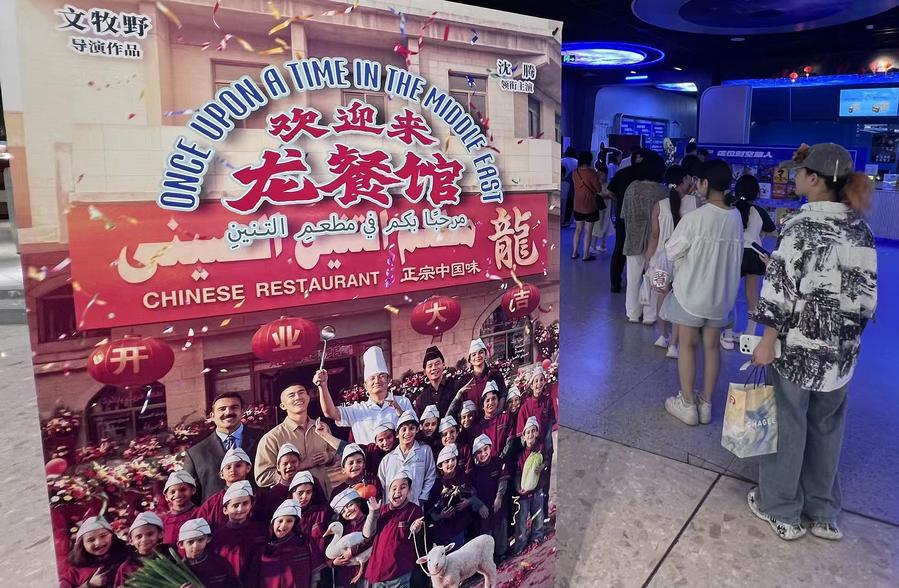
Perhaps that is why a simple line in the film carries such weight. When Xu Fu tells the children to "eat properly," it is more than a reminder to finish a meal. It is a wish for something most people take for granted: a warm meal at the end of the day, a family gathered around the table, and children growing up without learning to fear the sound of explosions.
Eat well. Live in peace. ■