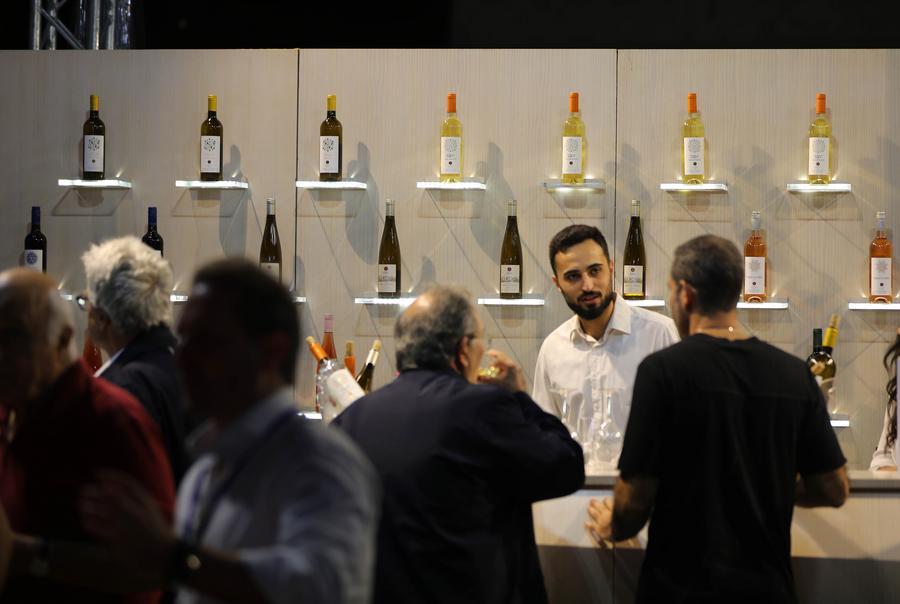
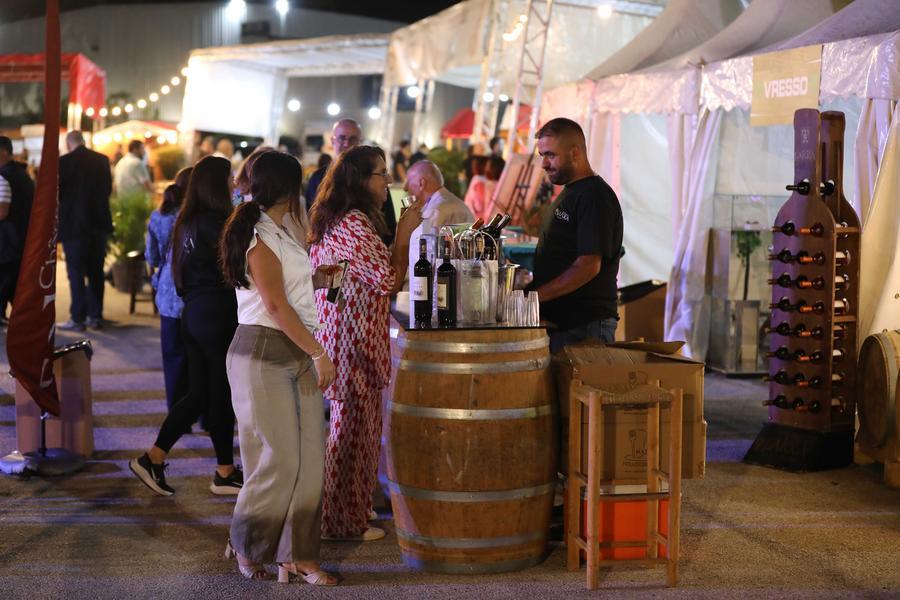
BEIRUT, Oct. 2 (Xinhua) -- Lebanon's wine producers have largely kept production alive despite the country's prolonged conflict, but falling domestic demand and mounting export pressures are weighing on wineries, according to exhibitors at Vinifest, a wine exhibition running from Thursday to Saturday in Sin El Fil, east of Beirut.
"Since the war started, there has been a major decline in the domestic market," said Eva Naim, co-owner of a family-owned winery Chateau Qanafar in West Bekaa.
Naim estimated that her chateau's domestic sales had dropped by more than 40 percent, blaming weaker purchasing power, the departure of people from Lebanon, and a shrunken hospitality sector.
"Wine is not an essential product," echoed Natalie Saade Touma, owner of Chateau Saint Thomas, noting that consumers under economic strain prioritize food and other necessities.
Chateau Saint Thomas saw a decline of about 20 percent in domestic sales in the first nine months of 2026 compared with the same period in 2025, while Chateau Ksara, a renowned local winery, reported a 30 percent fall, according to its deputy general manager, Kamil Chawi.
Production had largely endured amid the conflict.
Chawi said Ksara harvested all its vineyards in 2024, with no significant damage in 2026. Naim said her chateau maintained output because its vineyards in Kherbet Qanafar stayed accessible.
However, not all escaped harm: Saade Touma said Chateau Saint Thomas could not harvest one vineyard in the Bekaa in 2023 because security conditions blocked access.
An Agriculture Ministry assessment updated through August 2026 found that 26.76 hectares of vineyards in assessed conflict-affected districts in Lebanon required replanting or rehabilitation, with direct damage estimated at about 668,880 U.S. dollars.
The assessment covers selected districts rather than all Lebanese vineyards and distinguishes physical damage from production losses caused by restricted access and interrupted agricultural operations. Updated production-loss estimates for perennial crops remain pending.
Agriculture Minister Nizar Hani said the wine sector was affected particularly in parts of the Bekaa Valley, where Israeli airstrikes and difficulties reaching vineyards delayed harvesting and caused partial crop loss.
While domestic sales remain weak, exports have offered little relief.
Naim estimated that Chateau Qanafar's exports had fallen by around 50 percent, while Chateau Saint Thomas reported a 20-percent decline.
"There are many global factors that have affected the wine market," Naim said, citing inflation and shipping costs up some 50 percent.
Chawi said Ksara's exports outperformed its domestic business, though higher shipping, fuel, and raw-material costs still weighed on the winery.
Competition from lower-priced European wine amid global oversupply has compounded the squeeze, both abroad and at home, Hani said.
In response, wineries in Lebanon are pivoting outward, with some courting clients in Europe, the Gulf, and the United States.
Ksara has strengthened its export sales team, while Hani called for stronger promotion of Lebanese wine in restaurants, hotels, and foreign markets, alongside efforts to cut costs and boost competitiveness.
On Sept. 23, Lebanon's National Institute of Vine and Wine and the Syndicate of Owners of Restaurants, Cafes, Nightclubs, and Pastry Shops signed a cooperation memorandum, aimed at promoting Lebanese wine locally and abroad.
Member of parliament Razi El Hajj estimated Lebanon's annual wine production at around 12 to 13 million bottles and said that a parliament's economy committee stands ready to support the wine sector, which he called a value-added industry capable of sustaining farmers, jobs and investment. ■