by Xinhua writer Yuan Quan
BEIJING, Oct. 3 (Xinhua) -- Although called Tiangong, or "Heavenly Palace," China's space station is becoming less distant and more like home, as astronauts bring the comforting tastes into orbit.
The Chinese space kitchen now serves nearly 200 food items. Alongside dumplings and mooncakes, home-style dishes such as Kung Pao chicken, mapo tofu and fried rice have made it onto the station's menu.
Videos showing astronauts savoring freshly cooked meat and cakes in orbit have gone viral. Their smiling faces and bright eyes make the aroma almost leap off the screen.
Yang Liwei, the country's first astronaut, joked at a recent press conference that he was envious. He said astronauts can now use air-frying equipment in space and enjoy baked chicken wings in orbit. During his Shenzhou-5 mission in 2003, which lasted less than one day, his diet was limited to packaged instant food that could not be heated.
Microgravity, cosmic radiation and the enclosed cabin environment impose strict requirements on space diets. Floating particles and droplets may drift into instruments and trigger malfunctions. Since Yuri Gagarin, the first human to travel into space, paste-like food and compressed energy bars had long served as the standard meals for astronauts.
In June 2013, Wang Yaping, together with two fellow male crewmates, carried out the 15-day Shenzhou-10 space mission. People remembered this female astronaut with a ponytail for her space lecture. At the same time, the image of her floating a "zongzi," a leaf-wrapped rice dumpling, by hand also left a deep impression on the public.
Zongzi is traditionally enjoyed during the Dragon Boat Festival, which happened to coincide with the Shenzhou-10 mission that year. To help the astronauts celebrate, this special snack was added to the spaceship pantry.
Eight years later, Wang spent Spring Festival aboard the Tiangong space station during the Shenzhou-13 mission. It is also China's first six-month-long space stay. Scientists customized the cuisine: for instance, they prepared dumplings with seafood fillings because Wang grew up by the sea, and plenty of spicy food for crew member Ye Guangfu, who was born in chili-obsessed Sichuan Province.
At that time, the core module Tianhe had several sections, including those for working, sleeping, dining and exercising. The videos of Shenzhou-13 crew practicing calligraphy and playing Taichi became social media hits.
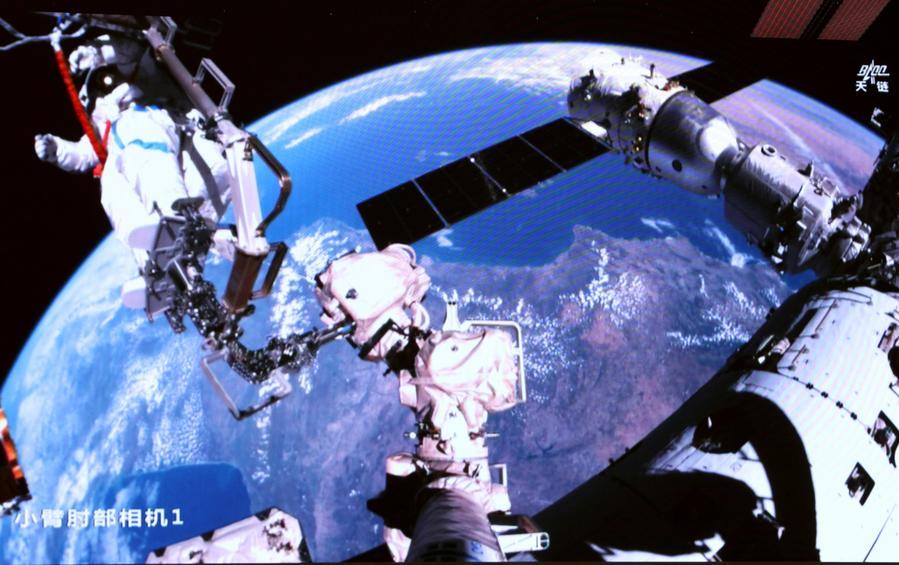
China completed the construction of its space station in 2022, with one core module and two lab modules forming a 110-square-meter orbital structure. Oxygen can be fully regenerated, and water recovery exceeds 95 percent.
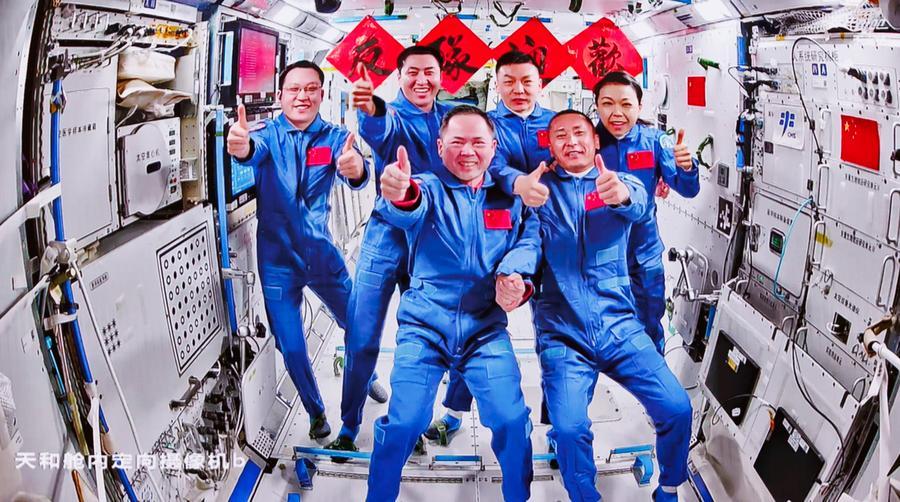
Since then, long-duration spaceflights have become routine, and the Chinese "space home" can host up to six astronauts in orbit at a time.
Space residency is also set to last even longer. One member of the Shenzhou-23 crew, currently aboard the Tiangong, will conduct a one-year in-orbit stay. Moreover, as China pushes further into deep-space exploration, these extended stays will become the norm, which means astronauts' diets will be more important than ever.
Because weightlessness causes bone calcium loss and muscle atrophy, space food must be high in calcium and protein, low in sodium and balanced in dietary fiber. According to the Astronaut Center of China, researchers have developed space food that counteracts oxidative damage, supports immunity, reduces fatigue and regulates the gut microbiome.
But taste is another problem. In microgravity, blood shifts upward, causing nasal congestion and cutting smell sensitivity by at least 30 percent. Since taste is closely tied to smell, astronauts often find food bland. The center's researchers have responded with adding more strong-flavored dishes, with liquid soy sauce and concentrated chili sauce.
New technology has also played a big role in keeping astronauts well-fed.
The astronaut center, in collaboration with private companies, has upgraded the "space kitchen" with a suite of intelligent appliances for drinking water, food reheating and baking. This allows astronauts in orbit to enjoy hot meals within 20 minutes, rather than waiting longer or eating cold food. Liu Weibo, an expert with the center, gave an example of the hot-air baking oven, which is a pioneering Chinese design for space use that can efficiently remove cooking fumes and allow astronauts to enjoy barbecue in orbit.
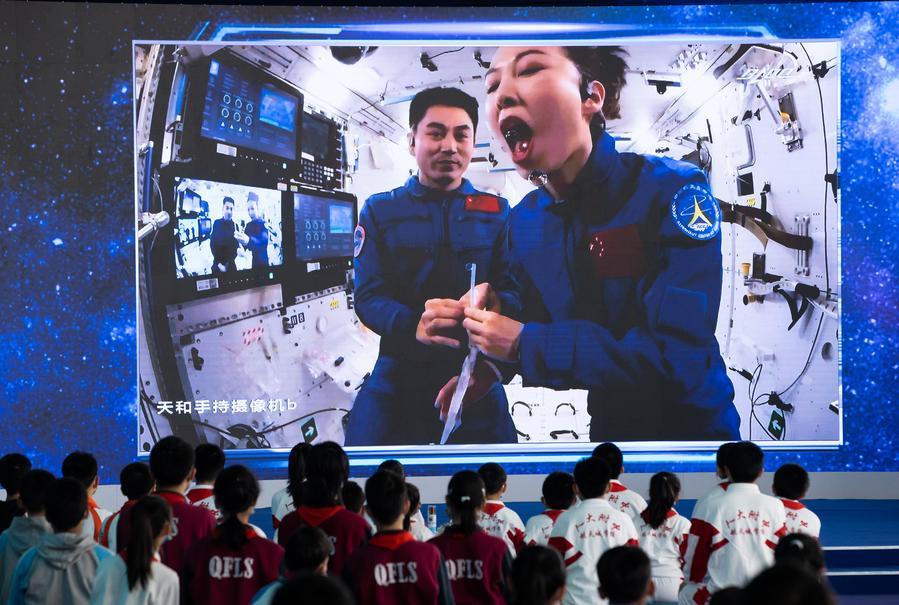
During a space lecture for Hong Kong and Macao students last month, Shenzhou-23 crew member Li Jiaying, or Lai Ka-ying in Cantonese, showed freshly baked cakes and said they reminded her of egg waffles, a popular snack from her hometown. She is a Hong Kong local.
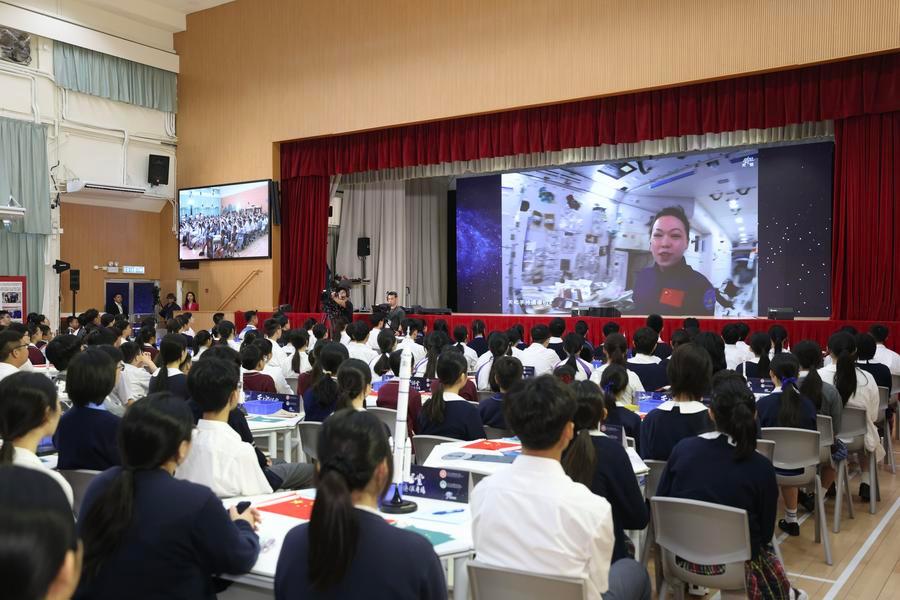
Space food supplies have also become more diverse and nutritious, including more fruits and vegetables, as well as frozen steak and chicken wings. The next-generation cargo craft Qingzhou, designed for future in-orbit supply delivery, will have greater cold-chain transport capacity.
However, long-term space residency requires reducing dependence on Earth's supplies, said center expert Bian Qiang. "The controlled ecological life-support tests we are conducting are intended to build an ecosystem in space that regenerates water, air and food on site, to reduce extraterrestrial survival's dependence on Earth resupply and ultimately achieve self-sufficiency."
Since the Shenzhou-16 mission in 2023, China has been growing plants in orbit. It has tested more than 20 varieties from 14 plant species, including lettuce, carrots, potatoes and wheat.
The Shenzhou-18 crew in 2024 was tasked with raising fish in an "aquarium" to study how space affects their growth. Scientists said the work may one day allow astronauts to enjoy fish from their own in-orbit harvests.
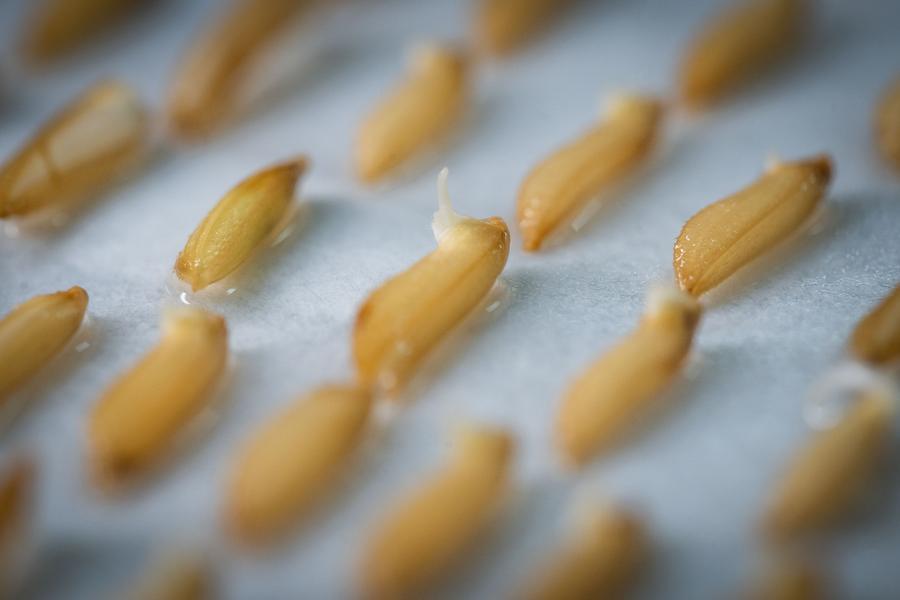
China is targeting a crewed lunar landing by 2030. Living on the moon will make resupply much more challenging because of the increased distance from Earth.
"We plan to build a Chinese 'lunar vegetable garden' on the moon," Bian said.
From heating, baking to farming, feeding astronauts well in space is not a luxury. It is part of the mission, bringing a taste of home to the universe. ■