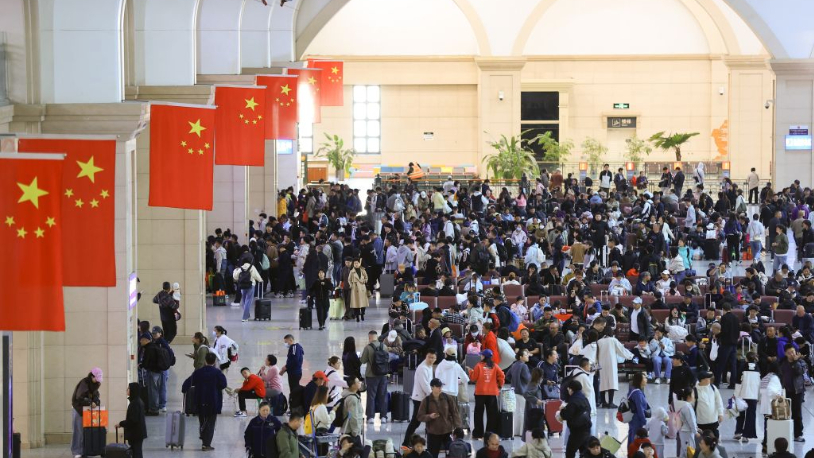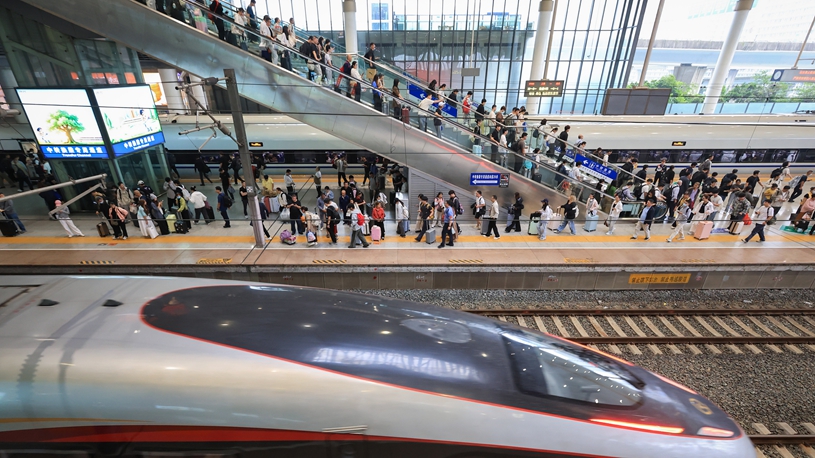
* With "China Haul" emerging as a buzz hashtag on social media platforms worldwide, more foreign visitors are flocking to the country not merely for sightseeing, but also for shopping sprees.
* In the first seven months of 2026, people from overseas spent 263.6 billion yuan (about 39 billion U.S. dollars) in China, an increase of 27.8 percent year on year, according to the Ministry of Commerce.
* Official data showed that foreign nationals made almost 61.29 million border crossings in the January-August period of 2026, up 19.5 percent from a year earlier. Visa-free entries accounted for 23.72 million of the total, an increase of 26.8 percent compared with 2025.
BEIJING, Oct. 2 (Xinhua) -- Andrea Triboldi, an Italian tourist, arrived in China with a long shopping list.
After landing in Shenzhen, a thriving tech hub in southern China, Triboldi and his 11-year-old son couldn't wait to visit a major sci-tech exhibition, which showcased drones and other latest tech products of this city in Guangdong Province.
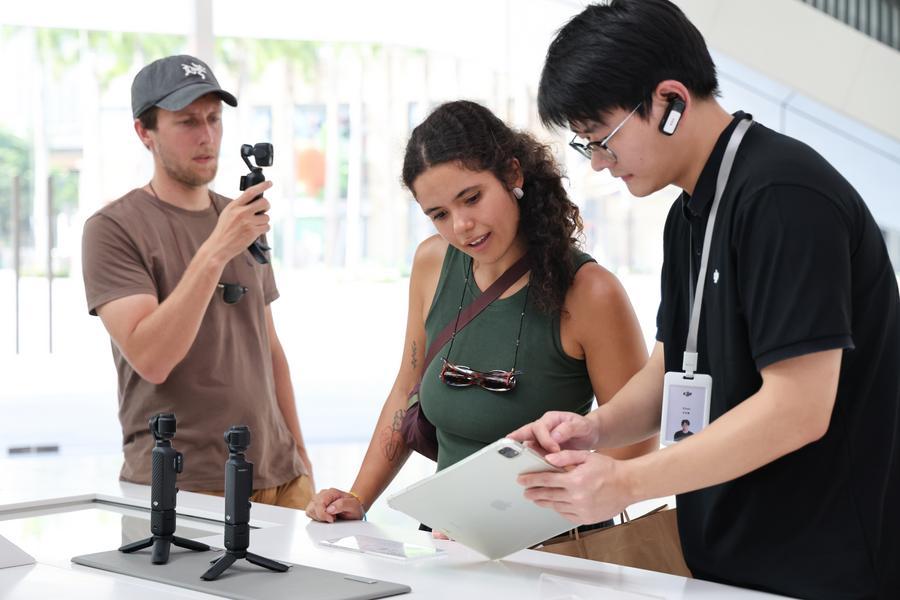
Prior to the trip, Triboldi had drawn up a shopping list featuring more than 20 Chinese products. "I chose Shenzhen as the first station of our China travel because of its technology. My son is particularly into DJI drones and wants to buy one to take home," he said.
Triboldi is not alone. With "China Haul" emerging as a buzz hashtag on social media platforms worldwide, more foreign visitors are flocking to the country not merely for sightseeing, but also for shopping sprees.
In the first seven months of 2026, people from overseas spent 263.6 billion yuan (about 39 billion U.S. dollars) in China, an increase of 27.8 percent year on year, according to the Ministry of Commerce.
DIVERSE SHOPPING SPREES
"I came here to feel the best technology I have ever seen in the whole world. It's really amazing. We don't have these kinds of drones in Mexico," said Ulises Padilla, an 11-year-old Mexican tourist, in describing his impressions of Shenzhen.
The city is drawing an increasing number of foreign visitors like Padilla. An average of nearly 8,000 foreign buyers have visited Huaqiangbei, Shenzhen's mega electronics marketplace, each day this year. From January through July, sales of artificial intelligence (AI) products surged more than 55 percent from a year earlier in this area. Sales of AI glasses doubled, while sales of drones and robots climbed by 60 to 70 percent during the same period.

Zhang Linwan, an employee of INNO100, a Shenzhen store featuring tech products, said that foreign tourists contribute roughly 40 percent of the store's total sales.
"They show strong interest in exoskeletons, 3D printers and laser engraving machines. At our store, they can also make their own 3D dolls and turn photos of themselves and their families into fridge magnets," the employee added.

Wang Linlin, who works at a DJI flagship store in Shenzhen, described a similar scene. "We've seen a large number of foreign customers recently. They enjoy getting hands-on experience with our products, especially trying out our drones in test flights," Wang revealed.
In Changsha, capital of central China's Hunan Province, Chinese snacks are proving a big hit with foreign tourists. Ivan, a 32-year-old Russian tourist, made a point of visiting Snack Kingdom, a specialty store in the city that offers over 35,000 types of snacks.
He said that not many large snack stores in Russia have such a complete range of products, and the variety is so rich that it's a bit difficult to choose.
Tanzanian tourist Shija Theodora Desderi commented that the store serves not only as a shopping destination but also as a place for entertainment. She compared Chinese snacks with Tanzanian ones, which she described as sweeter, noting that the former taste refreshing and are more organic, containing less sugar and salt.
"From sneakers and cosmetics to trendy toys and daily necessities, my family and friends often have their shopping plans ready before visiting China," said Mok Jin Jin from Malaysia.
She said her mother especially likes a Chinese-made blender and often uses it to make various healthy drinks for the family. The machine's one-touch automatic cleaning feature is particularly appealing, sparing her the hassle of manual cleaning.
APPEALING PRODUCTS PLUS FAVORABLE POLICIES
It is not only the price advantage, but the design, quality and practicality of Chinese products that draw the attention of foreign tourists, according to the Malaysian.
She concluded that behind the "China Haul" phenomenon lies not only China's enhanced manufacturing capabilities, but also profound shifts in Chinese brand design, innovation and consumer experience.
Carlos Alvarado, an international student from Guatemala, is already a seasoned shopper in China. "Chinese products, like clothes, accessories and daily necessities, are not only competitively priced, but also feature trendy designs that are hard to find in stores in my home country," he said.
Moreover, an array of favorable policies, such as visa-free policies and departure tax refunds, has further boosted the shopping frenzy in China.
Official data showed that foreign nationals made almost 61.29 million border crossings in the January-August period of 2026, up 19.5 percent from a year earlier. Visa-free entries accounted for 23.72 million of the total, an increase of 26.8 percent compared with 2025.
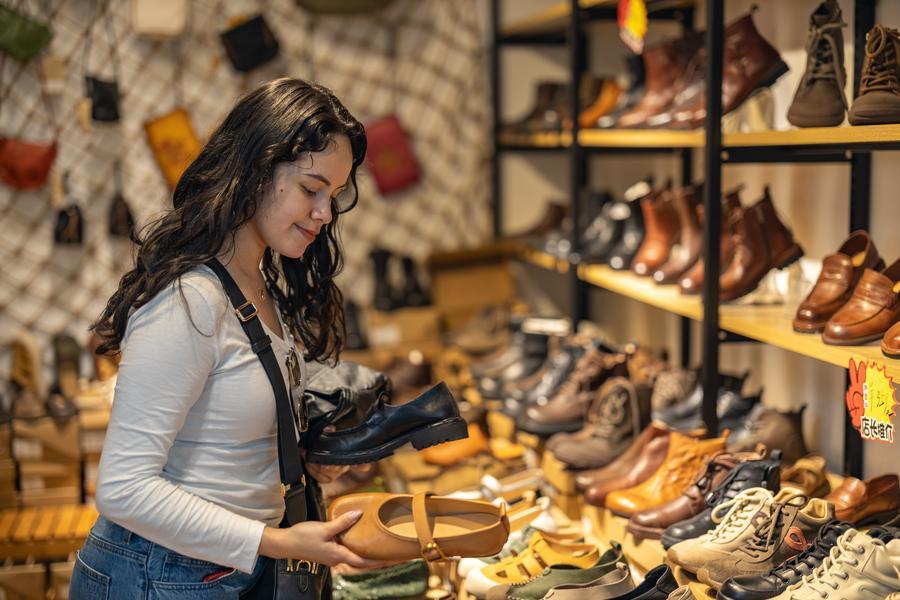
Before ending her trip to Chengdu, capital city of southwest China's Sichuan Province, Hungarian tourist Annamaria purchased some tea, teacups and teapots as gifts for her mother and younger brother at home.
"I like shopping in China because it's very convenient and there are many choices here," she said, praising the tax refund policy for allowing her to get refunds immediately upon purchase.
"The policy has boosted our sales. Foreign tourists now account for 30 percent of our daily customer flow," said Zhou Man, manager of a Chengdu store of Xiaomi, a Chinese consumer electronics and technology company.
Data from the Ministry of Commerce revealed that the number of overseas visitors applying for departure tax refunds had increased by more than threefold year on year during the first seven months of 2026.
Roger Matute, an international student from Honduras, was impressed by how convenient mobile payment is in China. "I have rarely used cash since I arrived here because it is very easy to pay everything with my smartphone using WeChat or Alipay apps," he said.

A range of favorable conditions, including tax refunds, mobile payments and visa-free policies, have systematically reduced the cost of cross-border consumer transactions, helping to facilitate the "China Haul" trend, according to Gao Li, vice dean of the School of International Business, Tianjin Foreign Studies University, located in north China.
The popularity of "China Haul" essentially stems from a shift in the consumption logic of overseas tourists, who are moving from purchasing foreign cultural symbols to buying Chinese technologies, designs and consumption experiences, said He Yun, an associate professor at the school of public administration of central China's Hunan University.
The trend, she noted, is underpinned by the upgrading of China's manufacturing and cultural and creative industries, a substantial transition from exporting production capacity to exporting brands and lifestyles.
(Video reporters: Hu Rong and Zhang Yujie; Video editors: Hong Liang, Zhu Cong and Zhou Yang) ■