by Xinhua writer Li Jun
BAGHDAD, Oct. 1 (Xinhua) -- "The American forces have finally left. We have waited for this day for so long," octogenarian Ismail Mohammed told me by the Tigris River in Baghdad, his voice trembling with emotion as he gazed across the water.
On Wednesday, the U.S.-led coalition formally ended its mission in Iraq, closing the latest chapter in more than two decades of U.S. military involvement in the country.
For Iraqis, the departure was more than a military milestone. It was a moment steeped in memories and wounds -- and, for many, a sense that something long-lost had finally been restored: dignity.
The Iraqi government declared a four-day national holiday starting Wednesday to mark "Sovereignty Days."
Prime Minister Ali al-Zaidi said that Oct. 1 marked a new era for Iraq, with the country free of foreign military forces and exercising full national sovereignty over its territory.
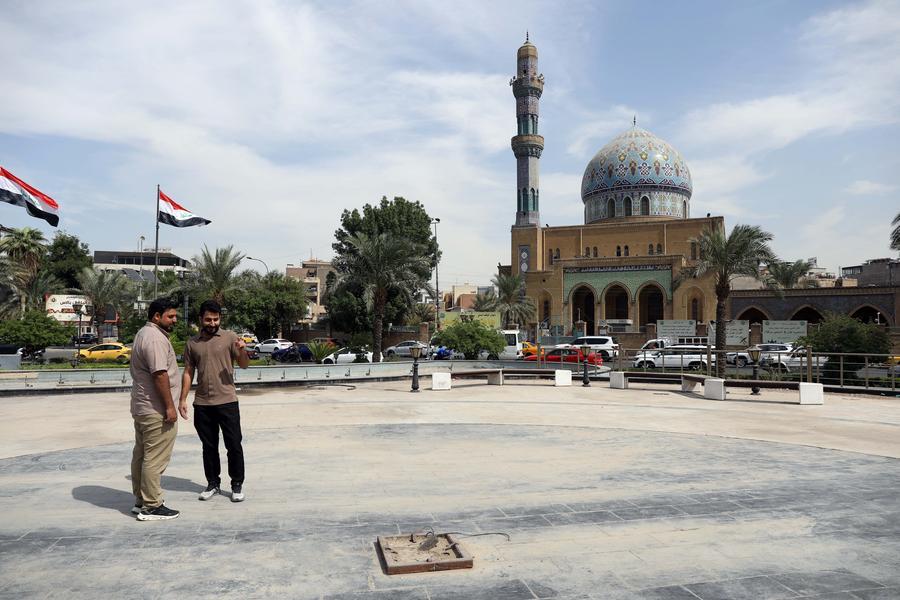
As I walked through Baghdad, I could feel that "sovereignty" was more than a political slogan. For ordinary people, it could be something far more tangible: foreign troops were no longer a visible presence in their homeland.
"Honestly, every Iraqi citizen wishes to see the U.S. forces leave," Ahmed Ali told me. "No Iraqi wants his country to be occupied. We hope the occupation of our country will come to an end."
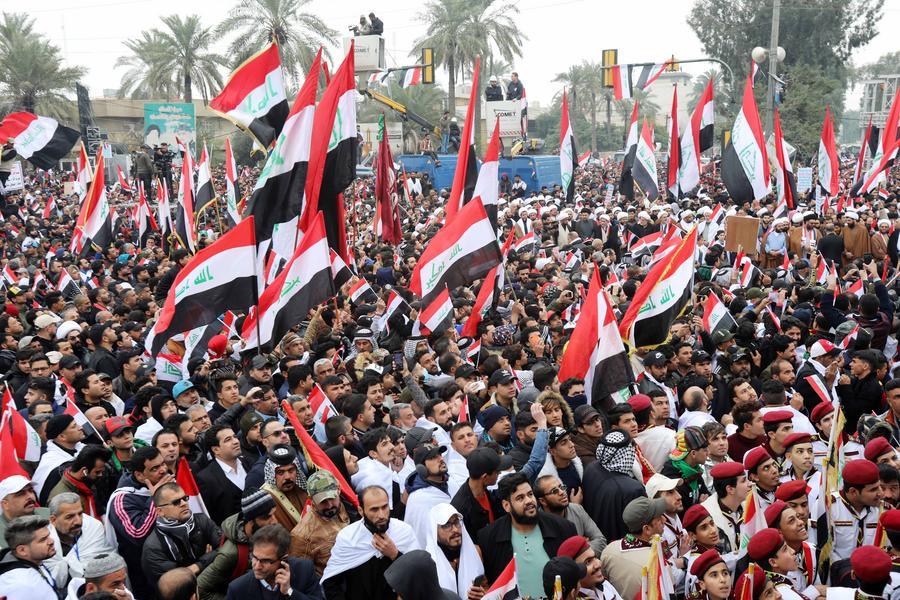
Mahdi Saleh voiced a similar sentiment. "It was painful for the Iraqi people to see American forces in our country," he said. "Now I hope the Iraqi people can unite and achieve national solidarity."
For many Iraqis, foreign troops had long been a reminder of a painful chapter that began with the U.S.-led invasion in 2003, launched on claims that Iraq possessed weapons of mass destruction. Those weapons were never found.
The war devastated Iraq's economy, political system, and social fabric. Years of conflict and instability followed.
For Hussein Ali, who was born around the time of the 2003 invasion, the presence of U.S. troops was a constant feature of his childhood.
"When I was a child, I was afraid whenever I saw American soldiers," he recalled. "Those were years of suffering, killings, and terror. Almost every Iraqi family suffered deeply."
The withdrawal of U.S. troops in 2011 did not end the country's turmoil. The resulting political and security vacuum helped create conditions in which the Islamic State was able to expand.
In 2014, the extremist group seized Mosul, Iraq's second-largest city, along with large swaths of northern and western Iraq. U.S. forces then returned as part of an international coalition fighting the group.
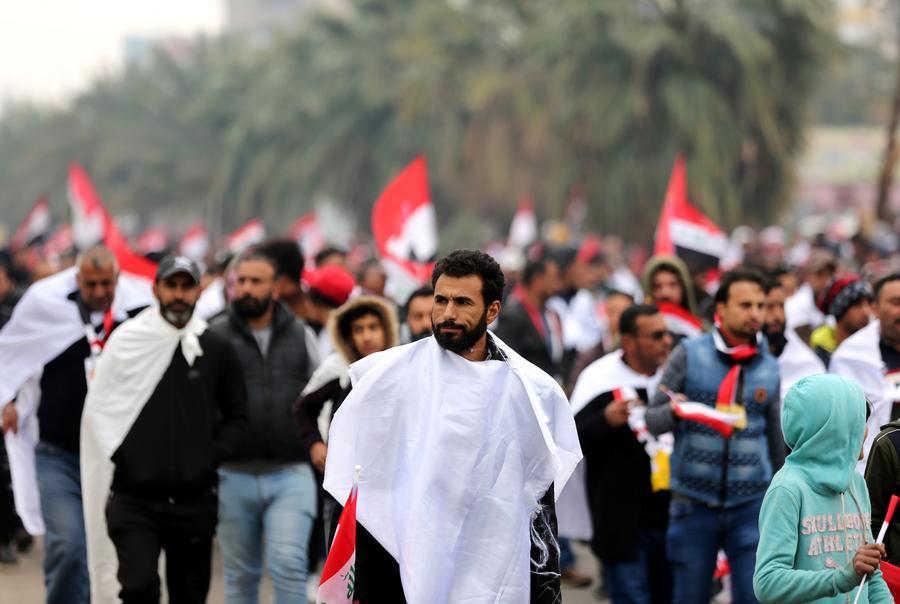
In 2017, Iraq declared victory over the Islamic State. Yet U.S. and coalition forces remained, officially in advisory and training roles. Even then, instability persisted.
As a journalist based in Iraq for nearly three years, I have watched an uneasy cycle play out before my eyes.
Armed groups attacked U.S. bases. The U.S. military responded with airstrikes. Political tensions mounted, security concerns deepened, and ordinary Iraqis were left to bear the consequences.
"Now that they have finally left, everyone is happy," Hussein Ali said.
With the coalition's military mission now over, Iraq is entering a new phase. Yet sovereignty is not the same as stability.
The departure of U.S. and coalition troops does not, by itself, resolve Iraq's domestic political divisions, the issue of armed groups, its economic challenges, or the risk of an extremist resurgence.
The challenge for Iraq now is to turn sovereignty into something its people can feel in their daily lives: security, development, and a better future.
The Tigris has witnessed wars, upheavals, and political transitions. Now, the ancient river awaits to see how the Iraqi people will write the new chapter in their long history.■