YINCHUAN, Sept. 21 (Xinhua) -- The Ningxia water conservancy museum in Wuzhong, northwest China's Ningxia Hui Autonomous Region, was recently admitted to the Global Network of Water Museums (WAMU-NET), becoming the 11th water conservancy and water culture institution in China to join this network.
Previously, 10 such institutions in the country, including the National Water Museum of China, the Yellow River Museum and the Changjiang (Yangtze River) Civilization Museum, had already joined the network.
The latest admission will help raise the profile of Yellow River water culture and Ningxia's irrigation heritage, while giving local institutions access to global expertise in protecting water cultural heritage and managing water resources, according to the Ningxia Water Conservancy.
Headquartered in Italy's Venice, WAMU-NET is a flagship initiative of UNESCO's Intergovernmental Hydrological Programme. It aims to advance the protection, research and promotion of water cultural heritage through global collaboration among water museums, and to raise public awareness of the sustainable use of water resources.
The network now covers more than 40 countries, bringing together over 120 water museums, water culture institutions and individual members.
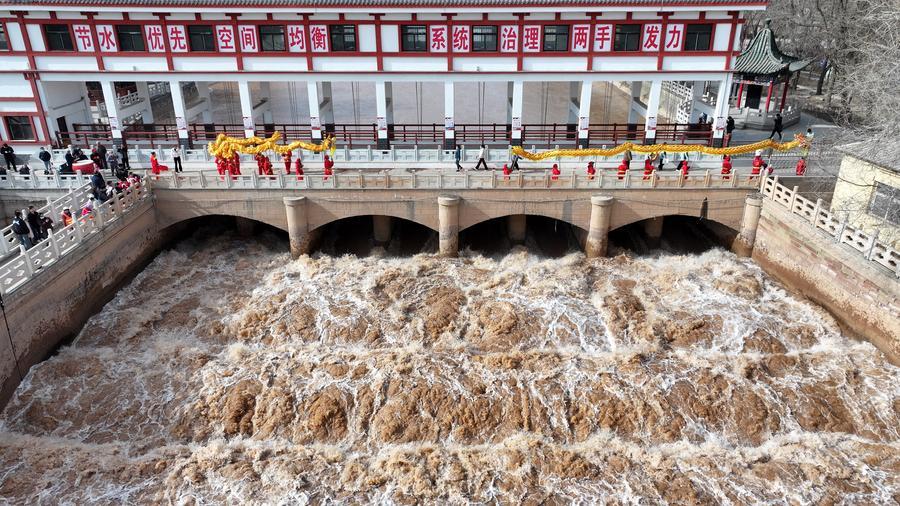
The ancient Yellow River irrigation district in Ningxia is one of China's four major ancient irrigation districts and an important vehicle for promoting Yellow River culture. In October 2017, it was inscribed on the World Heritage Irrigation Structures (WHIS) list. As of September 2025, it was one of 42 WHIS sites across China.
A WHIS exhibition center officially opened in Yinchuan, capital of Ningxia, in May 2025. The first venue in the Yellow River basin to present 2,000 years of irrigation heritage in a systematic way, it filled a gap in the region's cultural offerings by bringing its water and Yellow River culture together under one roof.
In recent years, Ningxia has stepped up its protection and use of water cultural heritage, enacting China's first local legislation specifically focused on the protection of the WHIS and adding a dedicated chapter on water culture to its conservation plan (2018-2035) for the ancient Yellow River irrigation district.
These local initiatives are part of a broader national push. The Ministry of Water Resources has, notably, been building an institutional framework for protecting water heritage.
In July 2026, it issued guidelines on advancing water culture, calling for a three-pronged framework for protecting, passing on and promoting water culture. These guidelines also set out measures including drawing up technical standards for protecting and managing representative water heritage sites, promoting the digital preservation of water heritage, and encouraging local governments across the country to explore dedicated legislation. ■