BEIJING, Sept. 21 (Xinhua) -- Chinese researchers are moving satellites from single-service platforms toward multi-functional systems that combine communication, sensing, computing and intelligent processing.
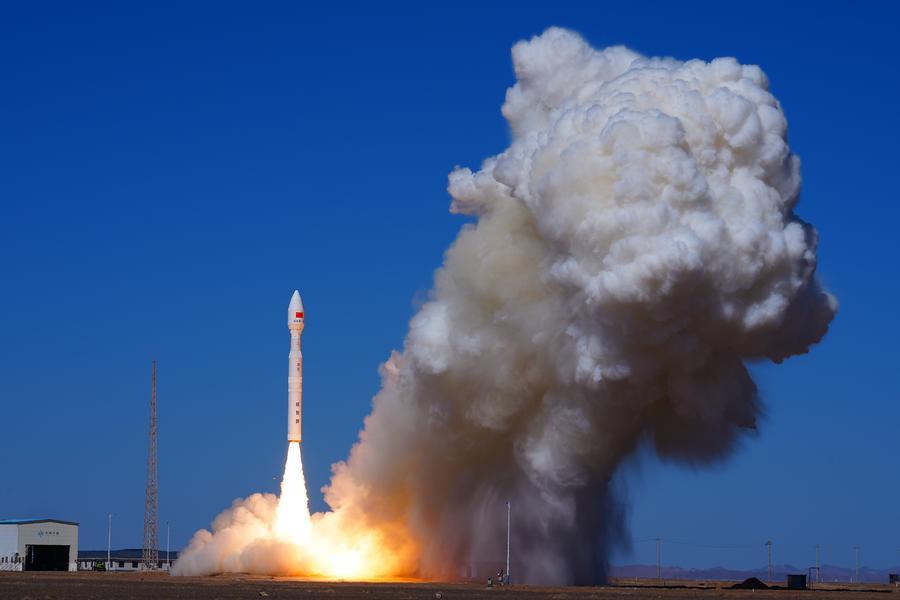
The latest example is PEGA-SUS1, which launched on Sunday aboard a Chinese commercial rocket along with eight other satellites.
Weighing about 150 kg, it carries a range of advanced payloads for non-terrestrial networks, satellite-ground laser links and microwave communications.
The satellite was jointly developed by Pengcheng Laboratory in tech-hub Shenzhen, Beijing-based private satellite maker GalaxySpace and other research institutions.
Pengcheng Laboratory said the satellite is the first in the PCL-Pegasus Constellation, an in-orbit technology verification platform for an integrated "communication-sensing-intelligence-computing" system. The constellation is expected to include nine satellites in total.
GalaxySpace said the satellite will explore a "one satellite, multiple functions" design concept and is expected to support further testing of next-generation integrated space-ground connectivity technologies.
Ren Jiadong, a senior technical staff member at GalaxySpace, used a fire warning as an example to demonstrate the strength of the satellite. Traditionally, he explained, data must first be downloaded, converted into images and then analyzed. The new satellite, however, can analyze remote sensing data in orbit, determine whether there is a fire, estimate the affected area and quickly send back the results. This approach eliminates the need to return raw images.
It can greatly reduce downlink bandwidth use and data transmission time.
In the future, the satellite will support multiple 6G frontier technology tests, help space-ground integration move from terrestrial networks toward integrated space-air-ground networks, build experience for next-generation communications and support innovation in China's satellite internet, according to Ren. ■