SANAA, Sept. 21 (Xinhua) -- Six weeks after Saudi Arabia, Türkiye and Pakistan agreed in Mecca to treat an armed attack against one as an attack against all, the rapidly escalating Houthi-Saudi confrontation is putting that pledge to its first serious test.
Houthi forces have advanced along Yemen's western coast toward the strategic Bab al-Mandab Strait while stepping up missile and drone attacks deep inside Saudi Arabia. Riyadh, meanwhile, has intensified airstrikes against Houthi targets in Yemen.
The confrontation took a particularly sensitive turn after Saudi Arabia said it intercepted a Houthi drone south of Mecca before it could enter the holy city's airspace. The Houthis denied targeting Mecca.
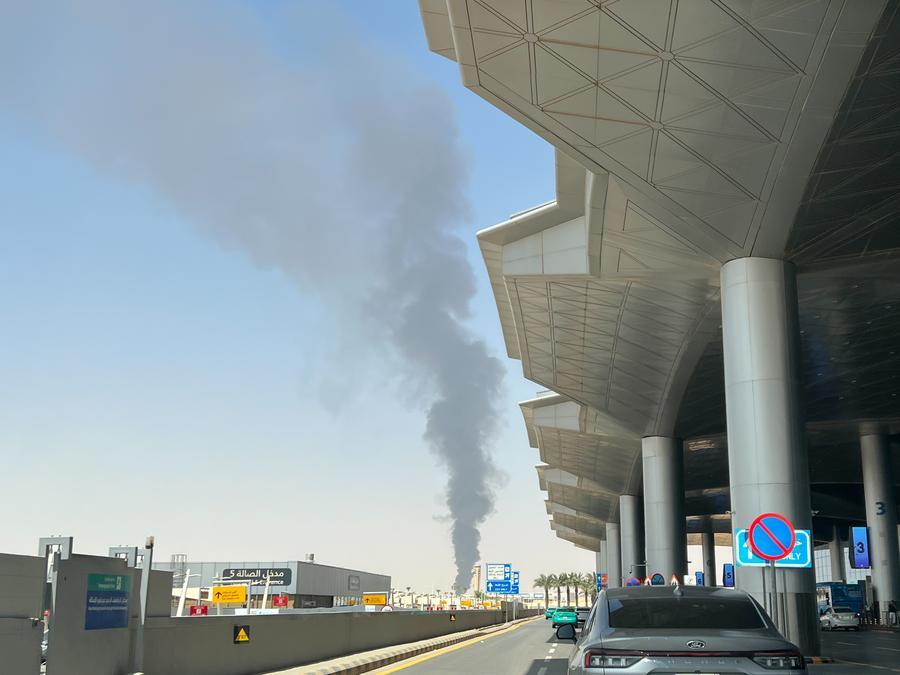
Then, on Saturday, the threat reached Riyadh. As explosions were heard in the Saudi capital and authorities issued an aerial alert, the Saudi-led coalition said it intercepted a Houthi ballistic missile targeting the city. The Houthis said they had attacked targets in Riyadh and the Red Sea energy hub of Yanbu.
The escalating exchange of fire is transforming renewed fighting in Yemen into a broader test of regional deterrence. Türkiye and Pakistan have pledged support for Saudi Arabia, but neither has announced direct combat involvement against the Houthis.
That leaves the Mecca agreement facing a question: Can its members make collective defense credible enough to deter further attacks without drawing themselves into a wider war?
PRESSURE SPREADS BEYOND YEMEN
Saudi Arabia is facing mounting pressure across an expanding geographic arc, stretching from the battlefields in Yemen and the Bab al-Mandab Strait to its cities and energy infrastructure.
The Houthis said Saturday they launched ballistic and cruise missiles and drones against "sensitive targets" in Riyadh and a facility of the Saudi oil giant, Aramco, in the western Saudi city of Yanbu.
The Saudi side said air defenses intercepted the missile targeting Riyadh and thwarted attacks on Baish, Taif, Farasan and Yanbu.
Houthi military spokesperson Yahya Sarea said the group's strategy is "escalation for escalation," linking its attacks to intensified Saudi air operations in Yemen.
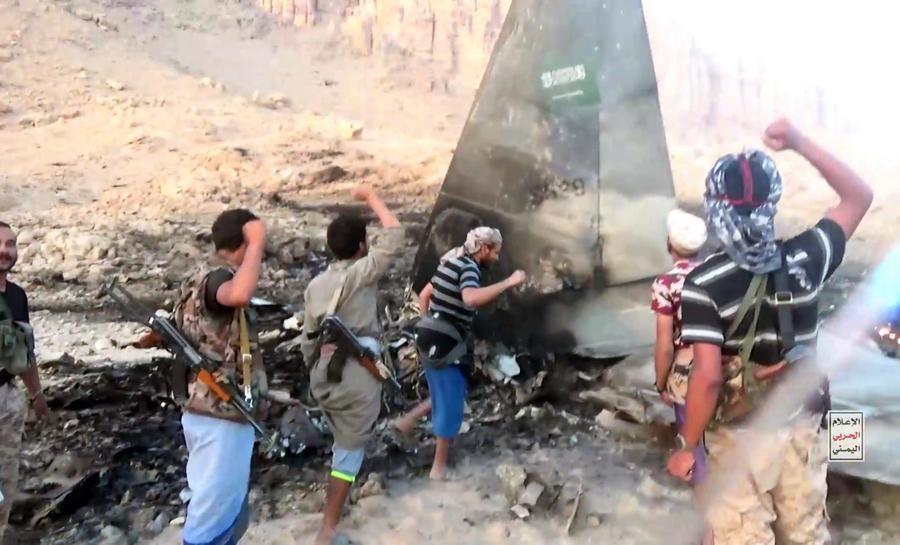
Meanwhile, the battlefield inside Yemen has shifted sharply.
On Sept. 10, Houthi forces captured Mocha, a strategic Red Sea port in southwestern Taiz province. A day later, they seized Dhubab and Mayyun Island in the Bab al-Mandab Strait after government forces withdrew farther south into neighboring Lahj province.
Fighting has since raged around the Kahbub mountain area and nearby heights overlooking approaches to the strait, with both sides rushing reinforcements to the front.
The Bab al-Mandab Strait links the Gulf of Aden with the Red Sea and, farther north, the Suez Canal, placing it astride one of the world's most important trade and energy corridors.
With shipping through the Strait of Hormuz already disrupted by wider regional tensions, instability around the strait adds pressure around another critical maritime chokepoint.
FROM PLEDGE TO PRACTICE
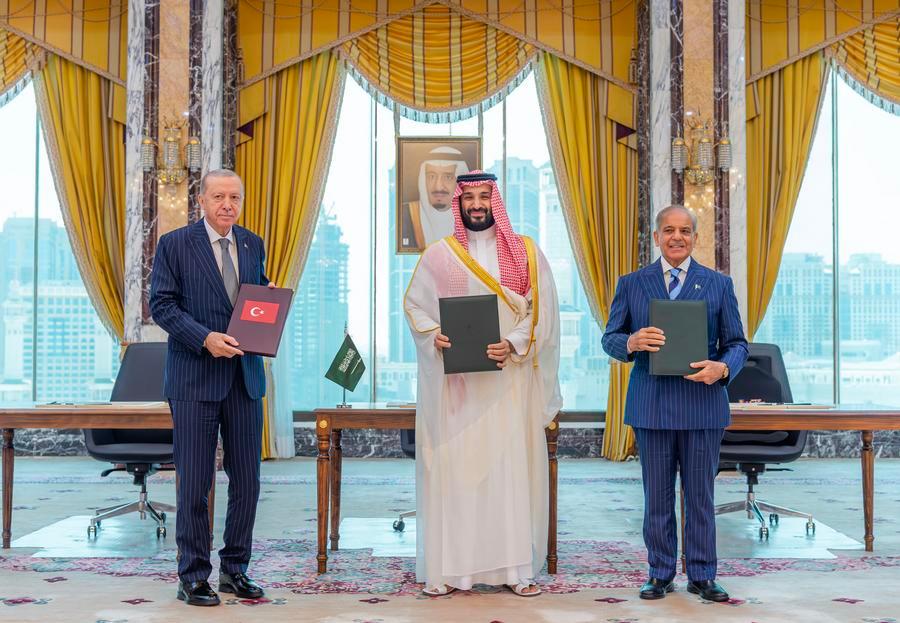
On Aug. 7, Saudi Crown Prince and Prime Minister Mohammed bin Salman bin Abdulaziz Al Saud, Turkish President Recep Tayyip Erdogan and Pakistani Prime Minister Muhammad Shehbaz Sharif signed the Mecca Joint Defense Agreement.
Its central principle is collective defense: any armed attack against any of the three countries will be considered an attack against them all.
The three countries began building the pact's institutional structure later that month, agreeing in Istanbul to strengthen military coordination and defense-industrial cooperation and establish a permanent secretariat in Saudi Arabia.
The Houthi attacks have abruptly moved the discussion from planning to practice.
Türkiye has offered the clearest indication of what its support could involve. Turkish Foreign Minister Hakan Fidan said Saturday that Ankara would honor its commitments and could provide technical assistance to meet Saudi military needs.
Pakistan has delivered an even stronger political message. Islamabad has repeatedly condemned attacks on Saudi Arabia and reaffirmed support for the kingdom's sovereignty and territorial integrity. Pakistan's military has said the country would go "to any extent" to defend Saudi sovereignty.
Yet neither Islamabad nor Ankara has announced direct combat operations against the Houthis.
For Ankara and Islamabad, collective defense need not immediately translate into direct intervention in Yemen. Support could instead involve air-defense coordination, intelligence, technical assistance, logistics and other measures designed to strengthen Saudi defenses without opening another front, said analysts.
DETERRENCE WITHOUT ENTANGLEMENT?
The current escalation is testing whether the new alliance can turn its collective-defense pledge into a credible deterrent without being drawn directly into the conflict, Aden-based political analyst Muqbil Naji told Xinhua.
"The challenge is not simply to show solidarity with Saudi Arabia, but to make that solidarity credible enough to influence the calculations of those attacking it," said Naji.
Turkish and Pakistani support could strengthen Saudi Arabia's ability to detect and intercept incoming threats, but could not guarantee protection from every missile or drone, he noted.
"More defenses can reduce the risk, but they cannot remove it," he said. "The bigger challenge is preventing the attacks from continuing."
Yet analysts argued that efforts to reinforce Saudi defenses could introduce another risk: the deeper Türkiye and Pakistan become involved, the harder the confrontation may become to contain.
"The more actors enter the equation, the harder it becomes to keep the conflict contained," said Ali bin Hadi, a military observer based in Aden.
That risk could grow significantly if Turkish or Pakistani personnel or assets were directly hit, bin Hadi said. "Once their own forces come under attack, staying purely defensive becomes much harder."
For now, analysts see room for deterrence without direct intervention. Türkiye and Pakistan could reinforce Saudi defenses while preserving diplomatic space and limiting their exposure to the fighting.
But that balance remains fragile. A high-casualty attack inside Saudi Arabia, serious damage to critical energy infrastructure, or another incident around the holy sites could sharply alter calculations.
The Mecca pact's first test, therefore, may not be whether Turkish or Pakistani forces enter the Yemen conflict, but whether their commitment can make further escalation costly enough to deter it, said analysts.■