
* Spain, Portugal, Italy and Greece, all deeply affected by Europe's sovereign debt crisis over a decade ago, have shown renewed vitality and resilience in recent years.
* Southern Europe's service-heavy economies and growing use of renewable energy had made them less vulnerable to some of the energy and trade shocks weighing on Europe's industrial core.
* The IMF's 2025 Regional Economic Outlook urged Europe to accelerate structural reforms while keeping trade open. Southern European countries have sought to combine the two, building on post-crisis reforms and existing industrial strengths while pursuing trade and investment ties with emerging economies.
* China has played a constructive role in this process through trade, investment and industrial partnerships.
MADRID, Sept. 14 (Xinhua) -- As the eurozone faces a subdued growth outlook, a different economic picture has emerged along its southern flank: Spain, Portugal, Italy and Greece, all deeply affected by Europe's sovereign debt crisis over a decade ago, have shown renewed vitality and resilience in recent years.
In the second quarter of 2026, seasonally adjusted GDP in the euro area increased by 1.0 percent year-on-year. In contrast, Spain, Portugal and Greece recorded growth of 2.7 percent, 2.5 percent and 1.9 percent, respectively, while Italy matched the eurozone rate.
A report published in June by Allianz, an insurance company, described Southern Europe's post-2021 performance as "a clear shift in the geography of Eurozone growth, with Southern economies moving from chronic underperformance to cyclical leadership."
Analysts and market observers attribute this resilience to three overlapping shifts: a broader mix of growth drivers, financial and institutional repair reinforced by EU investment, and a pragmatic openness to external markets, capital and technology, including expanding industrial partnerships with China.
Together, these factors have helped Southern Europe withstand some of the pressures weighing on the eurozone's traditional industrial core.
SHOCKS SHIFTED SIDES
Recent shocks -- from supply-chain disruptions to energy-price spikes and trade tensions -- have not fallen evenly across the eurozone.
"In the current cycle, the asymmetry of external shocks has, so to speak, shifted sides," Pablo Sanz, a professor at Spain's National University of Distance Education, said in an interview with Xinhua.
Sanz said Southern Europe's service-heavy economies and growing use of renewable energy had made them less vulnerable to some of the energy and trade shocks weighing on Europe's industrial core.
The difference is also visible in the drivers of growth. In the second quarter of 2026, Spain's economy ministry said growth was supported by domestic demand, investment and industry, while Portugal's rebound was driven mainly by net external demand.
Investment, construction and services have supported Italy in recent years, while investment, consumption and net exports all contributed to Greece's growth in 2025. Tourism also remains an important source of activity, employment and services exports, particularly in Spain, Portugal and Greece.
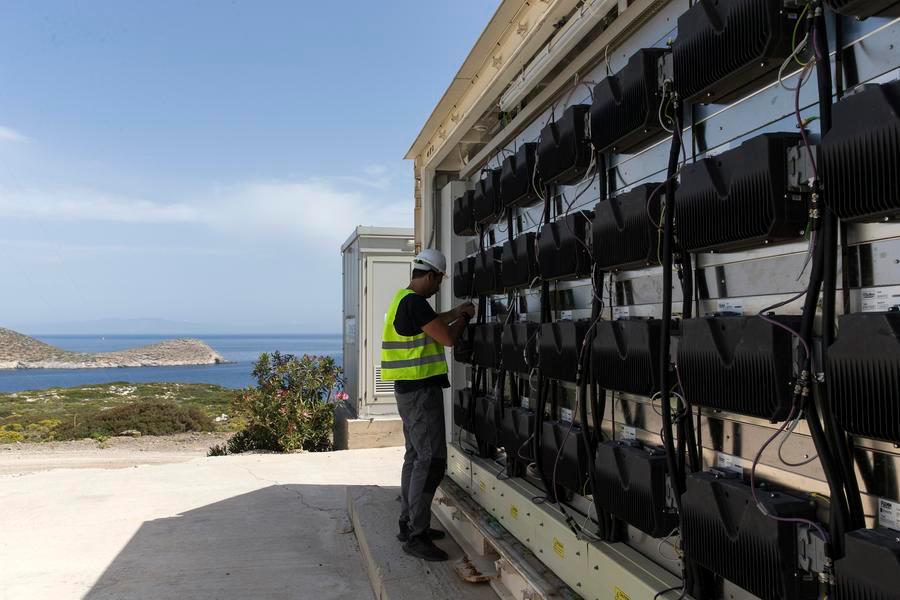
A changing energy mix has provided another buffer. Eurostat data showed that over 60 percent of gross electricity consumption in Portugal, Greece and Spain came from renewable sources in 2025. The European Commission said growing renewable generation had lowered wholesale electricity prices, with gas influencing prices in only a minority of market hours in the Iberian Peninsula.
Labor supply has provided further support, particularly in Spain. According to Sanz, labor-market reforms that reduced excessive reliance on temporary contracts helped stabilize household incomes, while immigration expanded the workforce and supported employment and domestic demand.
Public investment has added another leg to the recovery. Allianz estimates that Italy, Spain, Portugal and Greece together account for almost 60 percent of funding under the Recovery and Resilience Facility (RRF), the centerpiece of NextGenerationEU.
"Public capital injected through NextGenerationEU funds has therefore served as a countercyclical firewall, financing green-transition infrastructure, digitalization and key industrial projects without placing excessive strain on national finances," Sanz said.
REFORM DIVIDENDS
The recent divergence also reflects differences in the timing of adjustment. The sovereign debt crisis forced Southern Europe to confront long-standing financial and structural imbalances.
The process varied across countries. Greece and Portugal entered broad assistance programs covering fiscal consolidation, bank repair, pension reform, and changes to labor and product markets. Spain received assistance focused on its banking sector, while Italy remained outside a bailout program and followed a more gradual course.
The adjustment carried a high economic and social cost, as domestic demand contracted and unemployment surged. Over time, however, banks reduced non-performing loans, households and businesses cut debt, and labor- and product-market rules were revised.
Spain and Portugal also broke with a pattern of running external deficits during periods of expansion and began regularly recording current-account surpluses.
A 2026 study by the National Bank of Belgium found that Spain, Portugal and Greece grew at an average annual rate of 1.7 percent between 2019 and 2025, compared with 0.6 percent for Germany, France, the Netherlands and Belgium. It linked their stronger performance partly to post-crisis reforms and fiscal consolidation.
Greece shows how the repair extended to the functioning of public institutions. According to the IMF, measures targeting tax evasion and informality helped narrow its value-added tax compliance gap from 24 percent in 2019 to about 9 percent in 2024.
Reforms have also covered the judiciary, business regulation and tax administration, although weak productivity and judicial delays remain constraints.
After the pandemic, EU conditionality took a different form. Rather than focusing primarily on correcting imbalances, RRF funding was tied to national recovery and resilience plans combining investment projects with reform commitments, with at least 37 percent of the budget allocated to climate and biodiversity and a further minimum of 20 percent to digital measures.
The plans have directed funding toward renewable energy, power grids, sustainable transport, industrial decarbonization and digitalization.
According to Sanz, Spain and Portugal have used EU funding for electric-vehicle value chains, industrial decarbonization and the digitalization of public administrations and small businesses, while Italy has coupled investment with reforms of public administration, the justice system and public procurement.
However, these gains should not be overstated. Sanz cautioned that, except in some technological and renewable-energy niches, Southern Europe's productivity gap with Northern Europe remained substantial.
An analysis published by the Jacques Delors Institute noted that the four countries entered the pandemic on different growth trajectories and have deployed RRF funds at different speeds. Although the facility has supported demand and investment, the analysis said, its lasting impact will depend on whether the projects and reforms raise productivity and potential growth.
The IMF's 2025 Regional Economic Outlook urged Europe to accelerate structural reforms while keeping trade open. Southern European countries have sought to combine the two, building on post-crisis reforms and existing industrial strengths while pursuing trade and investment ties with emerging economies.
COOPERATION WITH CHINA
China has played a constructive role in this process through trade, investment and industrial partnerships.
In Spain, cooperation with Chinese companies is increasingly moving beyond trade toward local manufacturing in the electric-mobility supply chain. Chery's partnership with Spanish automaker Ebro has revived production at the former Nissan plant in Barcelona, while CATL and Stellantis are jointly investing in a lithium iron phosphate battery plant in Zaragoza.
"Spain has become a gateway not only for distribution but also for manufacturing, taking advantage of the auto manufacturing ecosystem that our country has," said Raul Morales, communications director at Faconauto, Spain's federation of automotive dealers' associations, in an interview with Xinhua.
Portugal is following a similar pattern. Chinese battery manufacturer CALB is developing its first European factory in the Sines Industrial and Logistics Zone. The 2 billion-euro project is expected to create 1,800 direct jobs and help Portugal develop a battery value chain around its lithium resources.
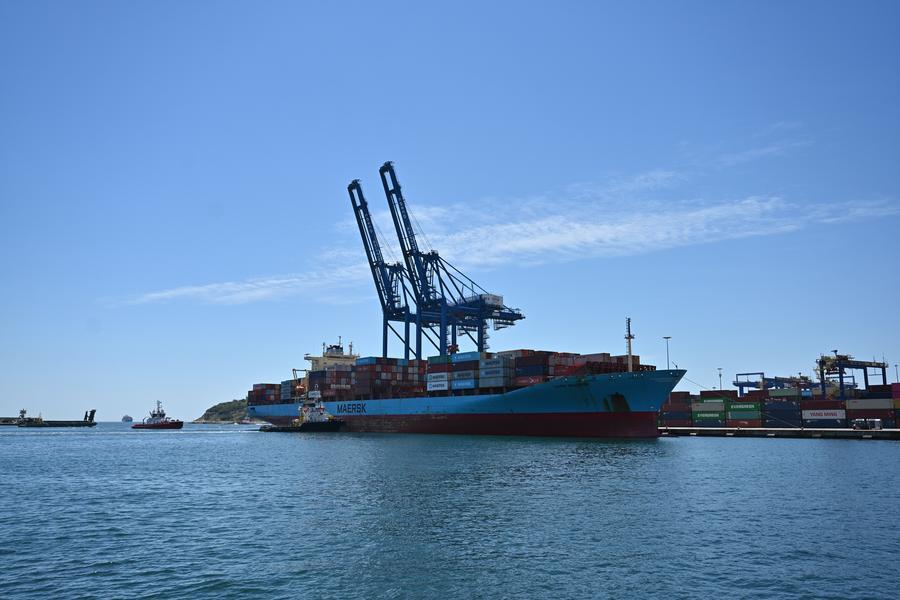
In Greece, China COSCO Shipping Corporation (COSCO) acquired a majority stake in Piraeus Port Authority in 2016, becoming the operator of the entire port. The port has since strengthened its position as a major Mediterranean container hub.
Stefanos Gkikas, Greek deputy minister of maritime affairs and insular policy, described the cooperation between COSCO and the port authority as "productive," saying it had enhanced the port's competitiveness and strengthened Greece's position in global shipping.
In Italy, the Ministry of Enterprises and Made in Italy, Italian renewable-energy developer Renexia and China's MingYang Smart Energy have agreed to work toward establishing wind-turbine manufacturing capacity. The proposed investment, worth around 500 million euros (579.2 million U.S. dollars), is linked to the planned 2.8-GW Med Wind floating offshore wind project off Sicily.
Sanz described the four countries' approach to China as "a form of reasonable industrial pragmatism aligned with their growth needs."
"Greater openness to emerging economies is an undeniable advantage for Southern Europe's economic dynamism, provided that it takes the form of co-investment, technology transfer and local job creation," he said.
"The success of Spain, Portugal, Italy and Greece will therefore depend on their ability to manage the complex balance between attracting highly competitive global capital and complying with EU regulations," he added. ■