* The BRICS cooperation mechanism has continued to grow and expand, and has demonstrated remarkable vitality and dynamism.
* As to the future development of BRICS, Xi called on the grouping to pioneer in advancing innovation-driven development.
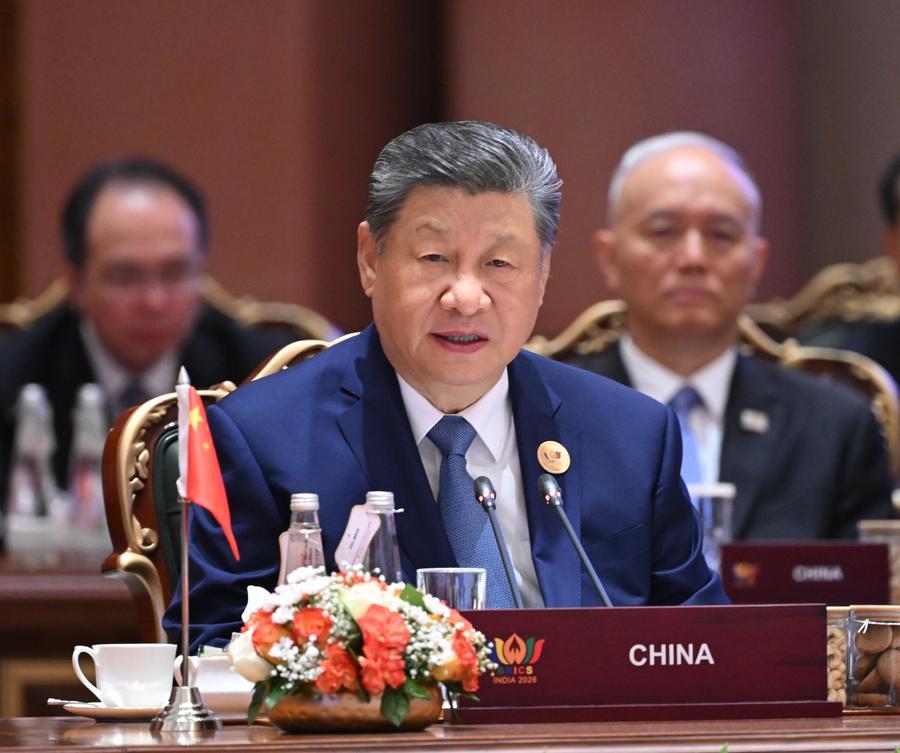
NEW DELHI, Sept. 12 (Xinhua) -- Chinese President Xi Jinping on Saturday urged BRICS countries to firmly stand on the right side of history and strive to be a pioneer of our times.
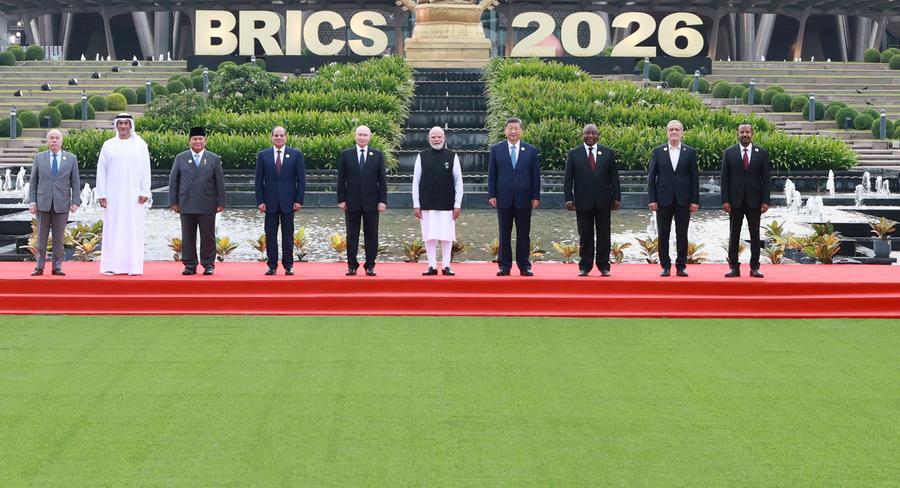
When addressing the 18th BRICS Summit in New Delhi, Xi noted that this year marks the 20th anniversary of BRICS cooperation, saying the mechanism has become the world's most influential platform for cooperation among emerging markets and developing countries.
Over the past two decades, BRICS has evolved into a broader platform for promoting shared growth, dialogue, and a greater representation of the Global South in international organizations, said analysts, noting that the group is expected to deliver more tangible results and foster a more balanced and inclusive world order in the future.
TWO DECADES OF BRICS COOPERATION
The BRICS cooperation mechanism was formally launched in 2006. The inaugural BRIC summit was convened in Yekaterinburg, Russia, in 2009. A year later, South Africa joined the grouping, turning BRIC into BRICS.
Since then, the mechanism has continued to expand in both membership and areas of cooperation. Today, BRICS countries account for nearly half of the world's population, around 30 percent of the global economy and one-fifth of global trade, serving as a force for fostering a more representative and multipolar world and enhancing the voice of the Global South.
Hailing the achievements over the past two decades, Xi said that the BRICS cooperation mechanism has continued to grow and expand, and has demonstrated remarkable vitality and dynamism.
Elaborating on the 20-year history of the mechanism, Xi said it has been 20 years of self-reliance and self-strengthening, adding that BRICS countries have actively explored development paths suited to their own national conditions, setting an example of self-strengthening through unity among emerging markets and developing countries.
The first decade of BRICS cooperation was primarily a period of institutional formation, and the second a period of expansion, said Rakhim Oshakbayev, director of the TALAP Center for Applied Research in Kazakhstan and former Kazakh vice minister for investment and development.
But the significance of BRICS goes beyond the growth of its membership.
Xi said that BRICS countries have established a comprehensive, multi-tiered framework for cooperation, and ushered in a new stage of high-quality development for greater BRICS cooperation.
Rather than replacing existing global institutions, BRICS seeks to strengthen dialogue, equality, mutual respect and cooperation among nations, said Balew Demissie, a senior consultant at the Policy Studies Institute of Ethiopia.
BRICS, with its expanded membership, provides a platform for emerging economies across the globe to have a stronger voice in global issues such as trade, development, finance, climate change, peace and security, Demissie said.
PIONEERING ROLES
As to the future development of BRICS, Xi called on the grouping to pioneer in advancing innovation-driven development.
BRICS countries, he said, should strengthen cooperation in artificial intelligence and push practical cooperation into new areas and to new heights.
China proposed an initiative to promote new industrialization through artificial intelligence among BRICS countries, and is willing to work with all parties to deliver more outcomes in research, development and application, and deepen cooperation in industrial and supply chains, he said.
Oshakbayev said emerging technologies such as AI risk creating new technological divides between countries that possess advanced models, computing power and standard-setting capabilities and those that remain mainly users of technology.
Joint research, research networks, education and training under BRICS could give developing countries greater opportunities to participate in technological innovation, he said.
Xi also called on BRICS to be a pioneer in upholding peace and stability.
Noting that the situation in the Middle East remains complex and fluid, Xi said this war has inflicted serious losses on the people of all countries in the region, and it is against the common interests of the international community.
China will work with fellow BRICS members to play a due role in bringing peace and tranquility to the Middle East, he said.
Diaa Helmy, founder and secretary-general of the Egyptian-Chinese Chamber of Commerce, said BRICS offers an important platform for cooperation rather than confrontation. "Within BRICS we do not compete; we complement one another," he said.
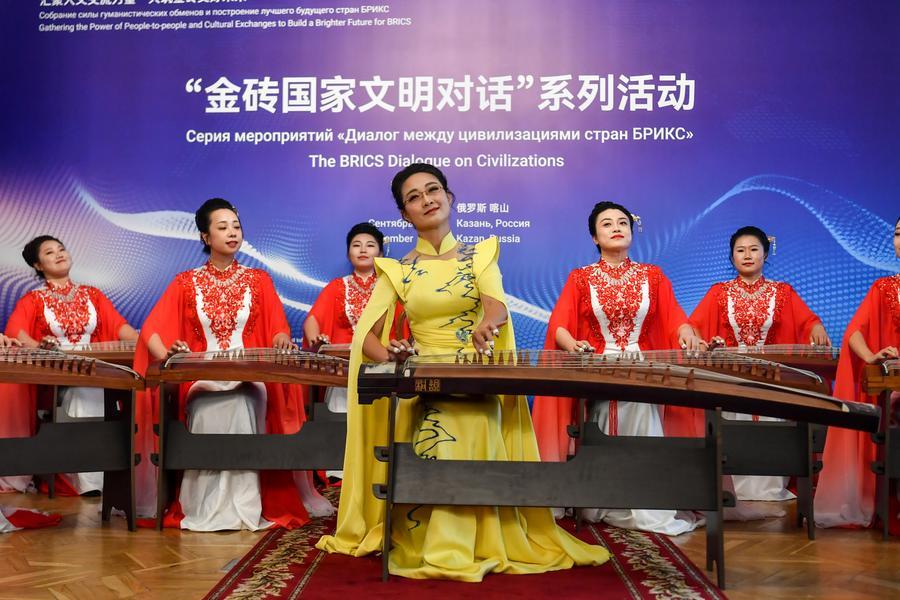
On exchanges among civilizations, Xi called on BRICS countries to champion the common values of humanity and advocate exchanges and mutual learning among civilizations as well as harmonious coexistence.
Such exchanges can help societies better understand one another while respecting differences, Oshakbayev said, adding that BRICS could contribute useful experience to dialogue among civilizations on an equal footing.
Xi further called on BRICS to be a pioneer in reforming and improving global governance.
He urged the group to keep pace with the trend toward greater democracy in international relations, promote a more just and equitable global governance system, and uphold the authority of the United Nations.
Demissie, the expert from Ethiopia, said BRICS is not seeking to replace existing global institutions, but to make global governance more representative and responsive to the interests and aspirations of the Global South.
BRICS RETURNS TO CHINA
In his address, Xi announced that China will assume the rotating chair of BRICS and host the 19th BRICS Summit next year.
During its previous chairmanships, China played a notable role in advancing the BRICS agendas. Over the past two decades, China has hosted three BRICS summits, each marking a new milestone in the group's evolution.
When China hosted its first BRICS summit in the tropical resort of Sanya in 2011, South Africa attended the gathering as a new member for the first time.
Six years later, in Xiamen, Xi proposed the "BRICS Plus" cooperation approach, inviting leaders from non-BRICS members to discuss international development cooperation and deepen South-South cooperation.
When China chaired BRICS again in 2022, the leaders met virtually. China called for a "more comprehensive, close, practical and inclusive high-quality partnership" and emphasized global development. That summit laid the groundwork for the group's major expansion the following year.

As BRICS cooperation enters its third "golden decade," a new chapter begins with China, with the Global South speaking with an even stronger voice.
China is expected to work with other BRICS members to promote a more just and equitable global governance system by advocating multilateralism, greater representation for the Global South in financial and political institutions, said Farhana Paruk, a Cape Town-based China-Africa specialist.
"I believe China's upcoming BRICS chairmanship could open a new phase that places greater emphasis on practical development and narrowing the gaps among the economies of member countries," said Salah El-Din Fahmy, professor of economics at Al-Azhar University in Egypt.
"BRICS is still evolving," Fahmy said, noting that China can help advance this process gradually during its upcoming chairmanship by focusing on areas of common interest among member countries and promoting cooperation that makes the group more cohesive and better able to confront global challenges.■