by sportswriters Zhou Xin and Chen Hao
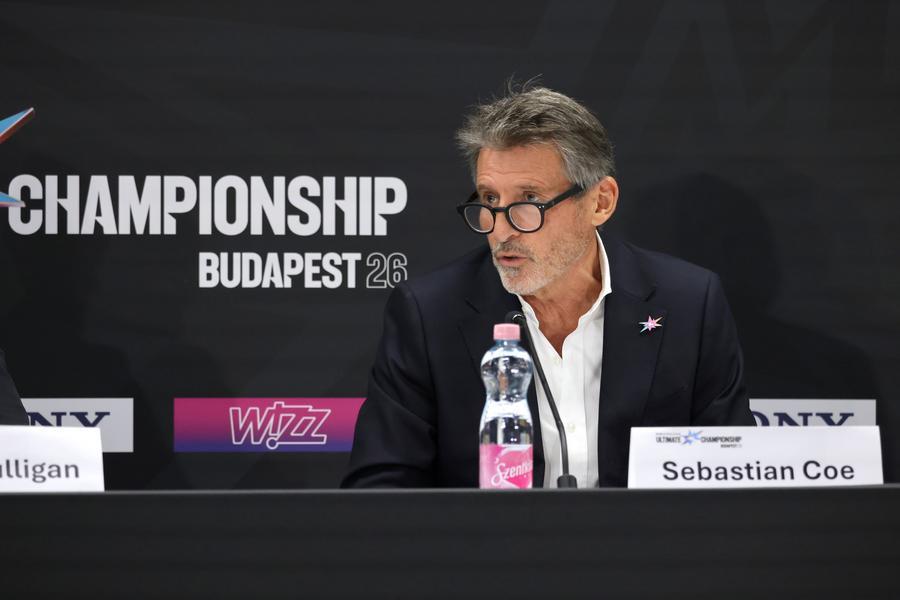
BUDAPEST, Sept. 13 (Xinhua) -- Faster competition, brighter stars and a longer global season -- World Athletics President Sebastian Coe says the inaugural Ultimate Championship offers a glimpse of where athletics could be heading.
"We are an innately conservative sport," Coe said at a media roundtable in Budapest on Sunday. "I just think we've moved slightly away from the risk-averse end of that spectrum. Not probably by much, but it's a start."
The inaugural World Athletics Ultimate Championship, held from September 11 to 13, was more than two and a half years in the making. Coe said many of its innovations grew out of spectator research conducted after the 2023 World Championships in Budapest.
Some of the findings, he admitted, were "counter-cultural."
Younger audiences did not want lengthy athlete introductions, long gaps between events or extended studio discussion while live competition was taking place.
"They just want the event," Coe said.
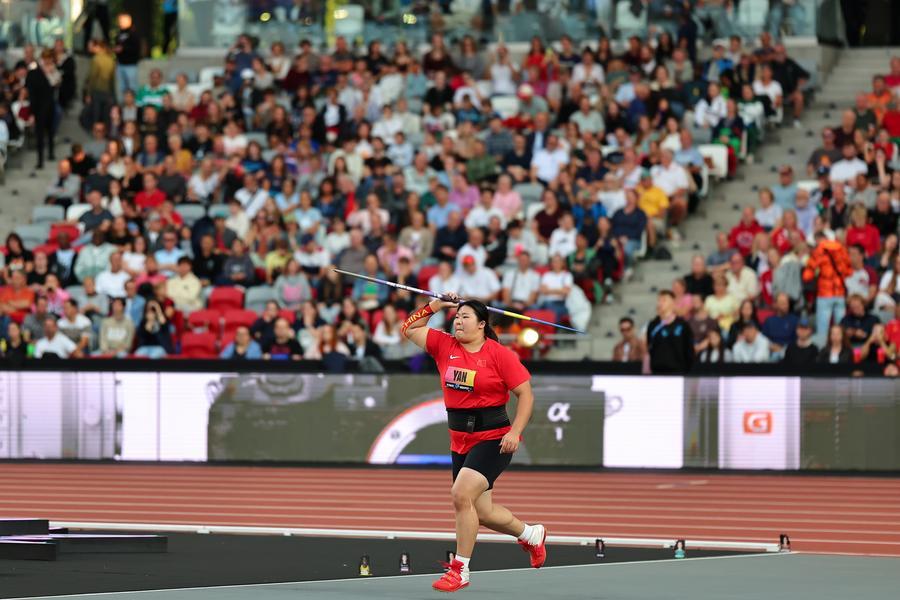
That thinking shaped a tighter competition schedule and broadcasts designed to give individual events and leading athletes more space. Coe said he had never understood why, for example, there could be seven minutes between heats of the women's 200 meters.
"It just drives me to distraction," he said.
Clearer graphics, rankings and predictions were also introduced to make athletics easier to follow, particularly for younger audiences.
Coe stressed, however, that the first edition was far from a finished product. Some disciplines could be added and others left out in future editions, but he said studying the popularity of different events was not about eliminating those ranked lowest.
Rather, the aim was to understand where resources and innovation could help raise a discipline's profile and make it more engaging.
Beyond the format, Coe added that athletics must make better use of its stars.
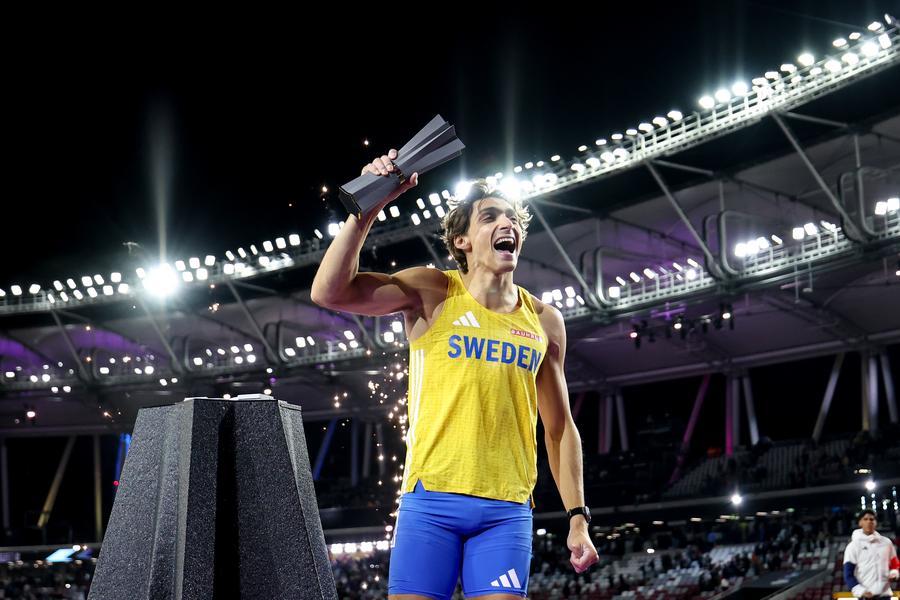
He described Swedish pole vault world record holder Mondo Duplantis as "the gift that keeps giving."
"He just wants to help," Coe said, adding that Duplantis understands that promotion has increasingly become part of the role of an athlete at his level.
Duplantis wrote the song "Gold" for the championship and is due to perform it at Sunday's closing ceremony. Athletes also took part in a pre-championship red carpet and other promotional activities designed to showcase personalities beyond competition.
Coe said the day-before activities generated well over one million hits and around 1,400 articles, underlining the appetite for seeing athletes away from the field of play.
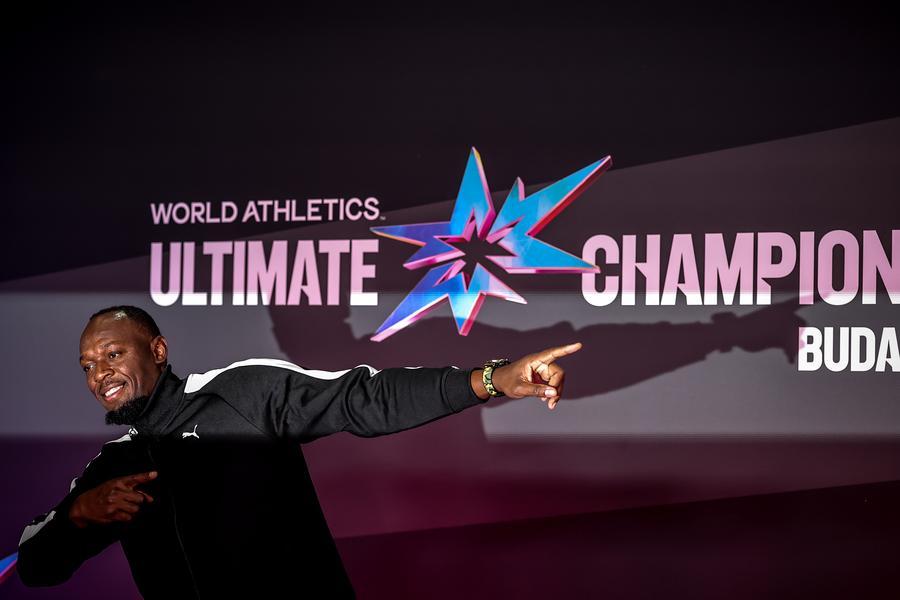
Retired Jamaican sprint legend Usain Bolt represents another kind of star power.
"I sort of feel Usain is back in our sport again," Coe said.
He said he had met Bolt several times this year, including spending an afternoon with him at Wimbledon, where much of their conversation centered on the Ultimate Championship.
"He was very excited and just wants to do more in the sport," Coe said.
The challenge, he joked, was finding the right role.
"If I'd gone to Usain and said, 'Would you chair a committee or commission?' He's not going to want to do that."
Bolt has already been involved behind the scenes in junior athletics and promotional work, and Coe said World Athletics would continue looking for ways to keep him engaged.
For Coe, athletics is also fortunate to have an unusually deep generation of current competitors.
"We're really lucky," he said, describing them as "a group of people for the ages."
In previous periods, attention could be concentrated more heavily on either track or field, he said, but over the past two or three years athletics has developed "a far broader bandwidth of talent across all our disciplines."
Looking further ahead, Coe said the Ultimate Championship also addresses what he sees as one of athletics' structural weaknesses -- a season that remains too short.
"The sport comes together for the big magnesium moments between sort of June and September," he said. "That, across any metric, is a short season for a sport that's supposed to be professional."
World Athletics wants its World Championships and Ultimate Championship, where possible, to serve as the climax of the season.
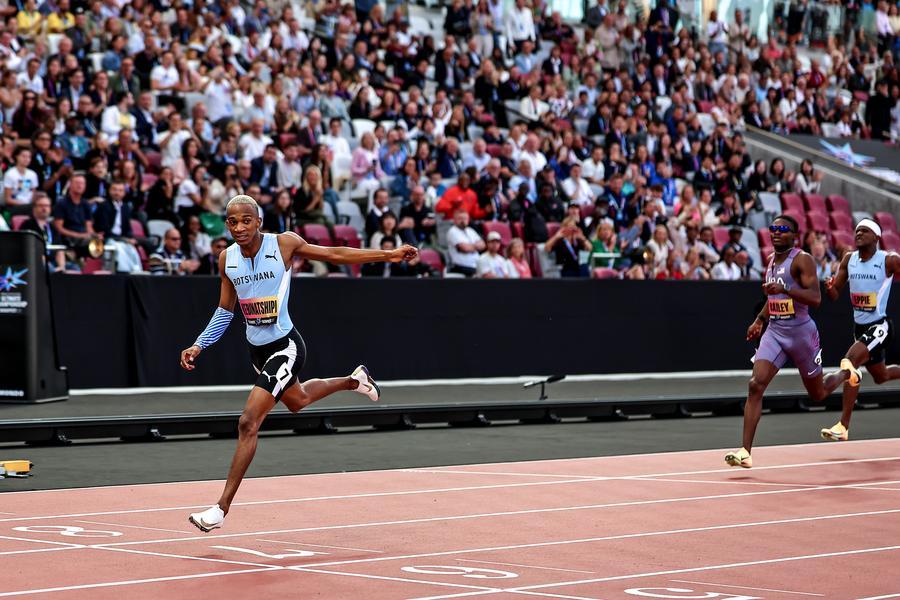
Coe said athletics could not afford to have one year in every four when the sport "goes a bit dark out there," particularly compared with the vast global audiences generated by the Olympic Games and World Championships.
Different climates in southern California, South Africa and Australia could help extend the season while broadening athletics' global footprint.
"So this event could be in maybe late October in a few years' time," Coe said. "That would be my success."
Climate change could also force that shift, particularly for endurance events, as athlete welfare may make some traditional competition windows increasingly unsuitable.
But a longer season, Coe stressed, should mean more choice rather than more pressure.
"We don't put athletes under pressure to compete," he said. "I just want to give them more options and more opportunities for financial security."
He cited Norway's Jakob Ingebrigtsen, who had been weighing whether to continue competing after an injury-hit season.
"In reality, I care more about you than I do an event," Coe said he told him.
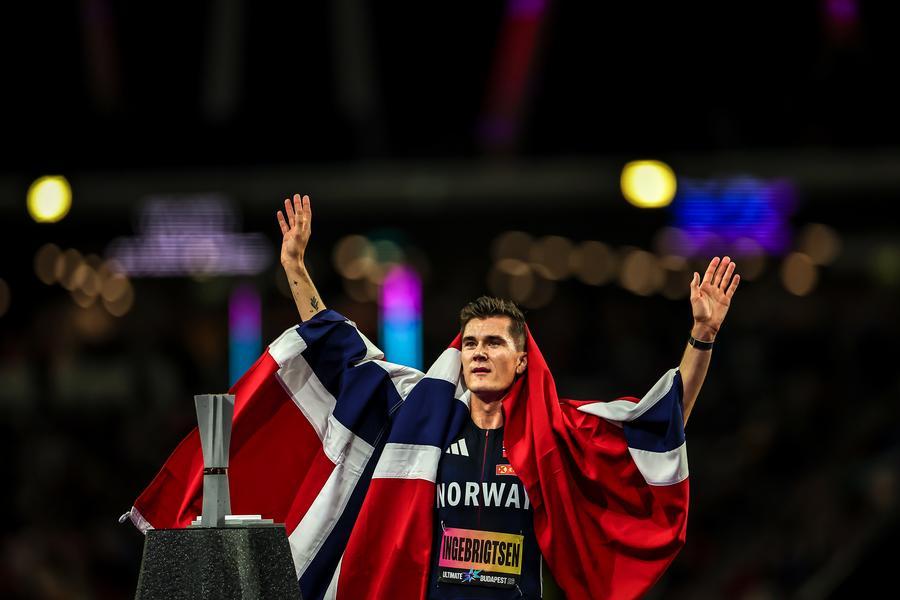
The same philosophy, he argued, lies behind higher prize money.
Athletes will not suddenly run faster because they are thinking about tens of thousands of dollars near the finish line, Coe said. The greater value lies in financial security -- helping them stay in the sport longer, afford better treatment when injured and prepare for life after competition.
He recalled British long jumper Jazmin Sawyers saying that 75,000 U.S. dollars would allow her to "stay on in the sport for another year and buy another sewing machine."
"When I was pushing prize money and raising the game generally, that's exactly what I had in mind," Coe said.
For a sport Coe describes as "innately conservative," the Ultimate Championship remains a work in progress.
"It's a start," Coe said. ■