BEIJING, Sept. 9 (Xinhua) -- Chinese President Xi Jinping made a five-day trip to Central Asia and the Middle East from Aug. 30 to Sept. 3, during which he attended the 2026 Shanghai Cooperation Organization (SCO) Summit and paid state visits to Kyrgyzstan and Egypt, sending strong messages that inject certainty and positive energy into a turbulent and changing world.
The trip, observers say, was in step with the broader trends of the times as the Chinese president, with the shared future of humanity in mind, advanced a series of proposals on reforming and improving global governance.
VISION FOR AN "EQUAL AND ORDERLY MULTIPOLAR WORLD"
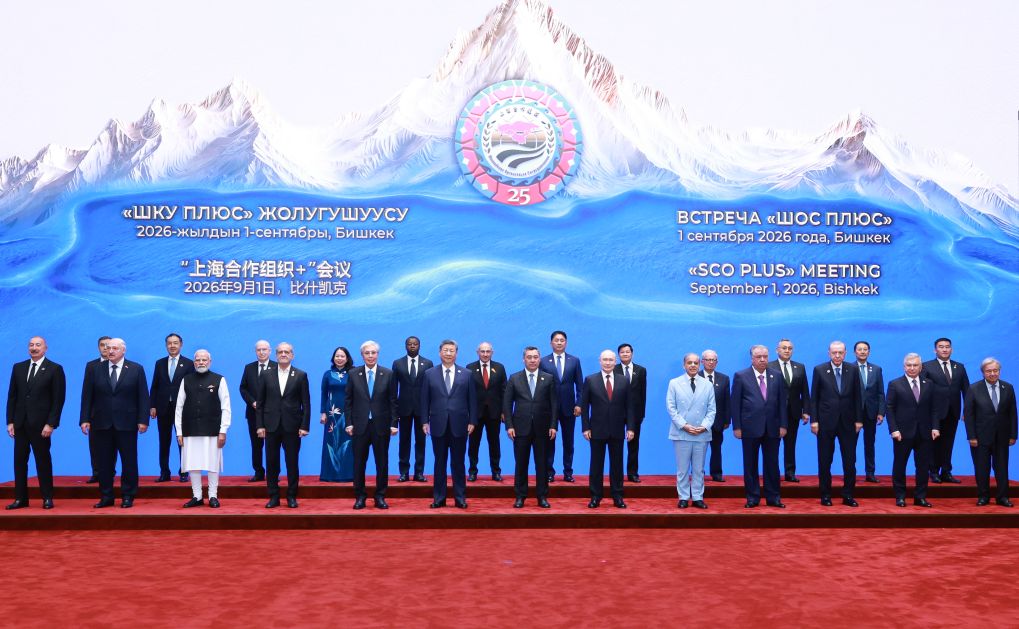
At the expanded SCO Plus Meeting in Bishkek, capital of Kyrgyzstan, Xi called for an "equal and orderly multipolar world" and a more just and equitable global governance system, with a stronger role for the United Nations.
The SCO, since its establishment in 2001, has grown from a six-member Eurasian organization to a 27-nation family across Asia, Europe and Africa.
In his speech, Xi said that sovereign equality and mutual respect are fundamental principles; balance, order and the rule of law are inherent requirements; multilateralism, dialogue and consultation are essential pathways; and mutual benefit, win-win, and inclusiveness are the way forward for development.
These principles are rooted in Xi's vision for global governance, first articulated with the launch of the Global Governance Initiative (GGI) at last year's SCO Summit in China's coastal city of Tianjin, as the United Nations marked its 80th anniversary.
The initiative has received support from nearly 160 countries and international organizations. The Group of Friends of Global Governance has been established in New York, Geneva and Vienna. The World Artificial Intelligence Cooperation Organization, the world's first intergovernmental international organization on AI, has been launched in Shanghai for AI governance. These efforts help turn the GGI into concrete actions.
Put forward by Xi, the Global Governance Initiative, along with the Global Development Initiative, the Global Security Initiative, and the Global Civilization Initiative, has been widely acclaimed, said SCO Secretary-General Nurlan Yermekbayev.
"This is a complementary system of ideas and practical approaches aimed at addressing pressing contemporary challenges and building a just, peaceful, and sustainable world order," he said.
During this trip, the Chinese president sought to promote peace, development and prosperity in both international and regional arenas.
At SCO meetings, Xi outlined four proposals for advancing the organization's high-quality development and three suggestions for enhancing its role.
During his state visit to Kyrgyzstan, Xi signed a bilateral treaty on permanent good-neighborliness, friendship and cooperation with his Kyrgyz counterpart.
In Egypt, Xi proposed a four-point approach to building a new Middle East security architecture.
DEVELOPMENT FOR THE PEOPLE
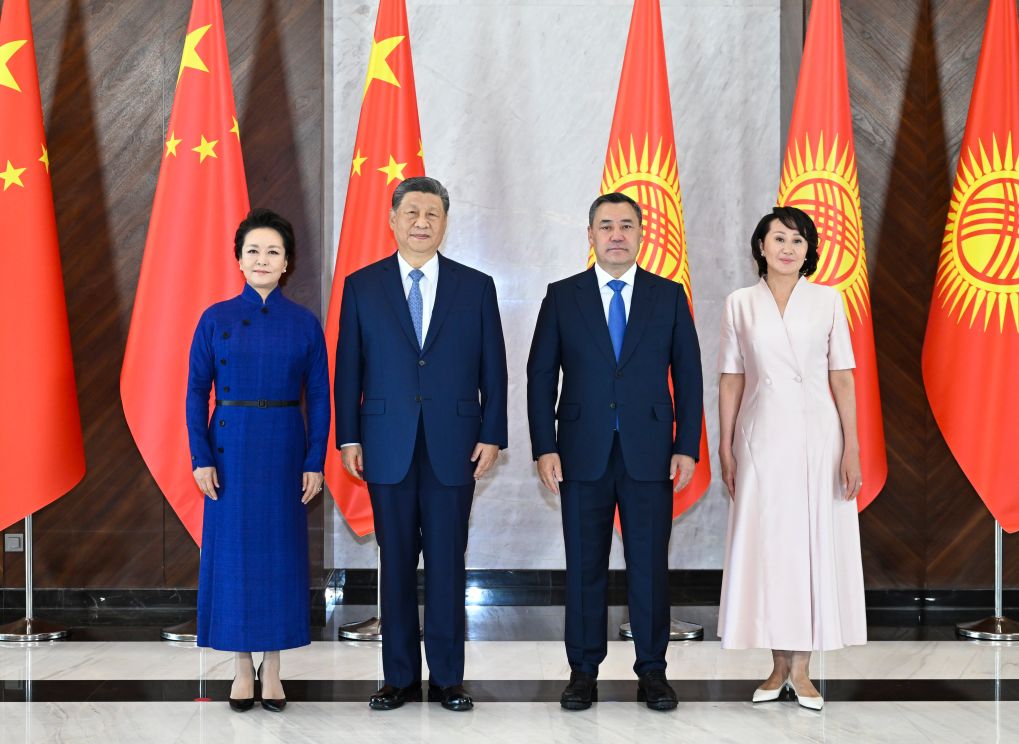
In his talks with Kyrgyz President Sadyr Japarov, Xi called for efforts to advance the building of a China-Kyrgyzstan community with a shared future and better benefit the people of both countries.
He urged high-quality construction of the China-Kyrgyzstan-Uzbekistan railway, a flagship Belt and Road project linking China with Central Asia.
Addressing the SCO summit, Xi called on the SCO to put development first and open up the prospects for shared prosperity.
The SCO, Xi said, should champion a universally beneficial and inclusive economic globalization, consolidate cooperation in traditional areas such as trade and investment, connectivity, energy and resources, and expand cooperation in emerging areas such as artificial intelligence, digital economy, green industry and green mining.
The same emphasis on development and people's wellbeing was evident during Xi's visit to Egypt. In a joint communique, China praised Egypt's Decent Life Initiative for its efforts to improve people's living standards, while Egypt expressed appreciation for the Global Development Initiative.
As Xi once put it, "People's sense of gain should be the goal of domestic governance and global governance, and we should continue to provide confidence and stable expectations for the people."
MUTUAL LEARNING
In a signed article published ahead of his visit to Kyrgyzstan, Xi wrote about the ancient Silk Road as a witness to the long-standing friendship between the two peoples, citing the stories of historical figures such as diplomat Zhang Qian, monk Xuanzang and poet Li Bai, whose legacy is seen as promoting civilizational exchanges between China and Kyrgyzstan.
During his visit to Egypt, Xi, accompanied by Egyptian President Abdel Fattah El-Sisi, visited the Grand Egyptian Museum, where the legacy of ancient Egypt unfolds against the backdrop of the millennia-old pyramids.
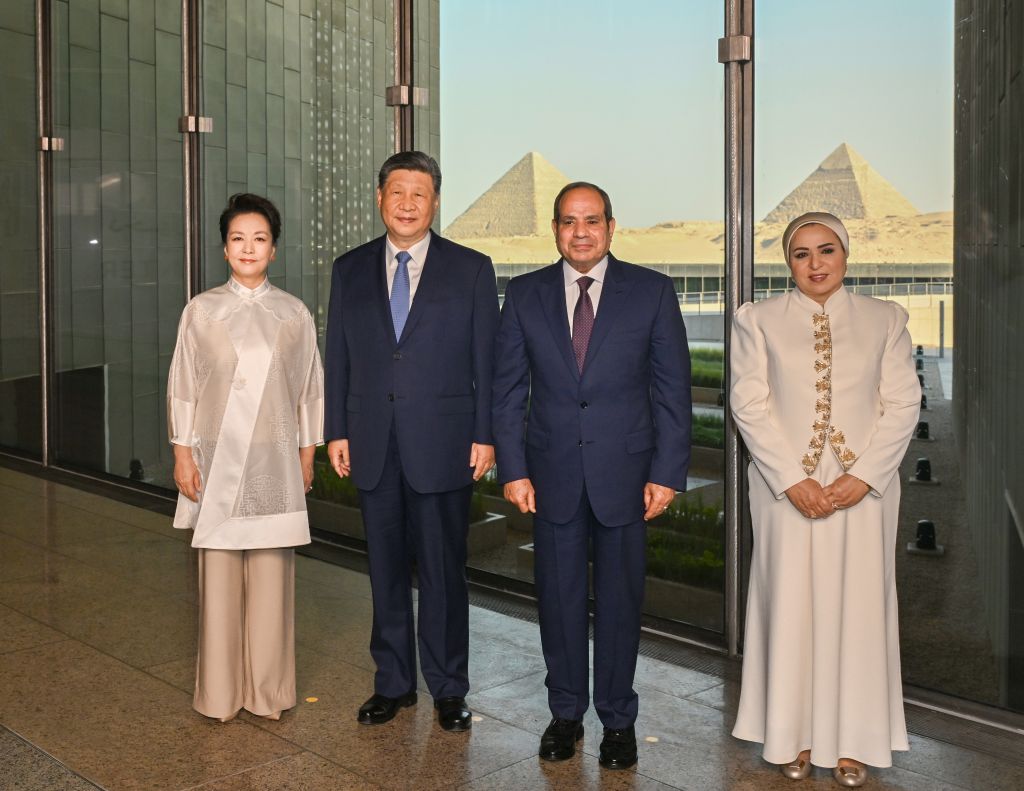
Xi and Sisi, together with their spouses, spent more than one hour touring the museum, home to more than 100,000 precious artifacts.
They toured the grand galleries, posing for a photo before a towering statue of Ramses II, one of the most famous pharaohs of Egypt, as curators delivered a swift primer on pharaonic history.
"This museum is a book with endless pages," Xi said.
The museum visit also underscored Xi's longstanding emphasis on exchanges and mutual learning among civilizations.
Over the years, Xi's overseas trips have taken him to museums and historic sites, from the Amir Timur Museum in Uzbekistan to the ancient Maya ruins of Chichen Itza in Mexico. At home, he also invited foreign leaders to visit China's historic sites, ranging from the Forbidden City to the ancient irrigation system Dujiangyan and the over 600-year-old Temple of Heaven.
At the Grand Egyptian Museum, Xi called on the two countries to promote inclusive coexistence and mutual learning among different civilizations, and pool greater strength from civilizations to advance the building of a community with a shared future for humanity.
The remarks echoed Xi's message to Sisi on the museum's opening last year, in which Xi highlighted the vibrant cultural and people-to-people exchanges between the two countries, citing the successful exhibition on ancient Egyptian civilization in Shanghai and joint archaeological exploration into the pyramids at Saqqara, located south of Cairo.
"It is encouraging to see the two ancient civilizations reaching out to each other, with the two peoples growing ever closer through mutual understanding and affinity," Xi said. ■