by Ma Kangduo
A recent article in The Economist bluntly declared "China won't apologize for overcapacity." The subtitle is even more direct: "Its industrial policy rests on a simple principle: might makes right."
The real problem with this narrative is not about capacity pressures; it is about turning economic competition into a moral judgment. When a country expands its manufacturing, lowers costs, and achieves efficiency across its supply chains, it is nevertheless asked to "apologize" -- as if success itself were a sin.
MORE PRODUCTION THAN DEMAND IS NOT OVERCAPACITY
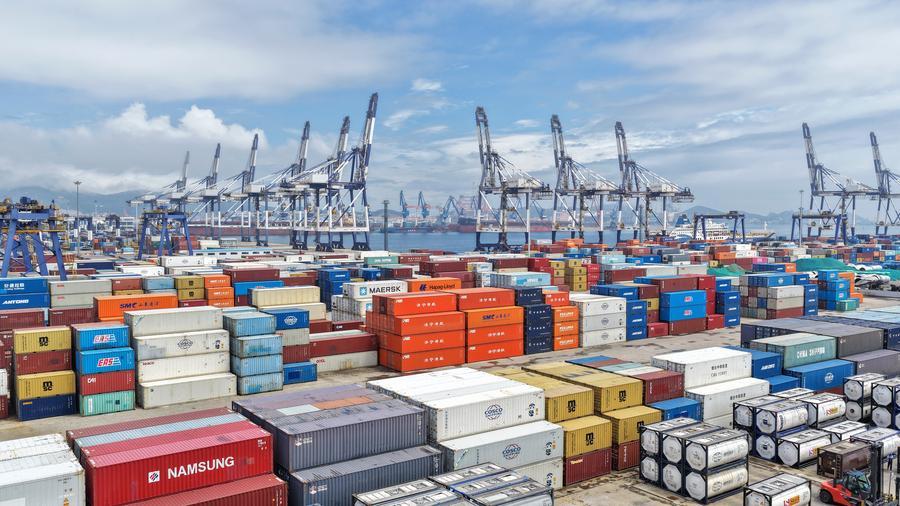
To be sure, China has substantial production capacity and strong exports in electric vehicles, photovoltaic products, batteries, and steel. But that does not automatically amount to "overcapacity." Defining production capacity that exceeds domestic demand as overcapacity is an overly simplistic way of understanding the concept.
By that logic, most of the aircraft manufactured by the United States, such as Boeing airplanes, are exported because the domestic market cannot absorb the entire output. German automobiles, Japanese machine tools, South Korean chips, French luxury goods and Swiss watches -- almost all highly specialized industries with comparative advantages -- produce far more than their domestic markets consume. If all of these were deemed "overcapacity," then international trade and the international division of labor themselves would become a problem, and the theory of comparative advantage would be turned on its head.

A country specializing in the products it can produce most efficiently and then trading them for other goods is precisely the foundation of modern economic efficiency. To single out China's advantages in certain sectors and simply label them "overcapacity" is, in essence, a selective double standard.
DOUBLE STANDARD IN INDUSTRIAL POLICY
China's industrial policy is portrayed as a "whole industry chain model" and cited as evidence of "market distortion" and "overcapacity generation." In contrast, the massive, targeted, and exclusionary industrial subsidies of the United States and Europe are largely ignored, or treated as if they were not even worth mentioning.
The U.S. Inflation Reduction Act provides an estimated 369 billion dollars in clean-energy and climate-related incentives, including tax credits for clean energy and electric vehicles, while incorporating domestic-content and North American sourcing requirements. The CHIPS and Science Act likewise provides substantial incentives to support semiconductor manufacturing in the United States. The EU's Clean Industrial Deal goes even further, planning to mobilize more than 100 billion euros (116 billion dollars) to support EU-made clean manufacturing.
The underlying logic of these policies is remarkably similar to that of the Chinese industrial policies they criticize: using fiscal subsidies, tax incentives, and domestic content requirements to actively shape the industrial landscape. The only difference lies in the labeling. When China does it, it is called "market distortion," "overcapacity," and "might makes right." When the United States and Europe do it, it is called "strategic autonomy," "industrial security," and "responding to the climate crisis."
"I CAN HIT YOU, BUT IF YOU HIT ME BACK, THAT'S AGGRESSION"
This double standard becomes even more apparent in the narrative surrounding "actions" and "counteractions."
When the United States raises tariffs and promotes manufacturing reshoring, or when Europe advances "Made in Europe," the Clean Industrial Deal, or the Carbon Border Adjustment Mechanism, these measures are framed as "defending the remaining industrial base," "safeguarding strategic autonomy," or "responding to unfair competition." The language is defensive, legitimate, and even tinged with a sense of victimhood.
Yet when China takes reciprocal countermeasures -- whether tariffs, export controls, or equivalent restrictions -- they are immediately labelled "geopolitical weapons," "economic coercion," or "weaponizing interdependence." At its core, this is the logic of "I am defending myself when I hit you, but you are committing aggression when you hit me back."
The West is presumed to have a unilateral monopoly on defining what constitutes "legitimate industrial policy" and "illegal countermeasures." They can use subsidies, domestic-content rules, and tariff barriers to restructure supply chains, while China is expected simply to accept the outcome and refrain from responding in kind. Once China does respond, economic competition is immediately escalated into a "threat to the international order."
THE REAL EXCESS
A developing country is asked to apologize for "being too successful," while the West remains silent about its own massive subsidies and subjects equivalent responses by others to moral judgment. This is a real double standard. It reveals not economic rigor, but anxiety and arrogance in the face of the erosion of its own comparative advantages.
A genuinely fair debate should acknowledge that virtually all major economies use industrial policy. The real question is not whether industrial policy exists, but whether it is transparent, whether it complies with the rules, and whether it creates unsustainable distortions. Singling out China for moral condemnation while remaining silent about one's own massive subsidies and protectionist measures will only strip the concept of "overcapacity" of its credibility and reduce it to nothing more than a rhetorical weapon.
What the West's "overcapacity of China" narrative really reveals is not economic reality, but arrogance and a glaring double standard.
What the West has in excess is arrogance and double standards -- spinning competitiveness into a sin, efficiency into a threat, achievement into a blunder to be repented, and reciprocal responses into aggression -- it is this narrative itself that needs to be scrutinized the most.
Editor's note: The author is a researcher and commentator specializing in international affairs.
The views expressed in this article are those of the author and do not necessarily reflect the positions of Xinhua News Agency.■