BEIJING, Sept. 3 (Xinhua) -- For Victoria, a visitor from Denmark, her trip to China this summer proved eye-opening: the scenes she had seen on TikTok became vividly real and tangible.
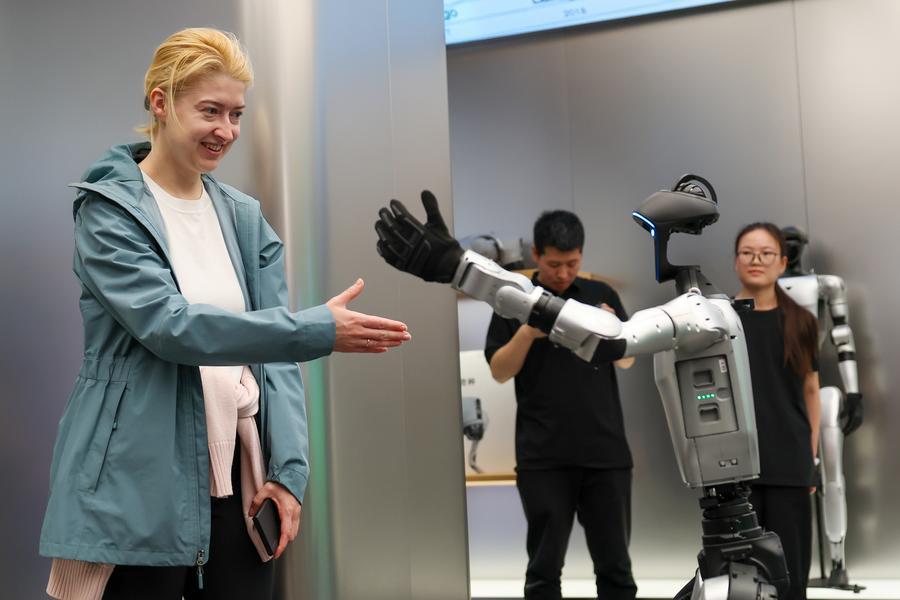
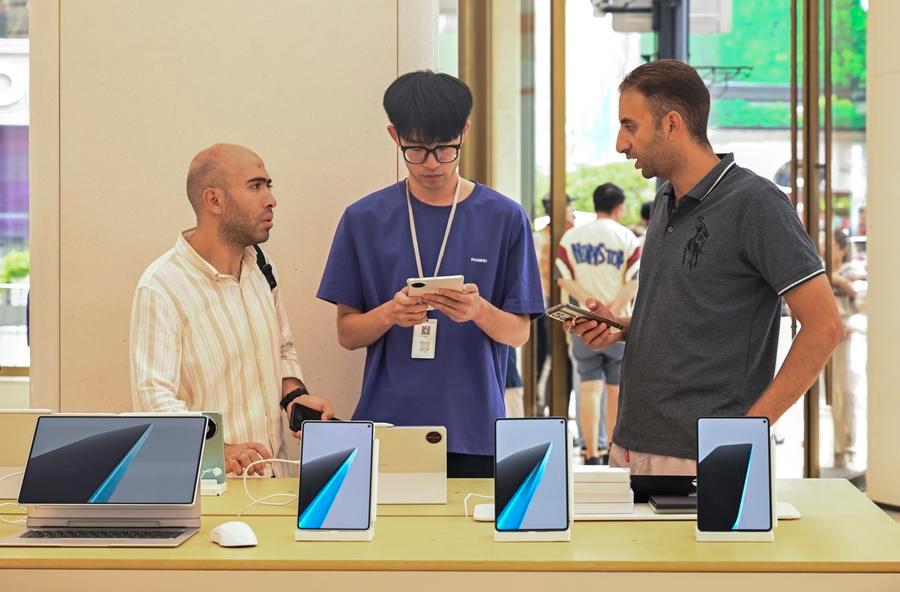
Inside a shopping mall in Shanghai, Victoria joined crowds gathered around a makeshift boxing ring outside Unitree Robotics' newly-opened experience store, the first outlet of its kind in Asia. Two humanoid robots in pink and red helmets sparred before onlookers, and she pulled out her phone to capture the moment.
"I watched clips of these robots dancing online, but it's really cool to see them in person," Victoria said. She described China's rapid advances in artificial intelligence (AI) and robotics as something "revolutionary, new and exciting."
She also recalled watching a humanoid robot brew a cup of tea. For her, these novel encounters are far more than entertaining novelties -- they are vivid proof that China's tech breakthroughs are stepping out of labs and factory floors and into the fabric of everyday life.
The booming growth of China's robotics and embodied AI industry is fully showcased at the 2026 World Robot Conference (WRC), which recently concluded in Beijing. The event drew over 300 exhibitors from 26 countries and regions, showcasing more than 3,000 cutting-edge tech products and giving the world an up-close view of China's fast-evolving robotics sector.
Xu Xiaolan, president of the Chinese Institute of Electronics, noted at the conference that China's embodied AI industry has entered a critical phase of large-scale commercial application, with relevant products transitioning from small-scale trial operation to widespread market deployment.
China has developed more than 400 complete humanoid robot products, over half of the global total, data from China's Ministry of Industry and Information Technology showed in July, while a WRC report revealed that China shipped more than 40,000 humanoid robots in the first half of 2026, accounting for 97 percent of global shipments.
As China's tech sector, particularly the robotics industry, flourishes, global perceptions of the country's technological capabilities are changing profoundly. Back in 2008, Rebecca Fannin, author of "Silicon Dragon," predicted the rise of China's tech sector in her book, a forecast that was widely dismissed at the time.
Today, the tide has turned. Fannin said global audiences increasingly recognize China as a leading innovative nation, as Chinese-made products ranging from humanoid robots and electric vehicles to intelligent robotic lawnmowers and smart laundry appliances gain growing traction in the United States and beyond.
"We're looking to China as a leader of the futuristic vision -- that's a big change from the past," she shared in a program hosted by the National Committee on U.S.-China Relations, a non-profit dedicated to advancing bilateral understanding.
Yuan Shaoyu, visiting assistant professor at New York University, shared his thoughts about China's tech rise during the program.
"Many people now see Chinese companies producing products and platforms that are genuinely felt more innovative, more polished, and also affordable compared to the Western ones," he said, pointing to the sheer range of China's tech innovation.
Technology is far from the only draw. Increasingly, Chinese culture and everyday lifestyles are also winning over young audiences in the West.
From Los Angeles to London, Generation Z is embracing authentic Chinese lifestyle trends online, fueled by viral hashtags such as #BecomingChinese and #Chinamaxxing.
A growing number of young Westerners now follow Chinese-inspired wellness routines: they wear cotton slippers at home, start their mornings with warm congee, and cut down on icy beverages to live healthier.
Yet this fascination stretches far beyond health habits. Global young audiences are also drawn to China's streamlined, people-centered modern-life offerings, ranging from high-speed rail, friction-free online shopping and food delivery to hit Chinese TV dramas and original role-playing games.
Eric Hovagim, an American YouTuber, thought China would be the last place he would visit, let alone settle down, because of how U.S. media portrayed the country. Many of his peers felt the same.
Nevertheless, he encountered China and was shocked by what the country offers -- bustling metropolises on par with New York, only safer and more convenient, and a tranquil life in small towns no matter how remote.
"We saw that and realized China is not a place we thought it was," Hovagim said.
In Hovagim's eyes, international content creators and Chinese social media influencers play a critical role in bridging cultural divides and showing the real China to the world. By capturing everyday, unscripted moments of modern-day China, their videos build a well-rounded portrait of the country -- one that resonates with audiences across global social media platforms.
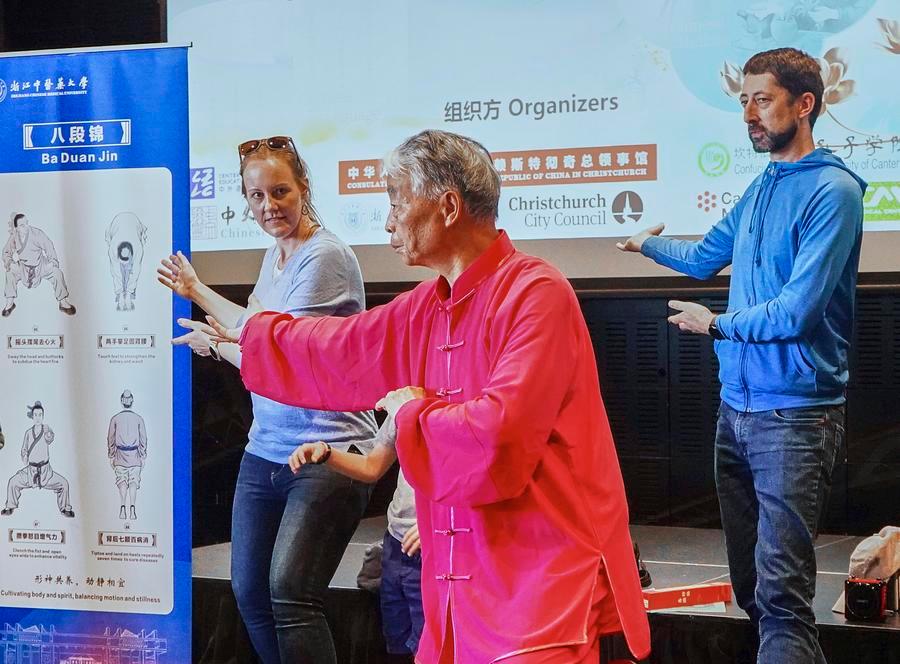
China's recent visa-free policies have enabled more Western visitors to experience China firsthand. Official figures recorded 22.9 million inbound foreign arrivals in China during the first half of 2026, a 20.4-percent year-on-year increase.
This surge of visitors reflects a broader shift in global attitudes toward China. A July Pew Research Center survey of 42,151 adults worldwide found that 25 out of 36 polled countries hold favorable views of the country.
Separately, the 2026 Global Soft Power Index from London-based consultancy Brand Finance placed China second globally, with its score only 1.4 points lower than that of the United States. The result underscores China's growing cultural pull and international appeal.
Captivated by the country's relaxing, fulfilling lifestyle, Hovagim hopes his parents will one day retire in Shanghai. He pictures them savoring its slow-paced joys: dancing alongside local seniors and pausing to sip warm goji berry tea from a thermos flask. ■