BEIJING, Sept. 8 (Xinhua) -- Zhao Qinghong, a property sales manager in south China's Shenzhen City, has been busier than usual recently, as a new package of measures for the property market has brought more prospective buyers to the residential project where he works.
Zhao said visits to the project in Longgang District, a popular area among young homebuyers in Shenzhen, began to pick up on the last weekend of August, immediately after the latest policy measures were rolled out. The momentum continued into the past weekend, when visits were up 30 percent from levels seen before the new initiative.
The increase in market activity was also reflected in industry statistics. Data from Beike, a leading platform for real estate services, showed that from Sept. 1 to 6, second-hand home transactions signed through Beike-affiliated stores in Shenzhen rose 20 percent from the same period in August and 17 percent from a year earlier.
Backed by the late-August policy package and earlier measures rolled out by local governments, both China's new-home and second-hand housing markets have shown signs of renewed activity, raising hopes for a "golden September and silver October" sales season.
The significance of the latest measures goes beyond the near-term pickup in market activity. The late-August policy package addresses some of the underlying mechanisms of the property sector, ranging from how homes are sold, to how developers and homebuyers are financed, as China seeks to advance a new development model for real estate.
FROM PRESALES TO COMPLETED-HOME SALES
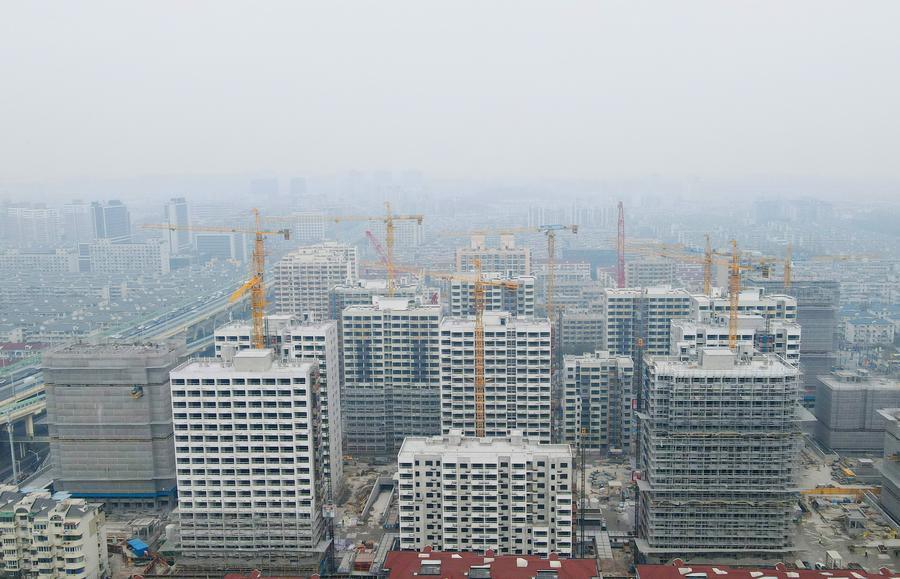
One key part of the reform is a stronger push to promote sales of completed commercial homes, an effort aimed at better protecting homebuyers' rights and reducing risks associated with home delivery.
The reform marks a shift away from a business model centered on presales and rapid turnover, steering property developers away from an excessive focus on scale expansion and toward improving the quality of housing and services.
Wu Jing, head of center for real estate at Tsinghua University, said China's commercial housing presale system, introduced in the 1990s, helped broaden funding channels for developers and rapidly increase housing supply at a time when urban housing was in short supply.
But as the supply-demand dynamics of the property market have changed, China's housing development has shifted from addressing whether homes are available to focusing more on how good they are, making corresponding adjustments to the housing sales system necessary, Wu said.
Against this backdrop, the late-August document on improving the commercial housing sales system calls for a strong and orderly push to promote sales of completed homes. The approach allows buyers to "get what they see," while helping reduce delivery disputes, prevent delivery risks and protect homebuyers' legitimate rights and interests.
Experts said that as the market moves toward structural oversupply, the drawbacks of a presale system that leaves homebuyers facing uncertainty over both delivery timing and housing quality have become increasingly evident. A transition from a presale-dominated system toward one centered more on completed-home sales is therefore an inevitable trend.
RESHAPING PROPERTY FINANCING
The shift in how homes are sold is being accompanied by broader changes in property financing. The China Securities Regulatory Commission has recently released guidelines to improve financing mechanisms for property developers through stocks, bonds, asset-backed securities and real estate investment trusts, with a focus on meeting their reasonable financing needs.
Zhang Bo, president of the 58 Anjuke Institute, said a key change is a shift in the underlying logic of developer financing. In the past, financing decisions were based more heavily on a developer's overall scale and brand reputation, meaning risks at the company level could lead to financing constraints across the board, Zhang said.
Going forward, greater weight will be placed on the merits of individual projects, allowing quality projects to gain more access to funding, he said.
Changes are also being made to real estate credit management. The People's Bank of China and the National Financial Regulatory Administration have introduced differentiated loan terms for presale and completed-home projects to better match their respective construction and sale cycles.
Under the new rules, loans for presale projects should in principle have a maturity of no more than three years, with a maximum of five years. For completed-home projects, the standard maturity is no more than five years, with a maximum of seven years.
The measures also extend the maximum term of individual housing loans from 30 years to 40 years, giving borrowers and lenders greater flexibility.
"The longer loan term means less pressure from monthly repayments. For families looking to upgrade their homes, it is a tangible benefit," said a Wuhan resident surnamed Wang, who visited several residential projects with her family over the past weekend.
Experts said the latest measures, covering housing sales and property financing, will help improve housing quality, defuse risks in the sector and advance a new development model for the real estate sector. ■