by Liu Baiyun, Maria Spiliopoulou
ATHENS, Sept. 5 (Xinhua) -- In the Peloponnese of southern Greece, where many of the most recognizable scenes in Christopher Nolan's blockbuster The Odyssey were shot, the film is already inspiring plans to turn its cinematic appeal into a longer-lasting cultural tourism experience.
"The Odyssey Route -- Homer's Peloponnese," a themed tourism route, is expected to be unveiled by the end of 2026. It will link filming locations, archaeological sites and landmarks associated with the Homeric and Mycenaean worlds, while incorporating local gastronomy and authentic cultural experiences.
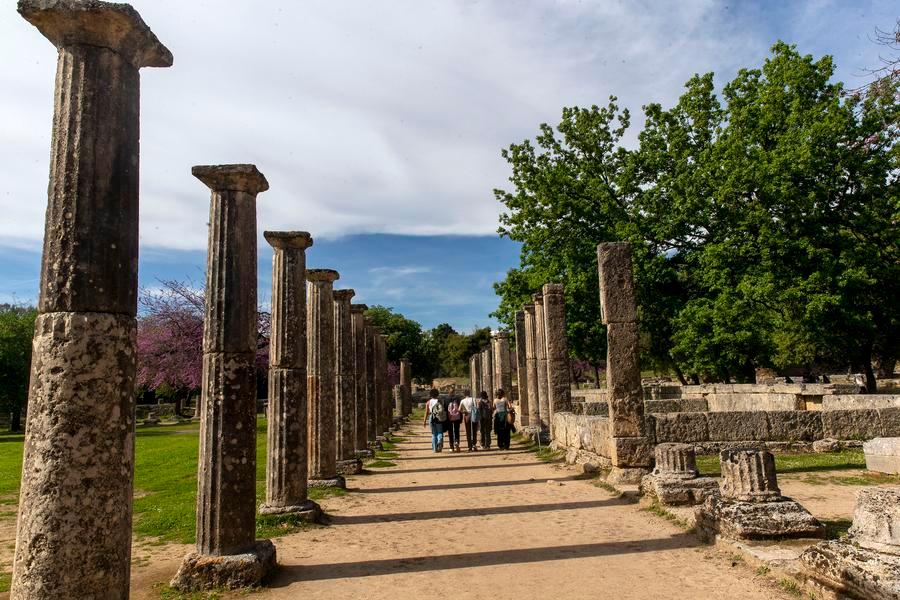
The route will include Nestor's Cave, which was used as the Cyclops' cave in Nolan's adaptation, as well as Voidokilia Beach, Methoni Castle and Acrocorinth. These locations will be connected with sites such as the Palace of Nestor and Mycenae, allowing visitors to move from the landscapes seen on screen to the history and traditions that inspired Homer's epic.
The plans come as the film continues to draw audiences in Greece. Nearly two months after The Odyssey premiered in the country, Athens' only IMAX cinema was still attracting near-capacity crowds.
But beyond the box office, a broader effort is taking shape. Across Greece, local governments, tourism authorities and scholars are exploring how to turn the film's international exposure into sustained interest in archaeological sites, living traditions and Homer's enduring legacy.
"Our ambition is therefore not to create a few isolated 'photo stops,' but to use The Odyssey as a gateway to the wider Peloponnese," said Thanasis Michelongonas, deputy governor for tourism of the Peloponnese Region.
In Pylos-Nestor, a municipality in the southwestern Peloponnese named after ancient Pylos, the kingdom of King Nestor in Homer's epic, mayor Panagiotis Karvelas said accommodation providers and tourism businesses were reporting growing interest from visitors eager to explore not only the filming locations but also the area's broader history and culture.
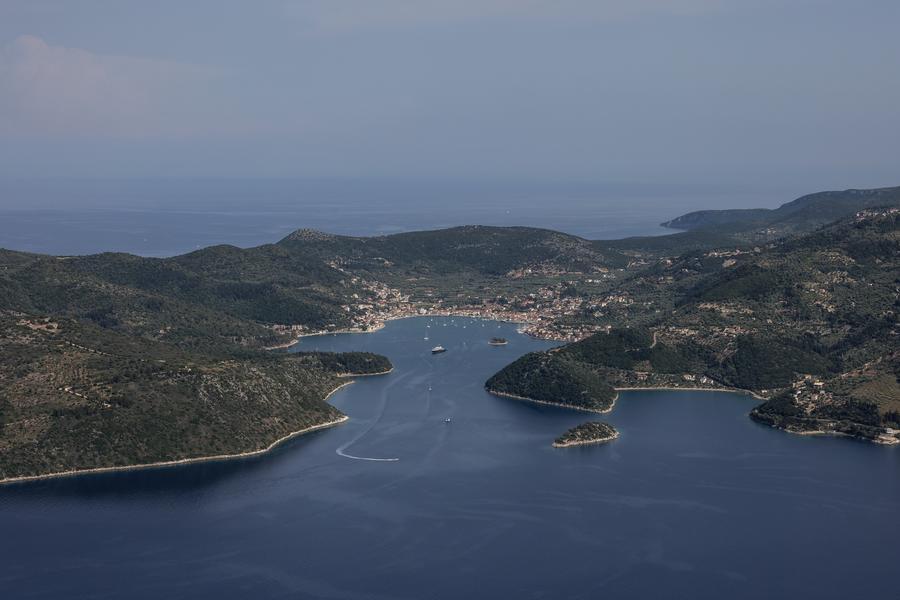
The same effort is taking shape farther west, on Ithaca, the Ionian island traditionally identified as Odysseus' home. Local authorities are already looking beyond the immediate film boom. A Municipal Odyssean Center, scheduled for completion in the summer of 2027, will feature digital exhibitions on The Odyssey, a library collecting editions of the epic from around the world, and spaces for conferences dedicated to Homer.
"We want visitors to come not only because of The Odyssey, but also to experience the history, culture and unique identity of our island," mayor Dionysios Stanitsas said.
The impact of the film, however, is extending beyond tourism and into the realm of literature itself.
Stamatia, a 23-year-old Greek who first encountered The Odyssey at school, said that after watching Nolan's adaptation at Athens' IMAX cinema, she felt inspired to return to Homer's epic.
For Nikoletta Kanavou, a professor of ancient Greek literature at the University of Athens, such a reaction illustrates the potential of a successful film adaptation to send audiences back to the original work.
"A successful film adaptation can create a reverse journey from cinema back to literature," Kanavou said, adding that Nolan's film functions "not as an accurate mirror of Homeric poetry, but as a gateway to it."
At Politeia, a large bookstore near the University of Athens, Greek-language editions of The Odyssey occupy prominent shelves in the classical literature section. Multiple English translations are available as well, but Emily Wilson's acclaimed edition had sold out, with booksellers saying it was their best-selling English translation.
The renewed curiosity was also evident among visitors. Payne and Wynne, a retired couple who spend several months each year in Greece, had already visited Ithaca and Pylos before seeing the film. But the cinematic experience gave them a new reason to explore the ancient epic. Payne said he now planned to read The Odyssey.
Kanavou said the enduring appeal of the epic lies in themes that continue to resonate with contemporary audiences -- homecoming, identity, family, love, loyalty and the lasting cost of war.
The challenge now is to turn that initial curiosity into deeper and more lasting engagement. Kanavou suggested that Greece could use the current momentum to build stronger connections between museums, archaeological sites, universities and digital resources, creating pathways that lead visitors from popular culture toward classical scholarship and Greek history.
Stanitsas also expressed hope for greater state support for archaeological excavations, heritage protection and museum upgrades, which he considers essential to turning international attention into lasting cultural tourism.
Kanavou said "The film provides the emotional and visual hook, while Homer's poem and Greece as a whole provide the historical, archaeological and linguistic depth."
As Payne and Wynne put it, "I think it will rekindle interest -- for a new generation." ■