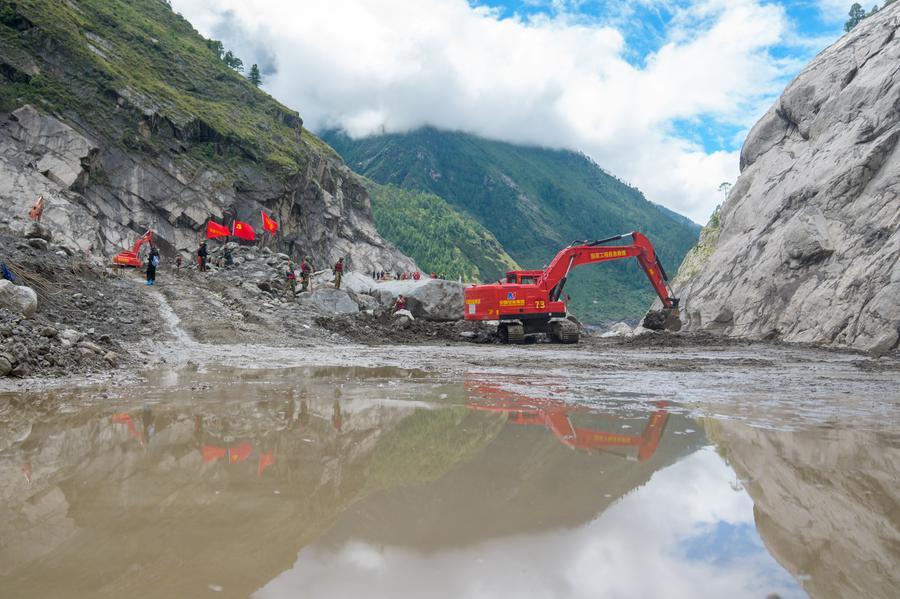
BEIJING, Sept. 5 (Xinhua) -- A fast-moving chain mudslide, triggered by a high-altitude glacier collapse in Nepal, struck Gyirong Port on the China-Nepal border in southwest China's Xizang Autonomous Region on Aug. 26, causing heavy casualties and leaving many missing.
Chinese rescuers immediately launched all-out search and rescue operations. Here is what we know about the deadly mudslide and the latest progress in China:
-- Thirty-one people have been confirmed dead and 531 others remain missing as of 6 p.m. Friday after the mudslide struck the border port, according to the latest update by local authorities.
-- China has deployed 726 troops as of Thursday to mudslide-hit Gyirong Port for disaster relief missions, the Ministry of National Defense said on Friday.
The military has been actively conducting search-and-rescue, road clearance, transport, and epidemic prevention operations, providing medical care to local residents and rescue personnel more than 900 times.
-- China's Ministry of Emergency Management had mobilized emergency fuel supply forces from China National Petroleum Corporation to support rescue operations in Gyirong Port.
As of Friday, a total of 451 tonnes of oil products have been transported, including 163 tonnes of gasoline and 288 tonnes of diesel. Currently, fuel inventories at gas stations in the disaster-hit area and nearby routes are sufficient and supply remains stable, according to the ministry.
-- As of Wednesday, inspections along the G216 rescue route had identified 58 potential geological disaster sites. Authorities have also completed inspections and risk assessments of potential hazards in three affected villages, selected sites for two temporary emergency shelters, and guided the construction of emergency evacuation facilities.
-- Following the disaster, the Chinese government quickly activated an emergency response mechanism for the resettlement and support of foreign nationals and coordinated efforts to provide daily necessities for stranded Nepalese border residents, address their concerns and facilitate their orderly departure. ■