
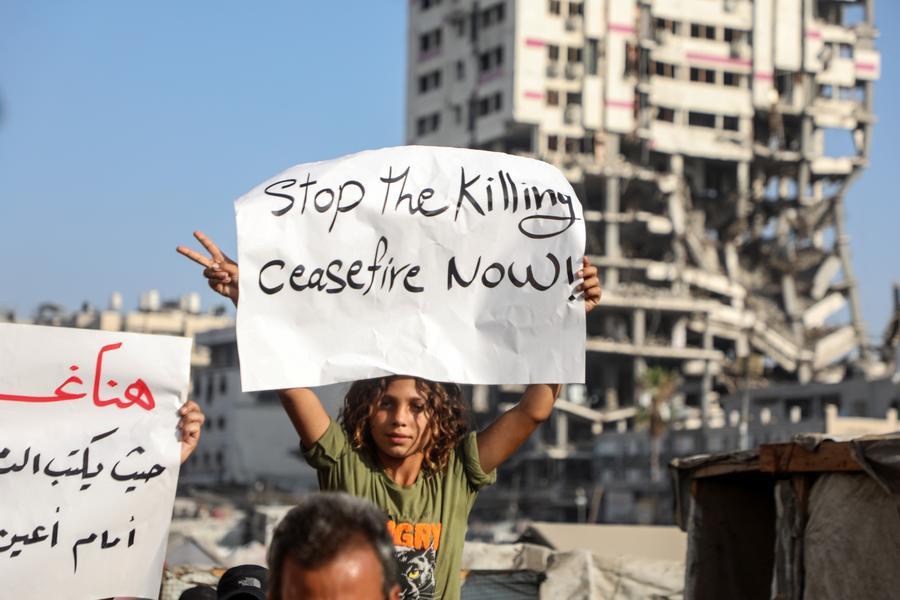
Israel's formally announced rejection to U.S.-backed 15-point Gaza peace plan underlines its dispute with Hamas over the sequence and conditions for ending longtime hostilities, furthering uncertainty over the enclave's future.
JERUSALEM, Aug. 10 (Xinhua) -- Israeli Prime Minister Benjamin Netanyahu on Sunday formally rejected a U.S.-backed 15-point plan for ending the Gaza conflict, insisting that Israel will not withdraw its forces from the enclave until Hamas is fully disarmed.
The rejection marks Israel's first explicit opposition to the Gaza peace framework proposed by the so-called U.S.-led "Board of Peace," exposing major differences between Israel and Hamas over the sequence and conditions for ending hostilities.
Netanyahu said Israel "does not accept the 15-point document," arguing that any Israeli withdrawal must come only after the "genuine disarmament" of Hamas. "When I say disarming Hamas, I mean the heavy weapons, the less heavy weapons -- all weapons," Netanyahu said at a weekly cabinet meeting.
WHAT IS THE PLAN?
The plan was drafted in May by Nickolay Mladenov, "high representative for Gaza" of the "Board of Peace," and officially announced by U.S. President Donald Trump in late July, who said back then the board had reached an agreement on the "complete disarmament" of Hamas and other armed groups in Gaza.
Under the framework, Hamas would give up its weapons, while Israeli forces would gradually withdraw from Gaza and be replaced by an International Stabilization Force working alongside a reformed Palestinian police structure.
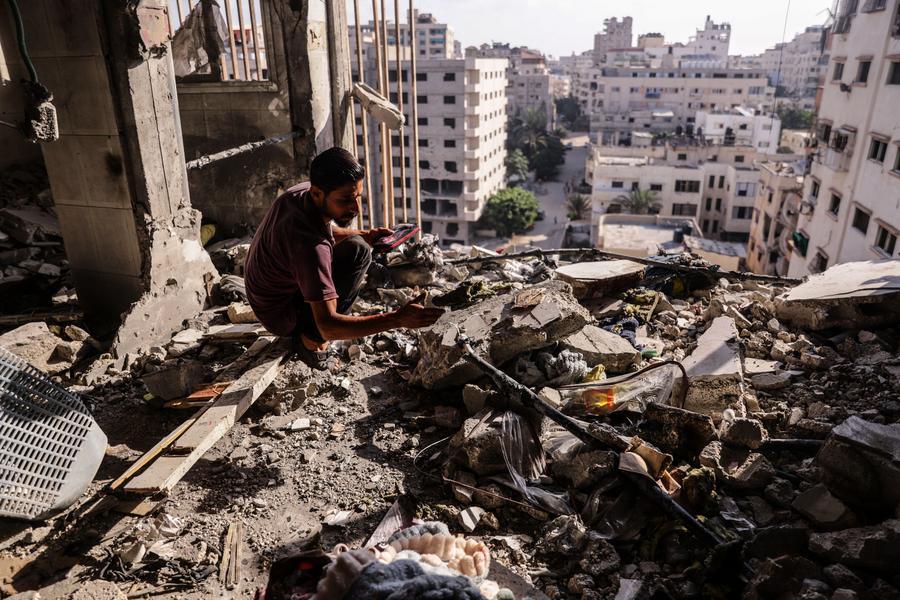
The plan also calls for humanitarian access, reconstruction efforts and the establishment of an interim body to administer Gaza, with the eventual goal of allowing the Palestinian Authority to resume responsibilities in Gaza and the West Bank, according to Egyptian officials involved in mediating the plan and the next stages of its implementation.
A day after Trump's announcement, Hamas said it had accepted the latest version of the plan following negotiations, but linked weapons arrangements to several conditions, including a complete halt to "aggression," Israeli withdrawal from the enclave and progress on reconstruction.
WHAT IS THE KEY DISPUTE?
The main obstacle lies in a fundamental dispute over which step should come first: Hamas' disarmament or Israel's withdrawal.
Israel has insisted that Hamas must first give up all weapons before any withdrawal of Israeli forces from Gaza, arguing that a ceasefire arrangement without the complete removal of Hamas' military capabilities would leave a security threat unresolved.
"They have ideas, some of which are acceptable to us and some of which are not, and we know how to stand our ground on these matters," Netanyahu said, while stressing that Israel would continue to carry out attacks in the enclave to "thwart threats."
Hamas, however, has rejected unilateral disarmament before the end of Israeli operations and withdrawal from Gaza. The group has argued that any discussion on weapons must be part of a broader political arrangement and linked to guarantees for reconstruction and Palestinian rights.
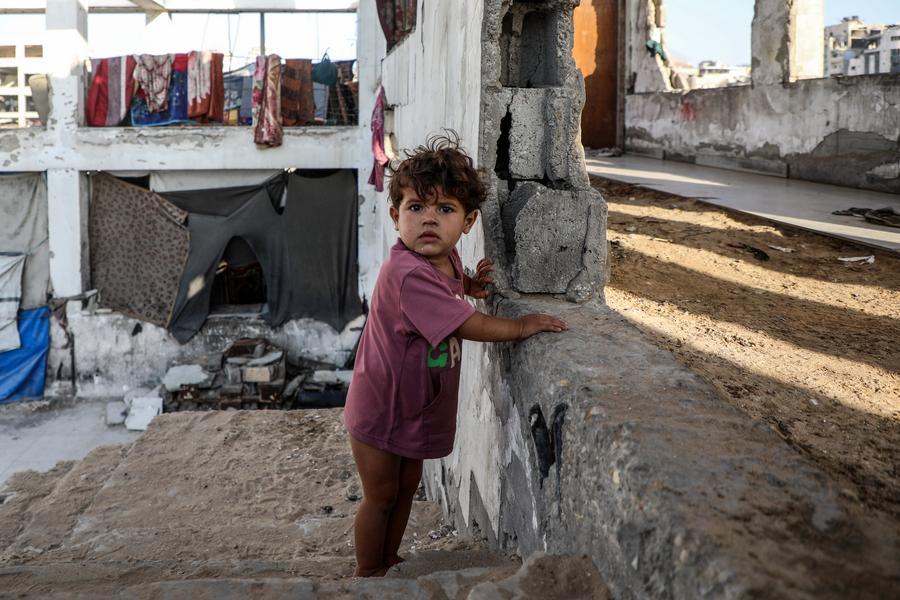
WHAT IS THE PATH FORWARD FOR THE PLAN?
The dispute over the Gaza plan comes amid continued uncertainty over the future of the enclave after months of conflict. Following Netanyahu's announcement, Hamas reaffirmed its commitment to the plan and called on relevant parties to help implement the agreement.
Analysts say Netanyahu's rejection of the peace plan reflects domestic political considerations. Palestinian Foreign Minister Varsen Aghabekian Shahin accused Netanyahu of attempting to delay a Gaza deal until after Israel's October elections, saying the Israeli leader "does not want to reach an agreement."
Hamas political bureau member Basem Naim said on X that the group expected the mediators and the U.S. guarantor to prevent Netanyahu's government from obstructing the process for "internal political and electoral reasons."
Egypt, a key mediator in the Gaza ceasefire negotiations, also urged all parties to honor their commitments and refrain from actions that could undermine progress.
Egyptian Foreign Minister Badr Abdelatty stressed the need to implement the agreed provisions, including sustained humanitarian access, a complete Israeli withdrawal from Gaza and arrangements for an International Stabilization Force.
Netanyahu also reiterated that "as long as I am prime minister, a Palestinian state will not be established," a position that appears to conflict with the plan's stated goal of creating conditions for a "credible pathway" toward Palestinian self-determination and statehood.
Despite the uncertainty, negotiations continue. Netanyahu said his country was still discussing the document with the United States and that some of its proposals were acceptable to Israel.
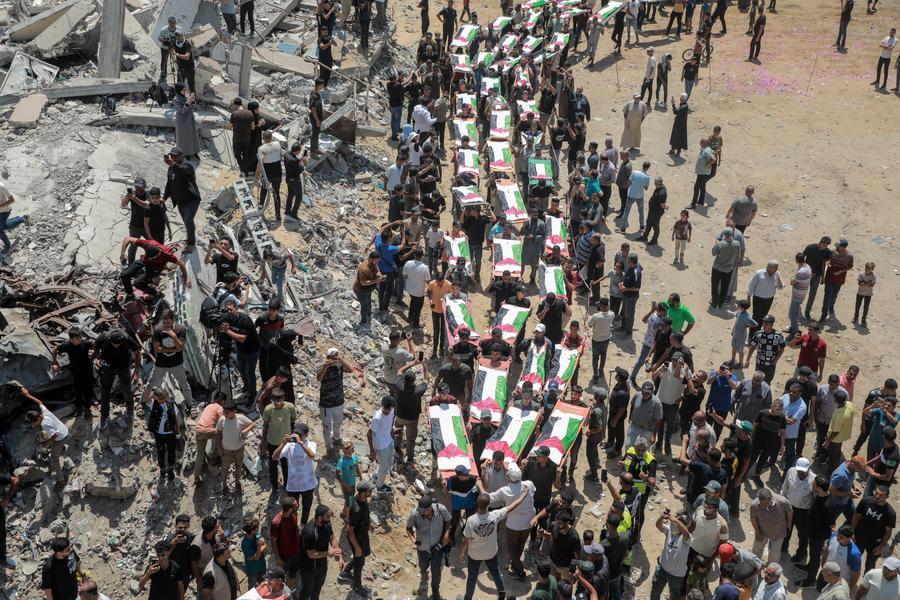
Since a ceasefire between Hamas and Israel came into effect in October 2025, Israeli attacks have killed more than 1,250 people and injured over 4,100 others in Gaza, according to Gaza-based health authorities. ■