HARBIN, Aug. 4 (Xinhua) -- Alejandra Palacios found herself moving from summer heat to winter chill in just a matter of minutes. One moment, she was strolling in almost 30-degree-Celsius warmth in summer clothes; the next, she was bundled in a thick down jacket as the temperature plunged to around minus 10 degrees Celsius.
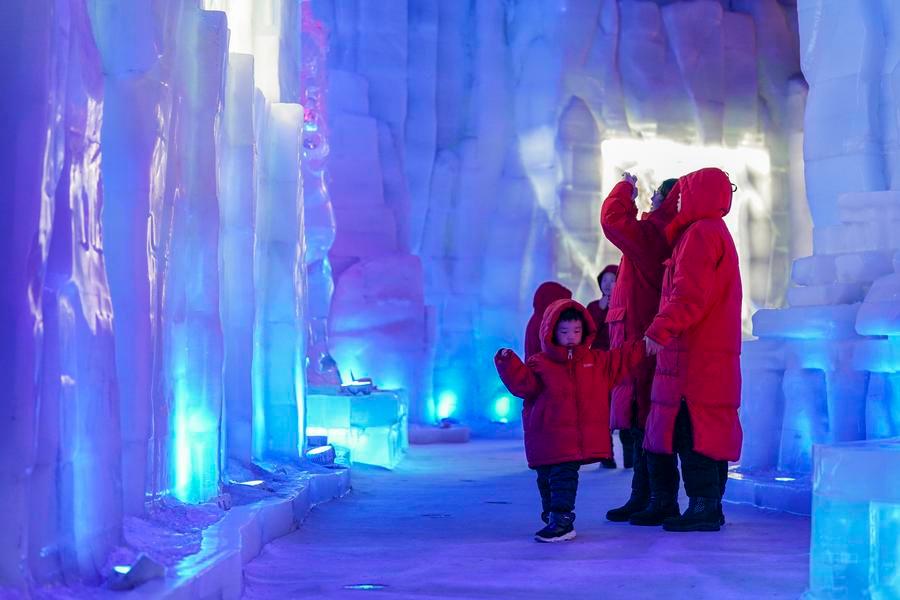
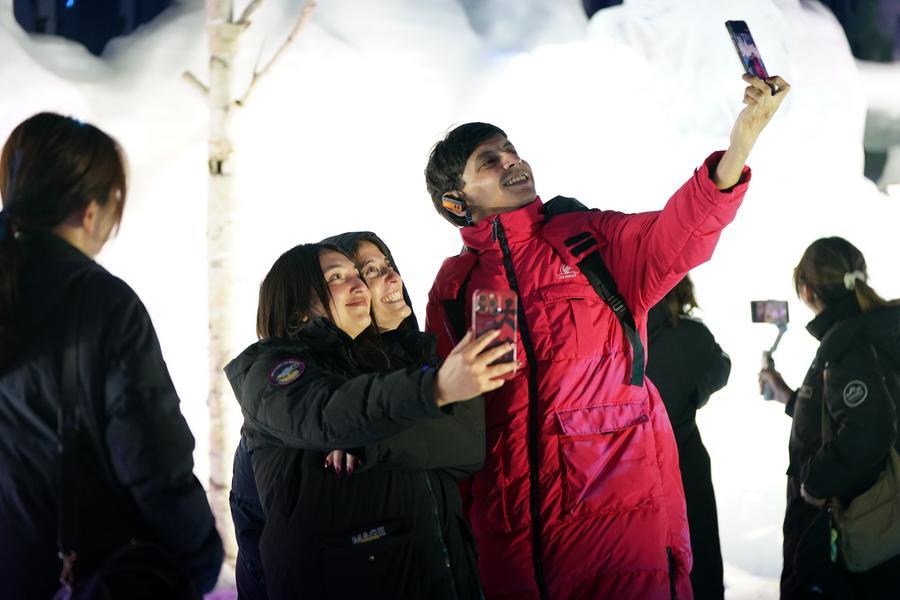
Inside an ice-and-snow pavilion at Harbin Ice-Snow World in northeastern China, the Nicaraguan visitor wiped the fog from her phone lens to reveal an ice-carved castle and cathedral glowing in violet-blue light. Snowflakes drifted down as tourists swooshed down ice slides on rubber tubes.
"They've brought winter into summer, and carved the ice into something so magnificent and delicate. It's astonishing," she said.
Harbin, the capital of Heilongjiang Province, is known as China's "Ice City" for its freezing winters, ice sculptures and winter sports. After the outdoor section of Harbin Ice-Snow World, the world's largest ice-and-snow theme park, closed this February, its indoor ice-and-snow pavilion took over, offering visitors a cool escape from the summer heat.
According to Sun Zemin, deputy marketing director at Harbin Ice and Snow World Co., Ltd., the pavilion opened in the summer of 2024. The 23,800-square-meter venue maintains an interior temperature of between minus 8 and minus 12 degrees Celsius and uses about 20,000 cubic meters of ice.
"The pavilion features natural ice harvested from the Songhua River in winter and preserved at low temperatures in sealed storage, as well as colored ice, bubble-free ice and frozen roses made by ice-making factories," Sun added.
Those who visit the park can also enjoy indoor ice shows that combine figure skating, acrobatics and live music. Ashley Martinez Aponte, a visitor from the Dominican Republic, lingered long after the performance had ended.
"It was such an unforgettable show. I think everyone should come and appreciate this piece of art on ice," she said.
The park's operator said that the pavilion's single-day visitor count exceeded 5,000 at its peak this summer. The park draws not only domestic tourists escaping the heat from southern China, but also travelers from Singapore, Malaysia, the Republic of Korea and other countries.
Beyond the ice sculptures, shows and rides, off-season winter sports are emerging as a new draw for Harbin's summer tourism -- a fresh way of turning its winter chill into a hot-season attraction.
At a year-round indoor ski resort in Harbin's Songbei District, beginners have been learning turns and braking with coaches this summer, while seasoned skiers race down the slopes, kicking up clouds of snow.
Lin Shuyue, a senior from Xiamen in east China's Fujian Province, recently visited Harbin with her classmates on a graduation trip. Though they have access to indoor ski slopes back in the south, they made a point of adding this ski resort to their itinerary.
"You can ski indoors in the south too, but it just doesn't feel the same as the 'Ice City,'" Lin said, adding that with greater vertical drops, more advanced slopes and the city's immersive ice-and-snow culture, skiing in the height of summer here is a truly unique experience.
Spanning around 80,000 square meters, the indoor ski resort features eight slopes of varying gradients, with a maximum vertical drop of 80 meters. It's the perfect venue for skiers of all skill levels. Thanks to its year-round temperature control and snow-making systems, ski training and recreation are no longer limited by the weather outside.
"We are committed to making winter sports accessible all year round, creating all-season, all-age ice-and-snow experiences," said Song Guangxu, who is in charge of the resort. In addition to daily operations and ski instruction, the facility also helps sustain visitor flows by hosting professional competitions, family-oriented events and public ice-and-snow experience programs.
These indoor ice-and-snow projects are weaving themselves into Harbin's broader summer tourism market, fueling a travel boom during the peak season. Travel platform data shows that flight bookings from major cities across the country to the "Ice City" have surged since late June, driven by a combination of graduation trips and family summer getaways, with young travelers making up a significant share of the city's summer visitors.
Li Zhuomin, deputy director of the Harbin municipal bureau of culture, radio, television and tourism, said the city is building a more stable year-round supply of ice-and-snow products through projects such as indoor theme parks, ice-art exhibitions and indoor ski resorts.
China's ice-and-snow economy exceeded 1 trillion yuan (about 147 billion U.S. dollars) in 2025, according to a report released this year by the China Tourism Academy. Indoor ice-and-snow complexes have become one of the most active investment categories in the sector, further breaking down the climatic and seasonal constraints on ice-and-snow consumption. ■