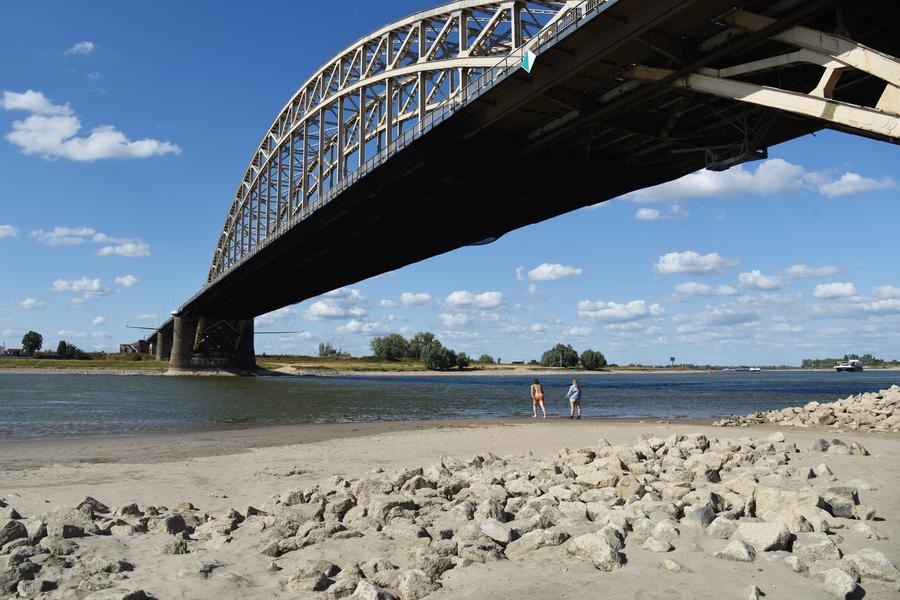
In the eastern Dutch city of Nijmegen, the Waal River makes a sharp bend before continuing westward. For centuries, the Dutch have worried about what happens when too much water rushes down the river. This summer, they are confronting the opposite problem.
NIJMEGEN, THE NETHERLANDS, Aug. 8 (Xinhua) -- Forty-year-old Bart rode his motorcycle about 70 kilometers from Venlo in the southern Netherlands to the Waal Bridge in Nijmegen on Thursday, simply to see the unusually low water level of the Waal River for himself.
"I've never seen the river this shallow in my life," he told Xinhua.
In the eastern Dutch city of Nijmegen, the Waal makes a sharp bend before continuing westward. For centuries, the Dutch have worried about what happens when too much water rushes down the river. This summer, they are confronting the opposite problem.
The Waal is visibly lower than usual. Large stretches of riverbed have emerged along the banks, while fine sand, baked dry under weeks of intense sunshine, is blown by the wind onto nearby streets. Private boats that would normally be out on the river during the summer are packed into marinas, with some already stranded.
Cargo vessels are still moving along the Waal, one of Europe's key inland waterways, but their hulls sit noticeably higher in the water. Some are carrying only about 70 percent of their usual loads, while others have to reduce their cargo by half to avoid running aground.
The scene is a striking reversal for a country whose history, geography and national identity have been shaped by water.
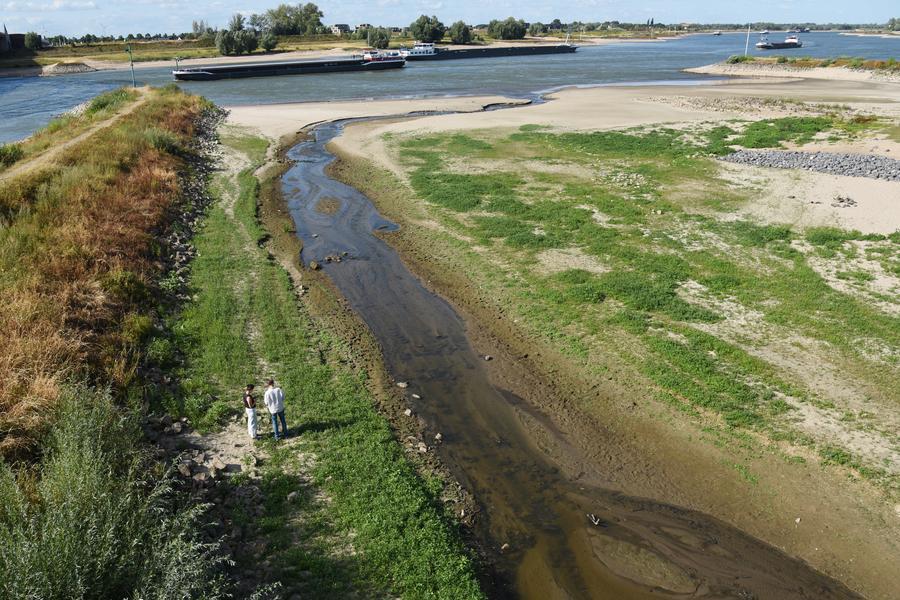
According to the Drought Monitor issued by the Dutch Ministry of Infrastructure and Water Management on Aug. 4, the Netherlands is facing an "exceptional situation of prolonged drought."
The Royal Netherlands Meteorological Institute (KNMI) reported at the end of July that the country received an average of just 13 millimeters of rainfall in July, compared with a long-term average of about 78 millimeters.
The precipitation deficit is expected to exceed 300 millimeters by the end of August, according to current projections, raising the prospect that 2026 could rank among the driest years on record.
The Rhine, one of the Netherlands' main sources of freshwater, is also receiving far less water from upstream.
On Thursday, KNMI said the Rhine's discharge at Lobith, where the river enters the Netherlands, was measured at just 655 cubic meters per second, the lowest level recorded for that date in the measurement series dating back to 1901.
Repeated periods of extreme heat have made the situation worse. The Netherlands has already experienced four heatwaves this year, increasing evaporation from rivers, lakes and soil at a time when rainfall has remained scarce.
Last month, the Dutch government raised the country's water status from an "imminent water shortage" to an "actual water shortage" as persistent drought and high temperatures continued to put pressure on water resources.
To conserve freshwater, maintain canal levels and protect dikes and natural areas, authorities have closed a number of locks in drought-hit parts of the country.
The Delfland water authority, which manages water levels, dikes and freshwater supplies in parts of the western Netherlands, closed locks along the Nieuwe Maas to both commercial and recreational shipping from midnight on Aug. 5 amid the prolonged drought.
Earlier, persistent drought had forced the closure of the Eefde lock in Gelderland province to shipping on the Twente Canal, as water levels remained too low.
The measures are putting increasing pressure on inland shipping. According to Statistics Netherlands, the country has around 7,000 kilometers of navigable inland waterways, connecting its ports with industrial and agricultural areas across the country as well as with neighboring Germany and Belgium. Low river levels and closed locks are now disrupting that network.
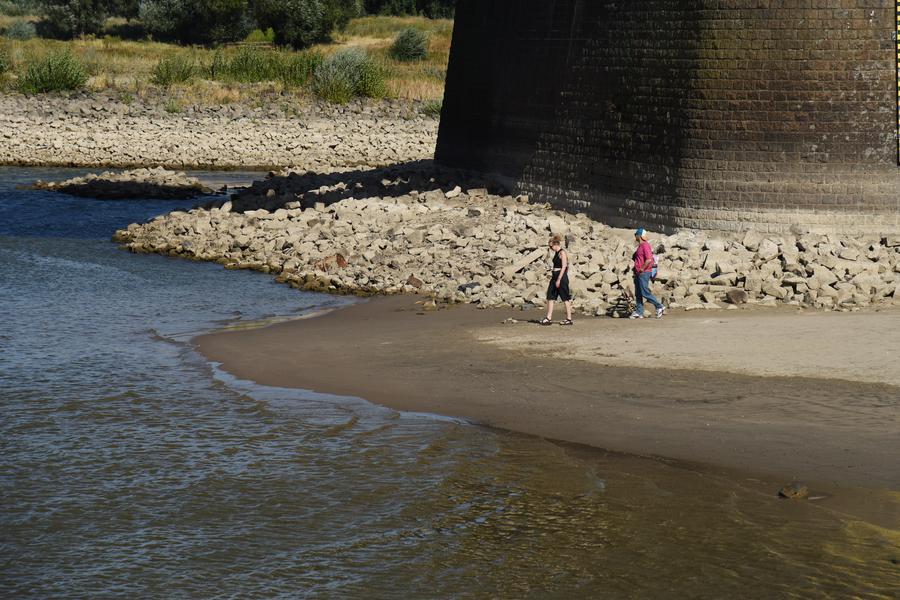
Dutch public broadcaster NOS reported that the closure of the Twente Canal alone is costing businesses hundreds of thousands of euros a day. For the announced closure of the locks along the Nieuwe Maas, the Royal Association of Dutch Inland Shipping estimated that the economic losses could also reach hundreds of thousands of euros a week.
The consequences extend well beyond rivers and canals. Persistent heat and a lack of rainfall have left forests, heathlands and dunes unusually dry, significantly increasing the risk of wildfires.
KNMI said on Friday that there would be hardly any precipitation this weekend and in the coming week, while temperatures are expected to remain above normal.
Meanwhile, Dutch online media nu.nl reported on Thursday that water authorities are running increasingly short of options to combat the drought. In some areas, their "toolbox" has already been exhausted.
"We're hoping for heavy rain," Bart said. ■