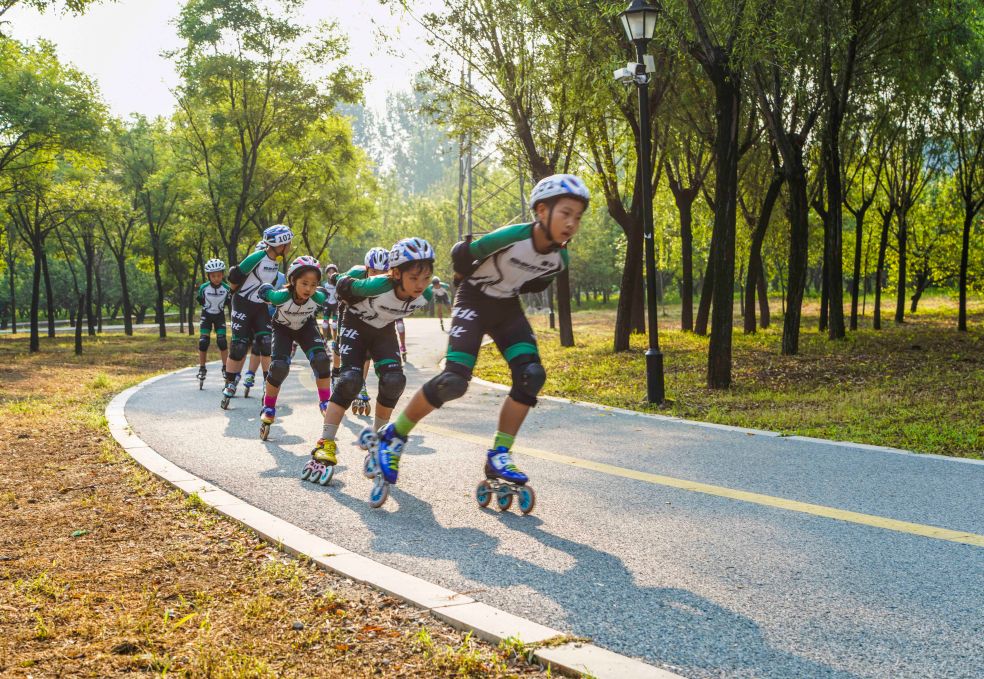
TIANJIN, Aug. 9 (Xinhua) -- In the mountainous areas of north China's Tianjin Municipality, hikers and cyclists are gathering to explore the natural beauty. More than 2,000 km away in Wanning, in south China's Hainan Province, paddleboarding has emerged as a popular new choice among young tourists.
Even as temperatures continue to rise across much of China, consumers' enthusiasm for sports shows no signs of decline. Driven by a boom in fitness and experience-oriented consumption, China's sporting goods market is rapidly expanding and upgrading, providing strong momentum for the growth of international sports brands in the country.
"Chinese consumers' demand for sports has in recent years expanded beyond clothing and equipment to service-oriented areas such as training, sporting events, spectating and community interaction," Yang Mulin, vice president of Decathlon China, told Xinhua, adding that the integration of sports with cultural and tourism offerings is creating sustained room for the company's growth.
As one of the earlier international sports brands to enter the Chinese market, Decathlon has operated in China for nearly four decades, witnessing the rise of mass fitness across the country.
Driven by major consumer markets including China, the company reported net sales of 16.8 billion euros in 2025, up 4.0 percent year on year, while net profit rose 16 percent to 910 million euros, marking continued rise in profitability.
Today, the French sporting giant's business in China has expanded beyond production, sourcing, research and development, and sales of sports equipment into a broader range of service-oriented offerings, as it seeks to provide integrated sports solutions covering consumers' diverse needs.
Yang said Decathlon regards China as an important innovation market and is developing products and innovating its retail channels around the needs of Chinese consumers, while continuously extending its service offerings.
As an increasing number of Chinese consumers place greater emphasis on green and circular consumption, Decathlon is actively promoting circular-economy models, including a second-hand children's bicycle program, Yang said. In 2025, Decathlon's sales related to the circular economy in China grew 26.5 percent.
China is not only an important production and sourcing base and sales market for Decathlon, but also a source of innovation and a long-term partner, Yang said.
China's rapid advances in digital technologies, intelligent manufacturing and business models provide a rich environment for retailers to improve the consumer experience and enhance operational efficiency, he added.
As China's sports economy continues to unleash its momentum, a growing number of international sports brands, like Decathlon, are emphasizing their presence in the Chinese market in pursuit of new growth opportunities.
Data showed that Amer Sports, the parent company of Arc'teryx, recorded revenue of over 1.86 billion U.S. dollars in Greater China in 2025, up 43.4 percent year on year. By comparison, growth in mature markets such as the Americas and Europe remained between 14 percent and 19 percent.
On June 4, Canadian sportswear brand Lululemon released its financial results for the first quarter of fiscal 2026, reporting a 30-percent year-on-year increase in net revenue from the Chinese mainland, the fastest growth among its major markets.
Industry experts said the figures indicate that the Chinese market is becoming a key growth engine for international sports giants.
Meanwhile, Chinese homegrown brands have also performed strongly. ANTA Group, a leading Chinese sporting goods company, reported total revenue of more than 80 billion yuan (about 11.8 billion U.S. dollars) in 2025, marking its 12th consecutive year of positive growth.
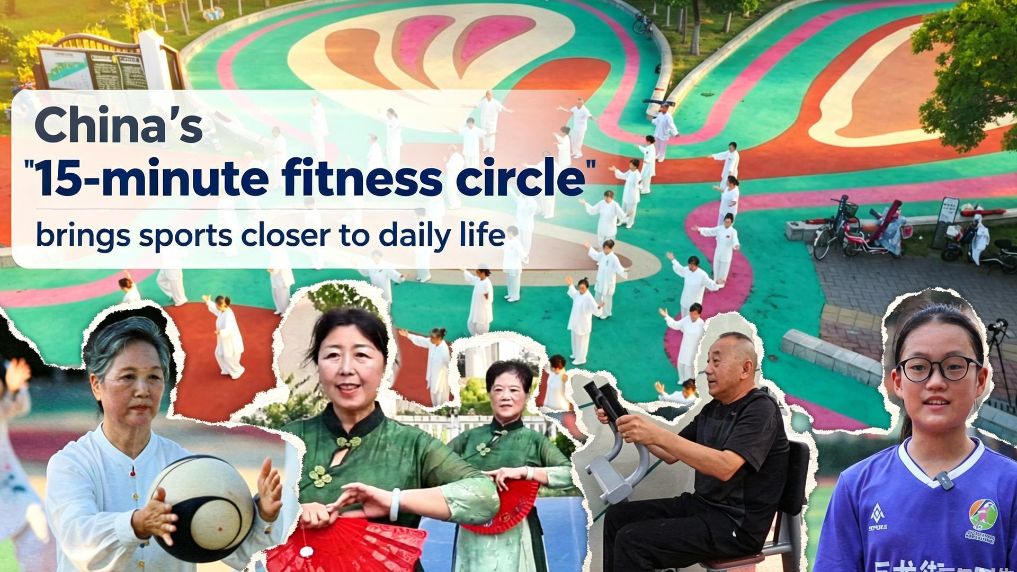
Driven by national initiatives such as Healthy China 2030 and strong consumer demand for sports and fitness, China's sports economy is entering a phase of accelerated growth.
Data showed that China's sporting goods market reached 2.49 trillion yuan in 2025, while the country's sports industry reached a market size of 5.12 trillion yuan. Industry insiders forecast that China's sports industry will grow to about 7 trillion yuan by 2035, accounting for more than 2.5 percent of GDP and becoming a new engine of market growth.
China's rapidly developing sporting goods industry not only holds enormous growth potential, but also spurs sports companies to accelerate innovation and product iteration.
In the eyes of Joe Ngai, senior partner and chairman of McKinsey's offices in Greater China, China has become "the world's most hardcore gym."
Jens Eskelund, president of the European Union Chamber of Commerce in China, said while many European companies hope to integrate into China's innovation ecosystem and tap into its vast opportunities, they also need to adapt to the intense competition in the country.
"You need to be really good to succeed in the Chinese market," Eskelund said. ■