ASEAN looks forward to closer strategic alignment with China, deeper practical cooperation in trade, investment, digital economy and other sectors, more people-to-people exchanges, and steady progress in ASEAN-China relations, said ASEAN Secretary-General Kao Kim Hourn.
by Xinhua writer Zhang Yisheng
JAKARTA, Aug. 9 (Xinhua) -- Long seen as a vibrant way station for merchants and traders, Southeast Asia has served as a crossroads where ideas, goods and civilizations converged across vast waterways and fertile lands.
From awe-inspiring ancient temples to centuries-old blue-and-white porcelain preserved in modern museums, countless relics and treasures across the region bear witness to the long-standing ties with its northern neighbor, China. Today, that tradition of good neighborliness and friendship continues to define cooperation between China and the Association of Southeast Asian Nations (ASEAN).
As ASEAN celebrates its 59th anniversary on Saturday, this year also marks the 50th anniversary of the signing of the Treaty of Amity and Cooperation in Southeast Asia (TAC), the 35th anniversary of the establishment of China-ASEAN dialogue relations and the fifth anniversary of their comprehensive strategic partnership. Against the backdrop of rising global uncertainties, analysts said maintaining the momentum of positive cooperation between ASEAN and China is mutually beneficial.
INSEPARABLE NEIGHBORS
In 2003, China became the first major country to accede to the TAC, prompting other countries to follow suit and significantly elevating ASEAN's international profile. Now China continues its unwavering support for ASEAN Community-building and ASEAN's pursuit of unity and self-strengthening.
During a meeting with Chinese Foreign Minister Wang Yi in Manila in late July, ASEAN Secretary-General Kao Kim Hourn spoke highly of ASEAN-China relations and the outcomes of practical cooperation between the two sides, expressing appreciation for China's support for ASEAN centrality in regional architecture.
Kao said ASEAN and China are inseparable neighbors, and that China is ASEAN's most important comprehensive strategic partner, with the two sides having established 65 cooperation mechanisms.

ASEAN looks forward to closer strategic alignment with China, deeper practical cooperation in trade, investment, digital economy and other sectors, more people-to-people exchanges, and steady progress in ASEAN-China relations, Kao added.
In line with this vision, the building of a community with a shared future with neighboring countries has steadily gained traction, as China has reached important common understandings with eight ASEAN member states on forming a community with a shared future bilaterally, according to Wang, also a member of the Political Bureau of the Communist Party of China Central Committee.
"China has long supported ASEAN centrality and actively engaged in win-win cooperation with ASEAN member states, laying a solid foundation for building a closer China-ASEAN community with a shared future," said Humphrey Arnaldo Russell, head of the ASEAN-China Research Center at the University of Indonesia.
PRACTICAL COOPERATION
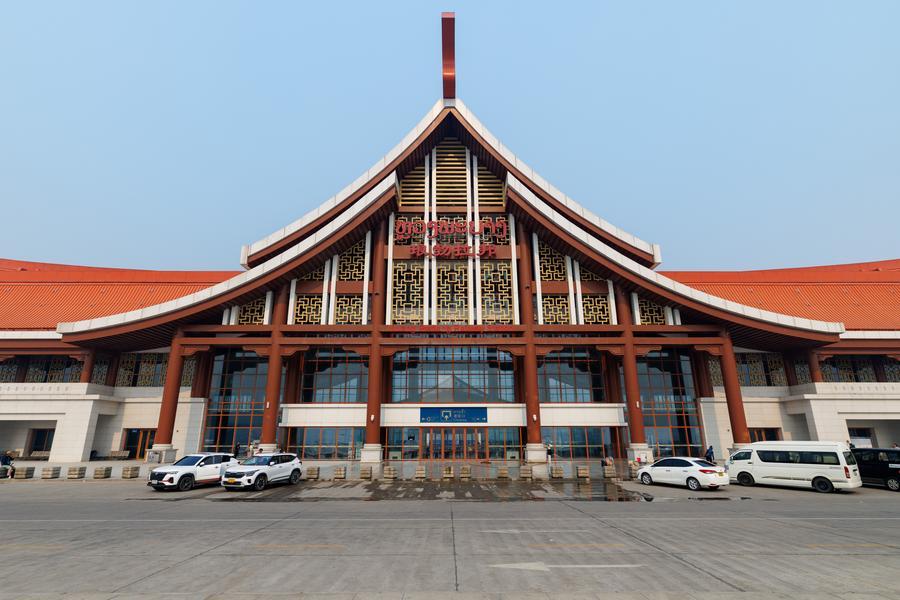
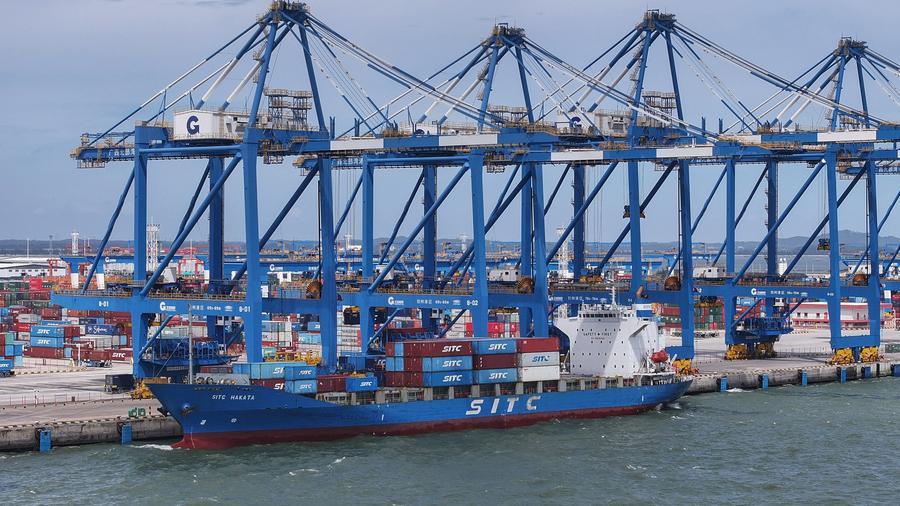
In recent years, expanding infrastructure connectivity between China and ASEAN countries has turbocharged trade and commerce exchanges. Flagship projects like the China-Laos Railway, alongside accelerated sea and road freight routes, have made cross-border logistics more efficient than ever.
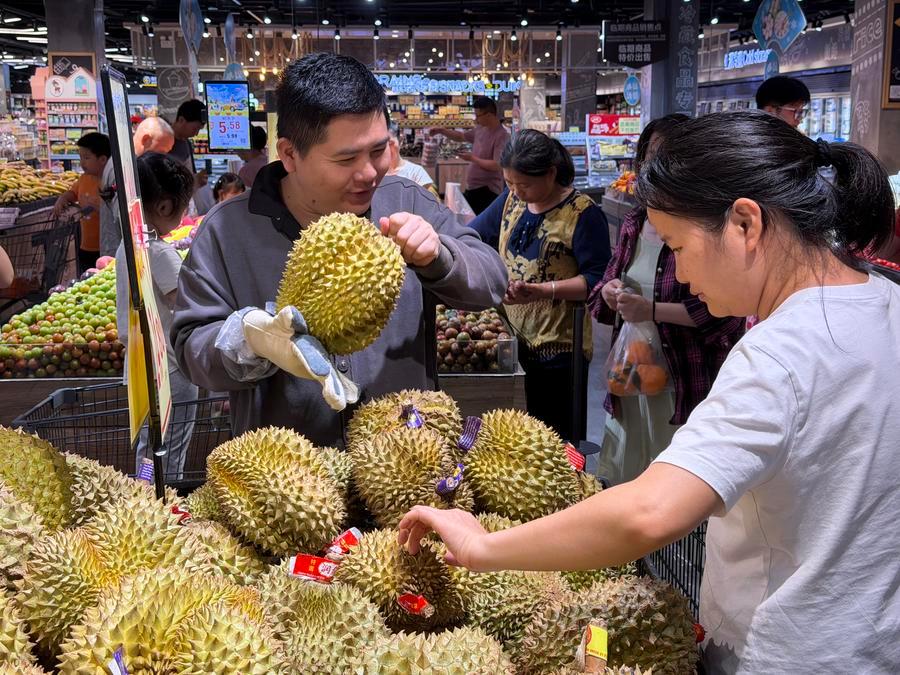
A vivid example is the seasonal durian trade. Guangzhou's Nansha Port, China's largest seaport for durian imports, has run "durian express" routes for six years, with 10 weekly direct voyages from Thailand's Laem Chabang Port that take just four days to complete.
Combined with expedited customs clearance and cold-chain freight services along the China-Laos Railway, the fresh tropical fruit can now reach Chinese consumers in record time, delivering tangible benefits to producers, businesses and consumers across the region.
The logistics success is a microcosm of the broader expansion of economic and trade ties between China and ASEAN, following the formal signing of the China-ASEAN Free Trade Area 3.0 Upgrade Protocol, with bilateral trade topping 1 trillion U.S. dollars in 2025.
The complementarity between China and ASEAN is structural, said Marco Kamiya, United Nations Industrial Development Organization (UNIDO) representative for Indonesia, Timor-Leste and the Philippines. "China's unique role may be first as a market, as its demand can pull ASEAN producers into higher-value niches."
He added that China also serves as an investor that brings not only manufacturing capacity but increasingly research, development and skills, while cooperation in green manufacturing, electric vehicle charging and digital infrastructure can help reduce costs and strengthen regional integration.
The close partnership has also been demonstrated during times of crisis and through cultural exchanges. The two sides have consistently demonstrated solidarity, as evidenced by China's swift emergency relief after powerful earthquakes in Myanmar and the Philippines.
Meanwhile, people-to-people exchanges have continued to flourish, highlighted by almost 200 high-profile events held throughout the 2024-2025 ASEAN-China Year of People-to-People Exchanges and the rollout of a dedicated visa scheme for ASEAN countries to streamline cross-border travel.
International observers said expanding practical cooperation between China and ASEAN across multiple sectors has established their partnership as an engine for Asia's development and revitalization, a model for Asia-Pacific regional cooperation, and a benchmark for the solidarity and self-strengthening of the Global South.
NAVIGATING A SHARED FUTURE
Looking ahead, China and ASEAN are expected to play an increasingly vital role as major forces in the Global South, injecting much-needed stability and growth momentum into a tumultuous world, experts said.
The Industrial Development Report 2026 released by UNIDO identified five transformative trends shaping the next wave of industrialization: the energy and green transition, the rise of artificial intelligence and digitalization, the reconfiguration of global value chains, demographic shifts and the transformation of food systems.
"Openness is an engineering requirement," Kamiya said, expressing confidence that closer China-ASEAN and global cooperation can help Southeast Asia strengthen its industrial capabilities and seize opportunities arising from the green and digital transitions.
China has advantages in scale, mature manufacturing ecosystems, and increasingly cutting-edge technologies in areas like electric vehicles, solar energy and batteries, while ASEAN benefits from demographics, resource endowments, market growth and rising demand, the UNIDO official said.
Indonesian Minister of Investment and Downstream Industry Rosan Roeslani also said Indonesia invites Chinese companies not just to invest in the country, but to build together with it -- creating stronger supply chains, developing talent, advancing technology, and serving regional and global markets.
"The opportunity is substantial, the direction is clear, and our commitment to long-term partnership remains strong," said Rosan. "China is a cornerstone partner, and we continue to diversify our relationships to stay resilient."
Beyond industrial partnership, climate resilience and pollution control offer additional areas for future collaboration. Lee Pei May, assistant professor at the International Islamic University Malaysia, suggested that China and ASEAN deepen collaboration in climate governance, an area where the region remains particularly vulnerable to extreme weather, floods and recurring haze problems.
As the bloc prepares to celebrate its 60th anniversary next year, ASEAN Secretary-General Kao told Xinhua earlier this year that people-to-people connectivity and mutual trust will remain fundamental to the future of ASEAN-China relations.
"People are the makers and drivers of long-lasting relationships. Our partnership should be defined by peace, by our people, and by shared prosperity," Kao said. "Trust is always the most powerful factor in our relationship, and we must focus on it as the key to our long-term relations."■