*Chinese travelers are moving past basic sightseeing to seek knowledge-rich, immersive cultural trips amid the nation's growing cultural-confidence surge.
*Quality time shared between parents and children on outings boosts children's physical and mental growth and tightens family ties.
*Study tours have gained growing recognition from both schools and families as modern‑day parents prioritize all‑round development of their children over purely academic performance.
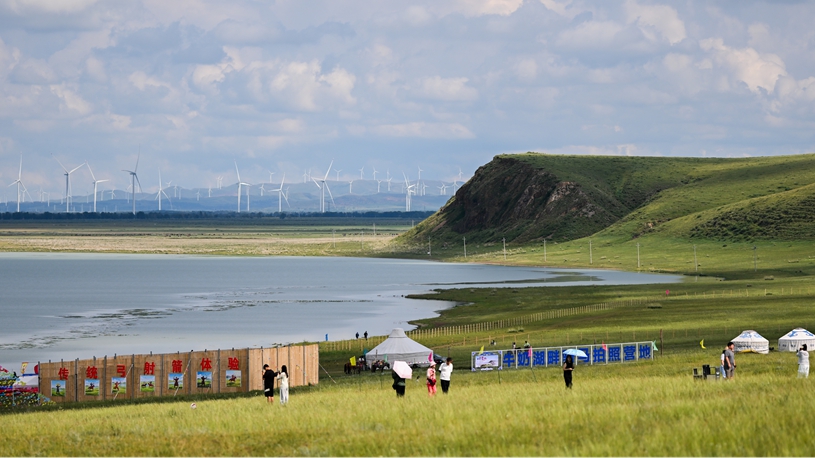
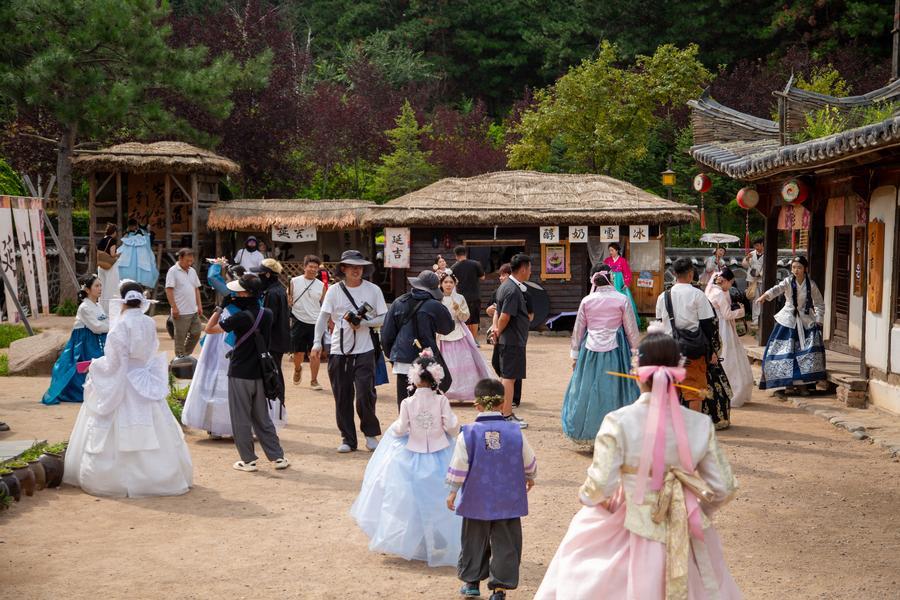
BEIJING, Aug. 7 (Xinhua) -- At a Korean ethnic folk park in northeast China's Jilin Province, Feng Yu turned a family trip into an immersive cultural lesson on ethnic heritage.
She and her kids slipped into traditional Korean ethnic outfits for photo shoots, learned to make Korean rice cakes, and took a shot at the traditional archery.
"I used to take my children on trips only to view beautiful scenery and taste various local delicacies," Feng told Xinhua. "This time, I hope they can learn about ethnic culture firsthand; trying traditional attire, touring ethnic architecture and watching folk shows offer lessons no textbook can provide."
As schools across China break for the summer, the country's two-month travel rush comes alive. Feng is among a growing number of parents opting for cultural journeys, hoping to help their children forge a deeper connection with the nation's rich and diverse heritage.
The Korean ethnic folk park where Feng toured received an average of 20,000 tourists a day during the summer travel season, including a large number of parents with their children, according to Zhu Baokun, operation director of the park.
To satisfy family travelers' appetite for hands-on experiences and immersive cultural learning, the park has introduced new activities like paper craft and incense-making workshops, along with intimate live performances of Korean ethnic folk music.
"These laid-back settings enable children to absorb ethnic cultural knowledge effortlessly amid a lighthearted and enjoyable environment," said Zhu.
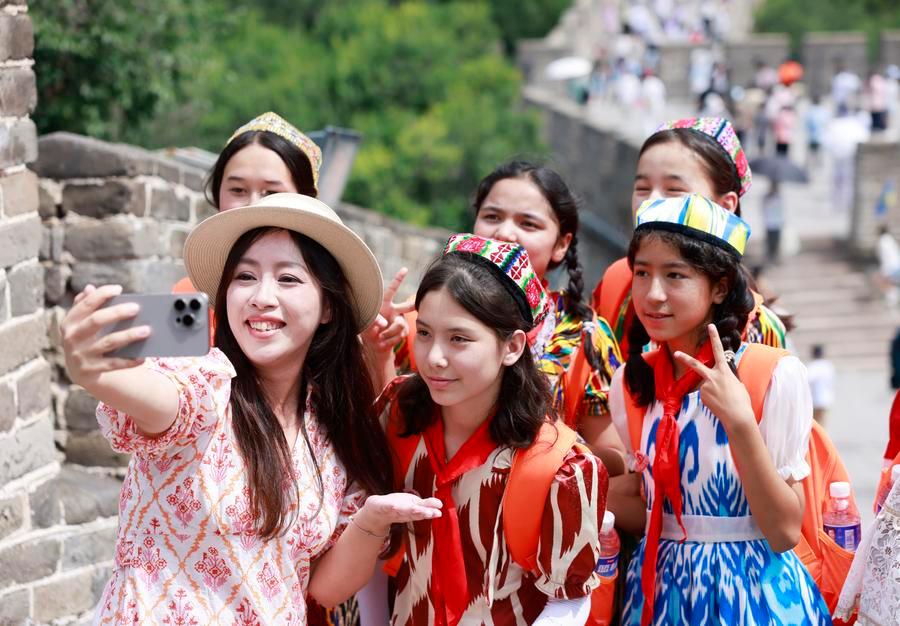
Statistics from Tongcheng Travel, one of China's top online travel agencies, show that families and students remained two dominant traveling groups this summer. Family travelers account for about 38 percent of domestic air passengers, while students make up roughly 29 percent, together exceeding 60 percent of the total.
Alongside ethnic culture-themed trips, red-tourism, which centers on revolutionary-era historical sites, is also a popular choice for family travel this summer.
In Ruijin, a city in east China's Jiangxi Province and home to the starting point of the Red Army's Long March, a 500-seat local theater was packed with audiences during a recent performance. This year marks the 90th anniversary of the victory of this epic journey.
When the scene of Red Army soldiers bidding farewell to local residents played out on stage, seven-year-old Wu Yawen gripped her grandfather's sleeve tightly.
"When the Red Army departed, local residents stayed up all night making straw sandals and boiling eggs. They pressed these supplies into the soldiers' hands, hoping the troops would return soon," Wu Song, her grandfather, told her.
"The older generation knows well that today's happy life is hard-won," said Wu Yong, Yawen's father. He drove hundreds of kilometers from neighboring Fujian Province to Ruijin with his family in the hope that the trip would help the girl remember the martyrs who sacrificed their lives for the country.
In the Ruijin Cradle of the PRC Scenic Area, more than 300,700 visitors arrived between July 1 and July 30, representing a 4.17 percent year-on-year increase.
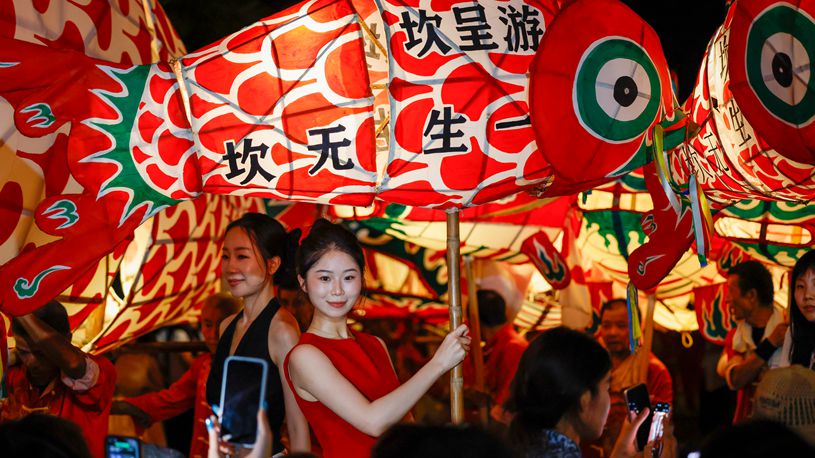
During the summer holidays, traditional Chinese culture has become a popular choice for families seeking fun and memorable vacation experiences.
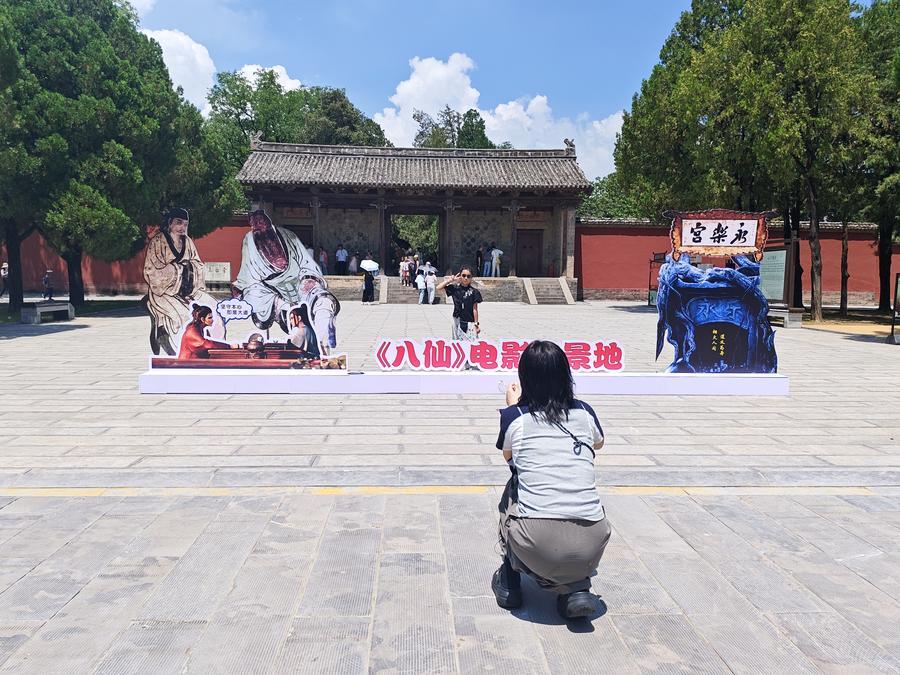
Shanxi, dubbed China's "above-ground cultural relics museum," is home to over 28,000 ancient structures. From the hit video game "Black Myth: Wukong" in 2024 and last year's popular animation "Nobody" to the latest "All Wishes Come True," the province has consistently capitalized on cultural and entertainment hits to showcase its treasure and attract young visitors.
Ruicheng County in Shanxi is the hometown of the prototype of the movie "All Wishes Come True"'s core protagonist Lyu Dongbin. Yongle Palace in Ruicheng saw a 12.9 percent year-on-year rise in visitor volumes in July, according to Liu Haibo, chairman of the Yongle Cultural Tourism Investment and Construction Co., Ltd.
Liu noted that the scenic site rolled out custom‑made services to keep its viral popularity driving steady tourism. Fans get special photo‑taking areas, guides explain well‑known murals by connecting them to film footage, and tourists can attend interactive classes to learn mural copying and line‑drawing.
For three consecutive years, the Shanxi provincial department of culture and tourism has issued free travel guide handbooks, which come with recommended touring route maps and dedicated pages for visitors to collect souvenir stamps from scenic spots across the province.
This year's edition features an upgraded wool cover and an adjustable carrying strap for added portability. The product quickly gained popularity after its launch, becoming a must-have item for travelers, especially younger visitors.
The growing popularity of cultural and educational travel also reflects broader policy support. China's 15th Five-Year Plan (2026-2030) outline calls for the well-regulated development of study tours alongside themed tourism products, including red tourism and other cultural travel experiences.
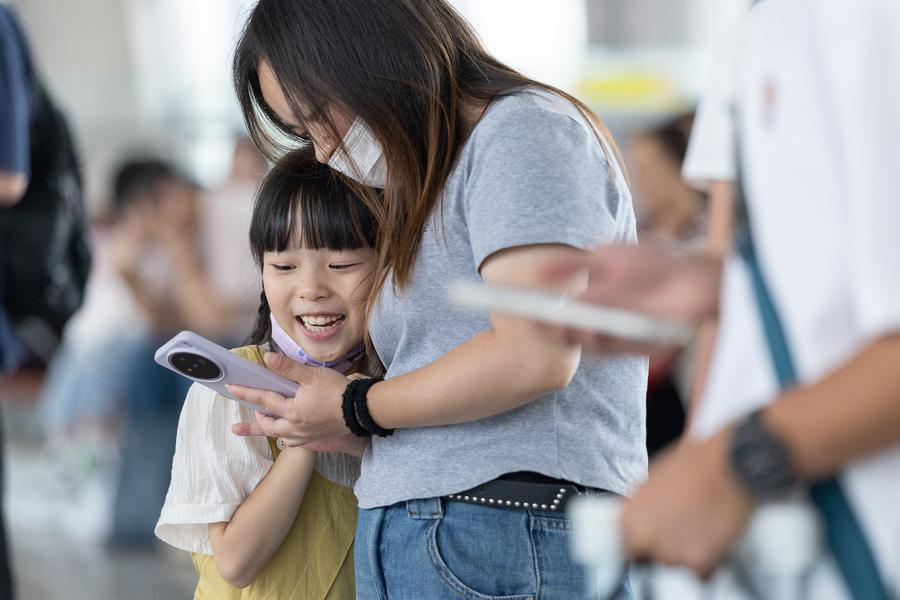
Building on that policy support, China launched a national summer holiday cultural and tourism consumption campaign in July, with more than 450 million yuan (about 66 million U.S. dollars) worth of consumer vouchers to be distributed. The campaign is expected to feature more than 30,000 activities nationwide, catering to popular travel demands including study tours.
Dai Bin, president of the China Tourism Academy, said that Chinese travelers are moving past basic sightseeing to seek knowledge‑rich, immersive cultural trips amid the nation's growing cultural‑confidence surge.
"The surge in family‑centered travel is an encouraging sign. Quality time shared between parents and children on outings boosts children's physical and mental growth and tightens family ties," noted Liu Chi, a sociologist at Northeast Normal University.
Liu said that study tours have gained growing recognition from both schools and families as modern‑day parents prioritize all‑round development of their children over purely academic performance.
"Families hope travels can broaden children's outlook and build up hands‑on experience, bringing the 'tourism‑based education' model to life," Liu said. ■